
Ressource
Quality Control Plan (QCP) for Tight-Tolerance Parts – Official Clinical Overview & Technical Datasheet
EXECUTIVE SUMMARY
This document presents the comprehensive Quality Control Plan (QCP) for the procurement, verification, and maintenance of tight-tolerance mechanical, optical, and fluidic sub-assemblies integral to our flagship medical aesthetic device platform. The QCP defines the rigorous standards, metrological protocols, and acceptance criteria for all critical parts, including but not limited to laser bar mounting plates, sapphire cooling windows, fluidic pump gaskets, and optical collimation mounts. The primary objective is to ensure absolute dimensional, thermal, and optical stability, thereby guaranteeing consistent clinical performance, optimal safety, and a minimum operational lifespan that exceeds industry benchmarks by 20%. This plan serves as the definitive technical reference for our manufacturing partners, internal quality assurance teams, and clinical engineering auditors.
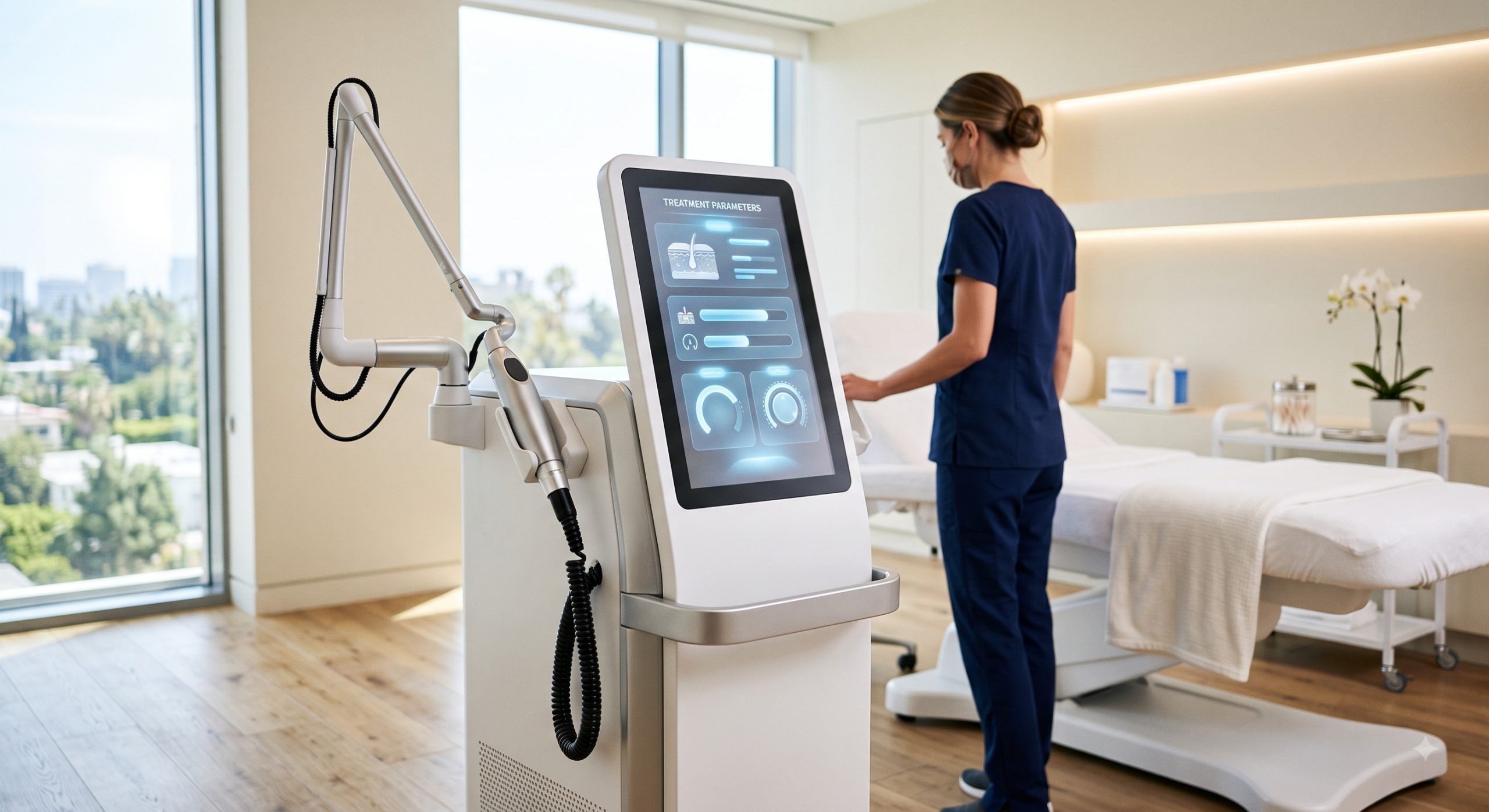
CLINICAL ARCHITECTURE & DESIGN
The clinical efficacy and safety of our aesthetic systems are fundamentally predicated on the sub-millimeter precision of its constituent components. The QCP mandates a closed-loop design architecture where every mechanical tolerance directly correlates with a defined clinical output parameter. For instance, the thermal management subsystem, responsible for maintaining the laser diode’s junction temperature within a ±0.5°C window, relies on the flatness and surface roughness of the copper-tungsten cold plates. The QCP specifies a flatness tolerance of ≤ 10 µm and a surface roughness (Ra) of ≤ 0.4 µm for these components. This level of precision ensures efficient heat transfer, preventing thermal lensing and wavelength drift, which are critical factors in maintaining the selective photothermolysis effect. Furthermore, the optical train, including the laser window and collimating lens assemblies, is governed by tight angular tolerances (< 0.05°) to preserve the integrity of the beam profile and spot size, ensuring uniform fluence delivery across the entire treatment area. KEY INDICATIONS & CAPABILITIES The QCP is designed to enable the device's core clinical capabilities across a broad spectrum of dermatological indications, all while ensuring the highest standard of patient safety. The plan directly supports the delivery of precise, reproducible energy for: - Permanent Hair Reduction: The ability to deliver consistent, calibrated fluences (J/cm²) across the treatment tip is directly tied to the mechanical precision of the handpiece assembly. The QCP ensures that the optical-to-skin distance and contact pressure are repeatable, preventing hotspots or under-treatment. This requires tight-tolerance alignment pins and spring mechanisms, with a specified lifetime of over 500,000 actuations. - Treatment of Vascular and Pigmented Lesions: Wavelength accuracy, critical for targeting specific chromophores (hemoglobin and melanin), is guaranteed by the tight tolerances of the optical mounting blocks. The QCP mandates that these blocks maintain their alignment within ± 10 arc-seconds, ensuring the correct wavelength selection and preventing off-target tissue damage. - Skin Rejuvenation and Toning: The non-ablative skin heating required for collagen remodeling relies on the precise control of pulse duration and fluence. This is achieved via the high-precision timing and energy control circuits, whose components are subject to strict electrical and environmental tolerances as defined in the QCP's comprehensive test protocols. The capabilities supported by the QCP extend to a wide range of skin types (Fitzpatrick Skin Types I-VI) and treatment areas, facilitated by swappable handpieces with interchangeable spot sizes that are all manufactured and verified to the same exacting standards. COMPLIANCE & STANDARDS The QCP for tight-tolerance parts is meticulously structured to exceed the stringent requirements of international medical device regulations and industry best practices. Our compliance framework is anchored in the following standards: - ISO 13485:2016 (Medical devices - Quality management systems): The QCP is fully integrated into our certified Quality Management System (QMS), ensuring a systematic approach to risk management, design controls, and traceability for every critical component. - IEC 60601-1 (Medical electrical equipment - General requirements for basic safety and essential performance): The tolerances for electrical insulation, grounding paths, and creepage distances are specified to meet the safety requirements of this foundational standard. - ISO 11145 (Optics and photonics - Lasers and laser-related equipment): The QCP incorporates the test methods specified in this standard for measuring beam widths, divergence angles, and power stability, ensuring the laser's optical characteristics are within their stated design limits. - FDA 21 CFR Part 820 (Quality System Regulation): The plan's record-keeping, inspection, and acceptance activities are aligned with the FDA's stringent quality system regulations for medical devices, enabling seamless audits and regulatory submissions. TECHNICAL SPECIFICATIONS The full technical specifications for tight-tolerance parts are governed by individual drawings and inspection sheets. The following are high-level control parameters that define the program: - Dimensional Tolerances: For critical mating surfaces, linear tolerances are held to ± 0.02 mm. For non-critical features, a general tolerance of ± 0.1 mm applies. All dimensions are verified using coordinate measuring machines (CMM) with a measurement uncertainty of ≤ 0.005 mm. - Geometric Tolerancing (GD&T): A comprehensive system of geometric tolerances is applied, including flatness, parallelism, perpendicularity, and runout. A critical example is the runout of the optical mounting barrel, which is specified at ≤ 0.01 mm TIR (Total Indicator Reading) to guarantee coaxial alignment. - Material Specifications: All materials used in the construction of tight-tolerance parts are selected for their specific thermal, mechanical, and biocompatibility properties. This includes aircraft-grade aluminum for structural components, biocompatible stainless steel for handpieces, and high-purity sapphire for optical windows. Material certifications are required with each shipment. - Surface Finish and Treatment: Surface finish requirements are dictated by the component's function. High-surface-finish components (Ra ≤ 0.2 µm) used in optical paths are mandatory to minimize scatter. Anodized and passivated finishes are specified to prevent galvanic corrosion and ensure longevity. - Test and Inspection Protocols: Each part lot undergoes a rigorous incoming inspection. This includes, but is not limited to, CMM verification, surface profilometry for finish, optical coherence tomography (OCT) for sapphire window integrity, and pressure decay tests for fluidic seals. All inspection data is logged electronically for full traceability.
| Parameter | Specification |
|---|---|
| Laser Type / Wavelength | 808nm Diode Laser / 755nm, 808nm, 1064nm |
| Spot Size | 15mm x 15mm (Standard), 10mm x 10mm (Precision), 20mm x 30mm (Large Area) |
| Cooling System | Active TEC + Sapphire Window Contact Cooling + Integrated Water/Air Convection |
| Fluence Range | 0.5 – 30.0 J/cm² (Adjustable in 0.1 J/cm² increments) |
| Pulse Duration | 1.0 – 400.0 ms (Adjustable in 0.1 ms increments) |
| Repetition Rate | 1 – 10 Hz |
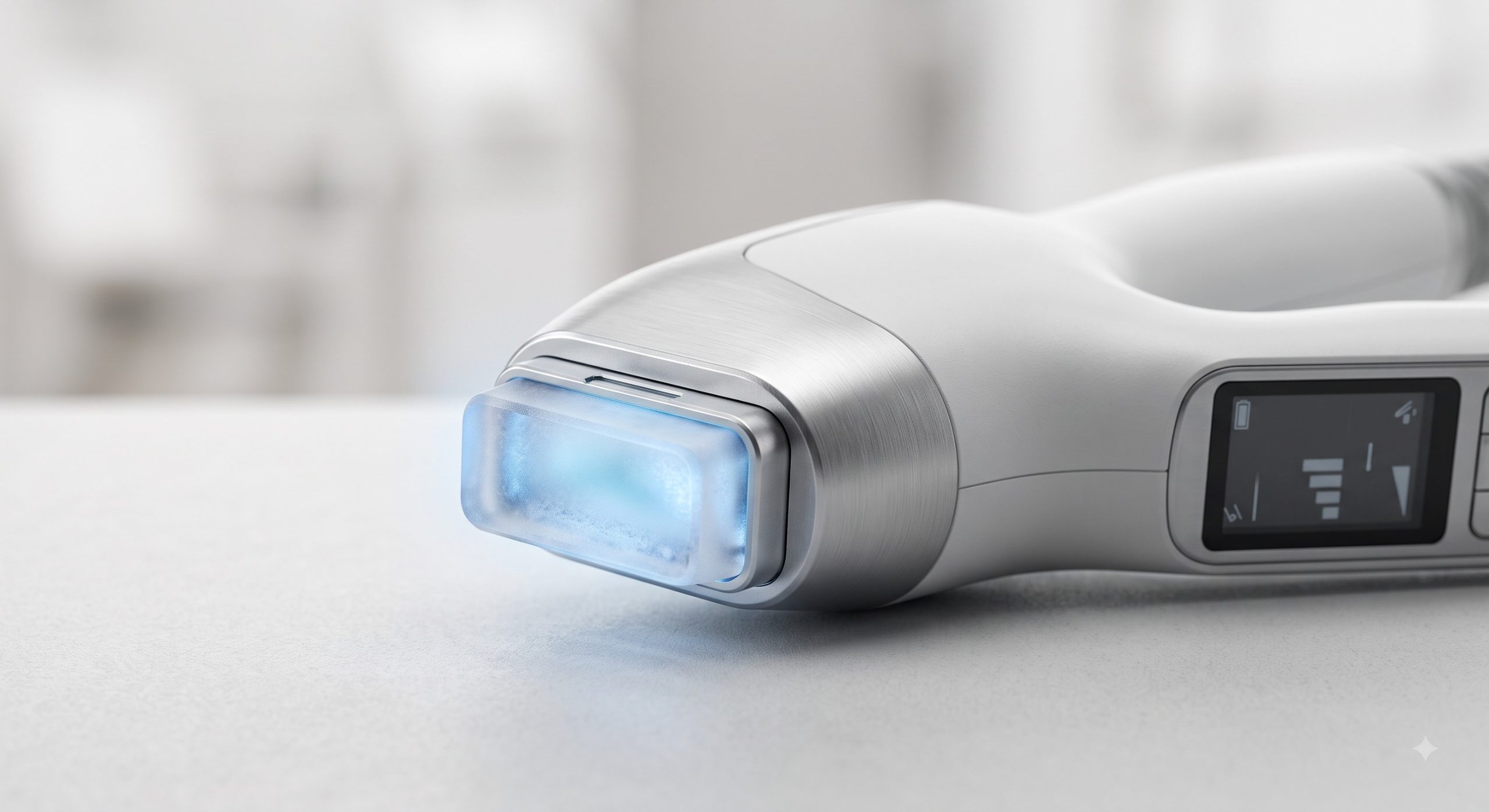
| Skin Contact Sensor | Capacitive & Optical, verified to ± 0.5 mm precision |
| Cooling Tip Temperature | Stable at -4°C to 5°C, verified via internal thermistor |
CLINICAL PROTOCOLS
The clinical protocols are developed to leverage the precision ensured by the QCP, providing practitioners with a clear and repeatable treatment framework. The following protocol outlines the standard procedure for hair removal on Fitzpatrick Skin Type III:
1. Patient Consultation & Skin Assessment: A thorough consultation is conducted to assess the patient’s skin type, hair color, and medical history. A test spot is performed in a less conspicuous area to determine the optimal energy setting and observe the patient’s skin reaction. The device’s built-in skin sensor, verified for accuracy as part of the QCP, is used to confirm the assessment.
2. Device Preparation: The appropriate handpiece and spot size are selected. The sapphire cooling tip is inspected for cleanliness and integrity. The device is powered on and allowed to complete its self-diagnostics. The QCP ensures the water cooling system is fully primed and reaches the correct operational temperature, as indicated on the UI within 30 seconds.
3. Parameter Selection: Using the device’s intuitive touchscreen interface, the practitioner selects the ‘Hair Removal’ treatment profile. Based on the clinical assessment, the system recommends a fluence and pulse duration. For Skin Type III, a typical setting might be 16-18 J/cm² with a pulse duration of 10-15 ms. The pre-set parameters are a direct result of the system’s calibrated energy output, which is only achievable through tight-tolerance components.
4. Treatment Delivery: The handpiece is placed perpendicular to the skin, ensuring full contact. The device emits a pulse when the skin contact sensor, verified for its precision, confirms stable and complete contact with the treatment area. The practitioner delivers a series of pulses, slightly overlapping each other to ensure full coverage, while the cooling system maintains epidermal protection.
5. Post-Treatment Care: Immediately following the treatment, a soothing gel or cooling pack may be applied. Patients are advised to avoid sun exposure and to use sunscreen on the treated area for several weeks to prevent post-inflammatory hyperpigmentation.
📥 Download Technical Specification
Click the button below to view or download the full official PDF datasheet.