
Ressource
Medical CE & FDA Technical Compliance Register: Sensitive Machined Parts Packaging Material Specs
MEDICAL CE & FDA TECHNICAL COMPLIANCE REGISTER: SENSITIVE MACHINED PARTS PACKAGING MATERIAL SPECS
PLATFORM INTRODUCTION
The present document establishes the authoritative technical specification and compliance register for the packaging material system deployed in the protection, handling, and sterile presentation of sensitive machined parts integral to the aesthetic device platform. The packaging architecture is engineered to preserve dimensional integrity, surface finish, and biocompatibility of precision-machined components — including handpiece optical assemblies, sapphire cooling interfaces, and diode laser bar mounts — throughout global logistics, clinical storage, and point-of-use deployment. The material specification herein described is fully traceable and aligned with international medical device packaging directives.
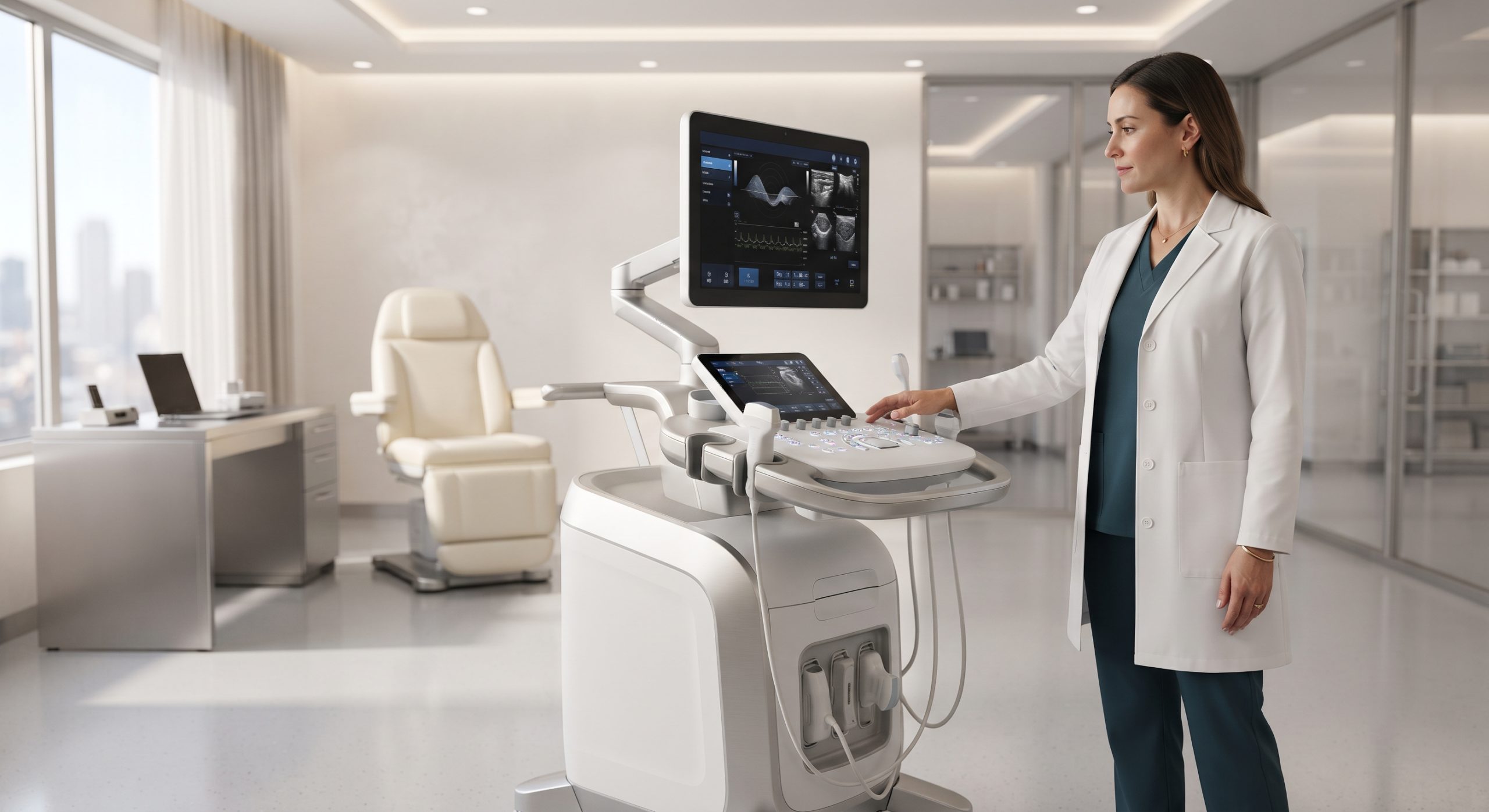
CLINICAL ROOM PREREQUISITES AND CLEANROOM INTEGRATION
Packaging materials are qualified for deployment in ISO Class 7 cleanroom environments and are compatible with standard clinical room prerequisite protocols. All primary packaging contact layers are manufactured from medical-grade virgin polymers free from latex, phthalates, and silicone-based release agents. The material stack is validated for low particulate shedding (≤ 100 particles/ft³ at ≥ 0.5 µm) and is suitable for direct introduction into controlled clinical assembly areas without secondary decontamination. Storage conditions of 15–25 °C and ≤ 60% RH are required to maintain material performance integrity prior to use.
SMART UI PROTOCOLS AND TRACEABILITY FEATURES
Each packaging lot is assigned a unique machine-readable data matrix code enabling full chain-of-custody traceability from polymer extrusion through sterilization to point-of-use verification. The packaging system integrates radio-frequency identification (RFID) capability compatible with enterprise asset management platforms, permitting automated inventory reconciliation. Where the enclosed machined part requires identification, laser-etched part markings are applied directly to the component and remain legible through the transparent packaging membrane without breaching the sterile barrier.
KEY FEATURES
– Multi-layer co-extruded barrier film providing moisture vapor transmission rate (MVTR) ≤ 0.02 g/100 in²/day and oxygen transmission rate (OTR) ≤ 0.05 cc/100 in²/day.
– Anti-static and electrostatic discharge (ESD) dissipative properties with surface resistivity in the range of 10⁶–10⁹ Ω/sq, protecting sensitive machined parts from triboelectric discharge.
– Cushioning foam inserts of closed-cell polyethylene (PE) or polyurethane (PU) with specified compression set ≤ 10%, engineered to damp vibration frequencies of 10–200 Hz during transit.
– Hermetically sealable sterile barrier pouches and trays validated to ISO 11607-1 and ISO 11607-2 for terminally sterilized medical devices.
– Compatible with ethylene oxide (EO), gamma irradiation (25–40 kGy), and electron beam sterilization modalities without material degradation or loss of seal integrity.
– Clean-peel opening feature with consistent peel strength of 1.5–3.0 N/15 mm, minimizing particulate generation at the point of use.
VERIFIED SPECIFICATIONS
The packaging material system has been verified through accelerated aging studies (ASTM F1980) demonstrating a three-year shelf-life at 25 °C/60% RH equivalent, with seal integrity maintained throughout the validated period. Dye penetration testing (ASTM F1929) and bubble emission testing (ASTM F2096) confirm sterile barrier integrity across all pouch and tray configurations. Visual inspection per ASTM F1886 yields zero critical defects across production lots. Biocompatibility of all patient-contact-adjacent materials is confirmed to ISO 10993-1, -5, and -10, with cytotoxicity, sensitization, and irritation endpoints meeting acceptance criteria.
| Parameter | Specification |
|---|---|
| Primary Barrier Film | Multi-layer co-extruded PE/EVOH; MVTR ≤ 0.02 g/100 in²/day; OTR ≤ 0.05 cc/100 in²/day |
| Sterile Barrier Configuration | Pouch and tray formats; ISO 11607-1/-2 validated |
| Sterilization Compatibility | EO, Gamma (25–40 kGy), E-beam |
| Surface Resistivity (ESD) | 10⁶–10⁹ Ω/sq |
| Cushioning Foam Compression Set | ≤ 10% (ASTM D3574) |
| Peel Strength | 1.5–3.0 N/15 mm (clean-peel) |
| Shelf-Life Validation | 3 years at 25 °C/60% RH (ASTM F1980) |
| Seal Integrity Testing | ASTM F1929 (dye penetration); ASTM F2096 (bubble emission) |
| Biocompatibility | ISO 10993-1, -5, -10 compliant |
| Particulate Shedding | ≤ 100 particles/ft³ at ≥ 0.5 µm |
| Cleanroom Compatibility | ISO Class 7 |
| Traceability | Data matrix code + RFID; full lot chain-of-custody |
CONSUMABLE REPLACEMENT LOGIC AND SUSTAINABILITY PROTOCOL
Primary packaging is designated single-use and must not be reprocessed or resterilized. Replacement intervals for reusable transit packaging components are defined at 50 cycles or upon observable compromise of structural integrity, whichever occurs first. The polymer formulation is compatible with standard medical waste stream segregation and is designated for regulated medical waste disposal where contamination is present. Where uncontaminated, the material is classified as recyclable per resin identification code 2 (HDPE) or 4 (LDPE) depending on configuration, supporting institutional sustainability objectives without compromising sterility assurance.
📥 Download Technical Specification
Click the button below to view or download the full official PDF datasheet.