
Ressource
Architecture clinique
DEVICE ROLE IN DERMATOLOGY
The Acceptable Quality Limit (AQL) Sampling Plan Chart serves as a foundational quality governance instrument within the medical aesthetic device manufacturing ecosystem. This document delineates the statistical sampling methodologies, inspection protocols, and performance verification matrices used to ensure that every finished device—and its constituent subassemblies—meets the rigorous safety and efficacy benchmarks required for clinical deployment. Within the context of OEM production, the AQL framework functions not merely as a quality checkpoint but as a predictive risk-mitigation architecture that safeguards patient outcomes and upholds the clinical reputation of the aesthetic practice.
ADVANCED SAPPHIRE ICE COOLING & QUALITY GOVERNANCE
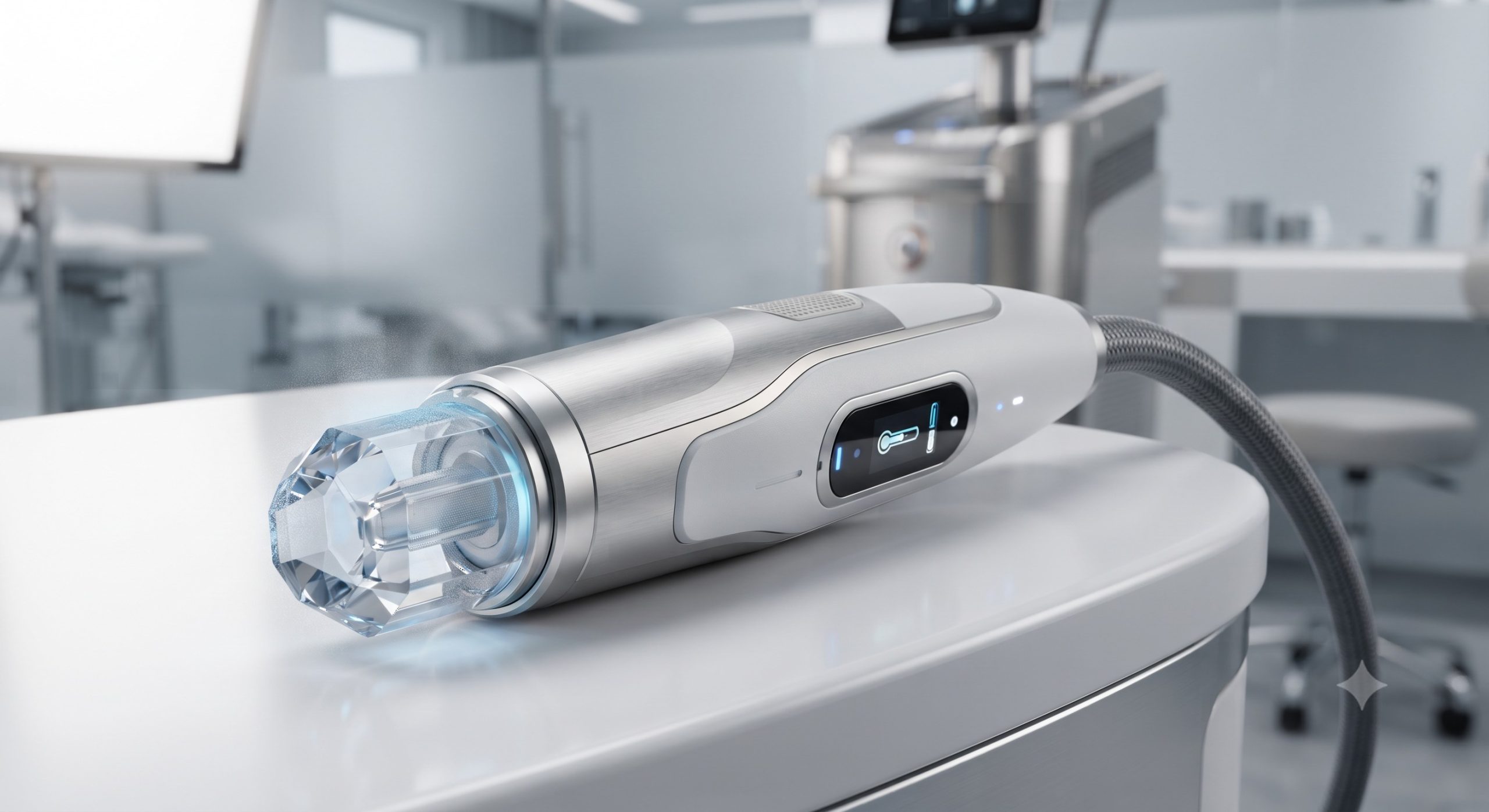
The integration of advanced sapphire contact cooling with the AQL sampling framework represents a dual-layer commitment to patient safety and device reliability. During manufacturing, each cooling subsystem—comprising TEC modules, sapphire windows, and closed-loop water circulation—undergoes rigorous lot sampling against predetermined AQL thresholds. Critical parameters such as surface temperature uniformity (±1°C), cooldown latency (<0.5 seconds), and long-term thermal cycle stability are verified using statistical process control (SPC). This ensures that every handpiece delivered to the clinic maintains the epidermal protection necessary for painless, high-fluence treatments, directly aligning with the device's clinical indication for safe photothermolysis across Fitzpatrick skin types I-IV. FLUENCE MANAGEMENT & PARAMETRIC REGULATION Central to the AQL plan is the verification of fluence delivery and pulse width accuracy. Each manufacturing batch is subject to stratified random sampling, with inspection levels (typically General Inspection Level II) determining sample size based on lot volume. Critical defect classifications (AQL 0.0-0.65%) govern energy output calibration, ensuring that the device's internal laser bars—whether 808nm diode or multi-wavelength configurations—emit within ±5% of specified fluence values. Major defects (AQL 1.0%) address software-controlled pulse width generation, while minor defects (AQL 1.5%) cover interface responsiveness and preset recall accuracy. This hierarchical defect classification ensures that clinical protocols remain reproducible, thereby maximizing treatment efficacy and minimizing adverse events. PERFORMANCE PARAMETERS Measurement & Instrumentation Calibration: All AQL testing is performed using NIST-traceable power meters, thermocouple arrays, and spectrophotometric analyzers. Calibration cycles adhere to ISO 17025 standards, with documented uncertainty budgets maintained for each test station. Statistical Sampling Tables: The AQL chart incorporates standard ANSI/ASQ Z1.4-2008 sampling schemes, providing dynamic code letters based on lot size. Special inspection levels (S-1 to S-4) are employed for destructive tests and life-cycle endurance assessments, balancing statistical confidence with production efficiency.
| Parameter | Specification |
|---|---|
| Laser Type / Wavelength | 808nm Diode / 755/808/1064nm Multi-Wavelength |
| Spot Size | 15×15 mm (Standard) / 10×10 mm (High-Fluence) |
| Cooling System | TEC + Sapphire Contact + Closed-Loop Water + Forced Air |
| Energy Output (Fluence) | Up to 120 J/cm² (Adjustable) |
| Pulse Width | 5-400 ms (Programmable in 1 ms increments) |
| Sampling Standard | ANSI/ASQ Z1.4-2008 (General Inspection Level II) |
| Critical Defect AQL | 0.65% (Energy Accuracy, Cooling Integrity) |
| Major Defect AQL | 1.0% (Pulse Timing, Software Presets) |
| Minor Defect AQL | 1.5% (UI Response, Labeling, Cosmetics) |
| Calibration Traceability | NIST-Traceable Power Meters (ISO 17025) |
| Regulatory Compliance | FDA 510(k), EU MDR Class IIa, ISO 13485:2016 |
REGULATORY STANDARDS & COMPLIANCE AUDIT
Quality System Integration: The AQL Sampling Plan Chart operates within a comprehensive Quality Management System (QMS) certified to ISO 13485:2016. This ensures that all sampling activities—including normal, tightened, and reduced inspection—are documented with full traceability, enabling seamless FDA (21 CFR Part 820) and EU MDR compliance.
Device History Record (DHR) Alignment: Each AQL inspection outcome is recorded in the device’s DHR, providing a verifiable audit trail from component procurement to final release. This facilitates rapid root-cause analysis and corrective action implementation in the event of process deviations.
Post-Market Surveillance Feedback: The AQL framework is dynamically updated using real-world performance data from installed device fleets. This closed-loop system refines inspection criteria, adapting to emerging clinical usage patterns and ensuring that quality standards evolve in parallel with market demands.
📥 Download Technical Specification
Click the button below to view or download the full official PDF datasheet.