
Blog
The Ultimate Clinic Guide to Understanding Technical Construction Files for Notified Bodies: Compliance, Patient Safety, and ROI
2026年8月6日
Introduction: The Clinical Backbone of Medical Aesthetic Device Compliance
For medical aesthetic clinics, the procurement of a new laser or energy-based device is often driven by clinical efficacy, patient satisfaction, and return on investment (ROI). However, a critical and often overlooked component that underpins all these factors is the Technical Construction File (TCF). This dossier is the bedrock for Medical CE marking and demonstrates compliance with the Medical Device Regulation (MDR) 2017/745. In this comprehensive guide, we dissect the Technical Construction File from a clinical and business perspective, moving beyond mere regulatory jargon to show how it directly impacts patient safety, clinical outcomes, and your clinic’s bottom line.
At its core, the TCF provides a notified body, such as TÜV SÜD or BSI, with the evidence required to assess a device’s safety and performance. It details the device’s design, manufacturing process, and crucially, its clinical performance metrics. A robust TCF ensures that devices such as diode lasers, IPL, and RF systems deliver consistent, verifiable outputs, including specific parameters like energy density (Fluence in J/cm²), pulse width (ms), and spot size (mm). Understanding this file is paramount for clinic owners and medical directors who are responsible for the safe and effective deployment of aesthetic technologies.
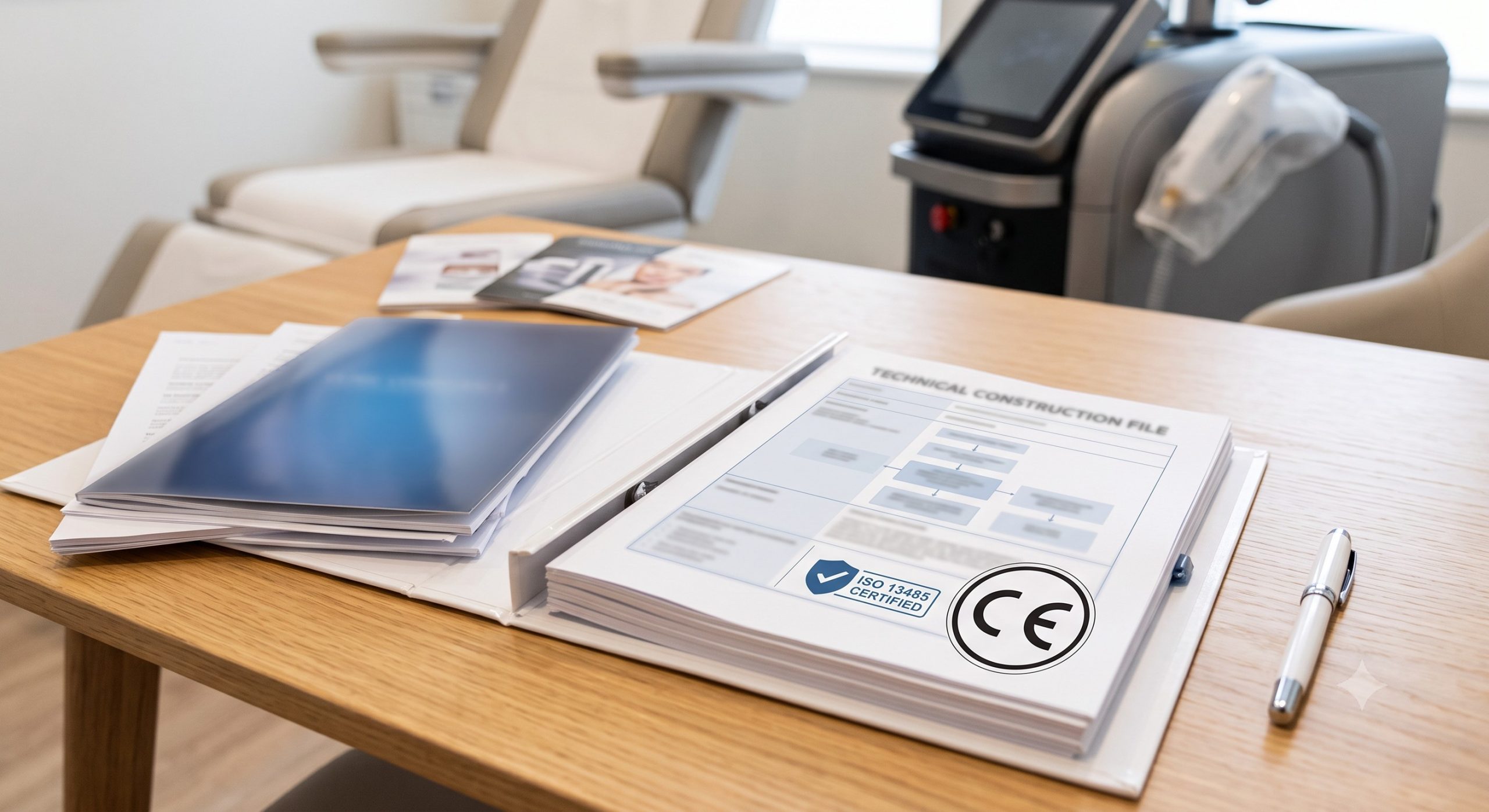
What is a Technical Construction File (TCF)? A Deep Dive for Clinicians
A Technical Construction File is a comprehensive set of technical documentation that proves a medical device complies with the essential requirements of the MDR. For a laser device, this goes far beyond a simple user manual. It provides a notified body with a ‘map’ of the device’s entire lifecycle. For a clinic, reviewing the TCF is a key step in due diligence, ensuring the device you are investing in is not just effective, but also reliably built to deliver consistent energy outputs without compromising patient safety. The TCF must demonstrate that the device’s performance specifications are met under all operating conditions, including the rigorous demands of a high-throughput medical spa.
Key Components of a Compliant TCF
- Device Description and Specification: This includes detailed technical drawings, material compositions, and the fundamental operating principle. For example, the file will specify the laser medium (e.g., GaAs diode bars), the exact wavelengths (e.g., 755nm, 808nm, 1064nm), and the physical dimensions of the system.
- Design and Manufacturing Information: This section covers the manufacturing process, quality control checkpoints, and evidence of compliance with harmonized standards like ISO 13485 (Quality Management Systems). It assures the notified body that the device is built to a consistent, auditable standard.
- Risk Management and Clinical Evaluation: This is arguably the most clinically relevant part of the TCF for aesthetic practitioners. It details the risk assessment (ISO 14971) for all known hazards, including thermal injury, scarring, and pigmentation changes. It also contains the Clinical Evaluation Report (CER), which uses clinical data and literature to confirm the device’s safety and performance for specific indications.
The Critical Technical Metrics You Must Verify
From a clinic’s perspective, the TCF verifies the technical specifications provided by the manufacturer. These metrics are not just numbers; they are the clinical dials that determine treatment success. A notified body will scrutinize these to ensure the device can deliver the power and precision claimed. Understanding these specifications allows a medical director to optimize treatment protocols for various skin types and indications.
| Key Parameter | Clinical & Technical Significance | Verification Requirement |
|---|---|---|
| Laser Type & Wavelength | Determines target chromophore (e.g., melanin for 755nm/808nm, hemoglobin for 1064nm) | Must match clinical indication for efficacy |
| Energy Density (Fluence) | Measured in J/cm². Dictates the clinical effect (e.g., hair reduction, vascular lesion clearance) | Must be calibrated and verified within the TCF |
| Pulse Width (Duration) | Measured in ms. Must align with the Thermal Relaxation Time (TRT) of the target | Critical for selective photothermolysis and avoiding thermal damage |
| Cooling System Type | Sapphire contact cooling or Cryogen spray. Protects epidermis during energy delivery | Efficacy and safety validation data included in the TCF |
Implications for Clinic Compliance, Safety, and ROI
Understanding the TCF is not just an exercise in regulatory compliance; it has direct, tangible benefits for your medical spa. A device with a well-documented and approved TCF provides protection against clinical complications and also serves as a powerful marketing and insurance credential.
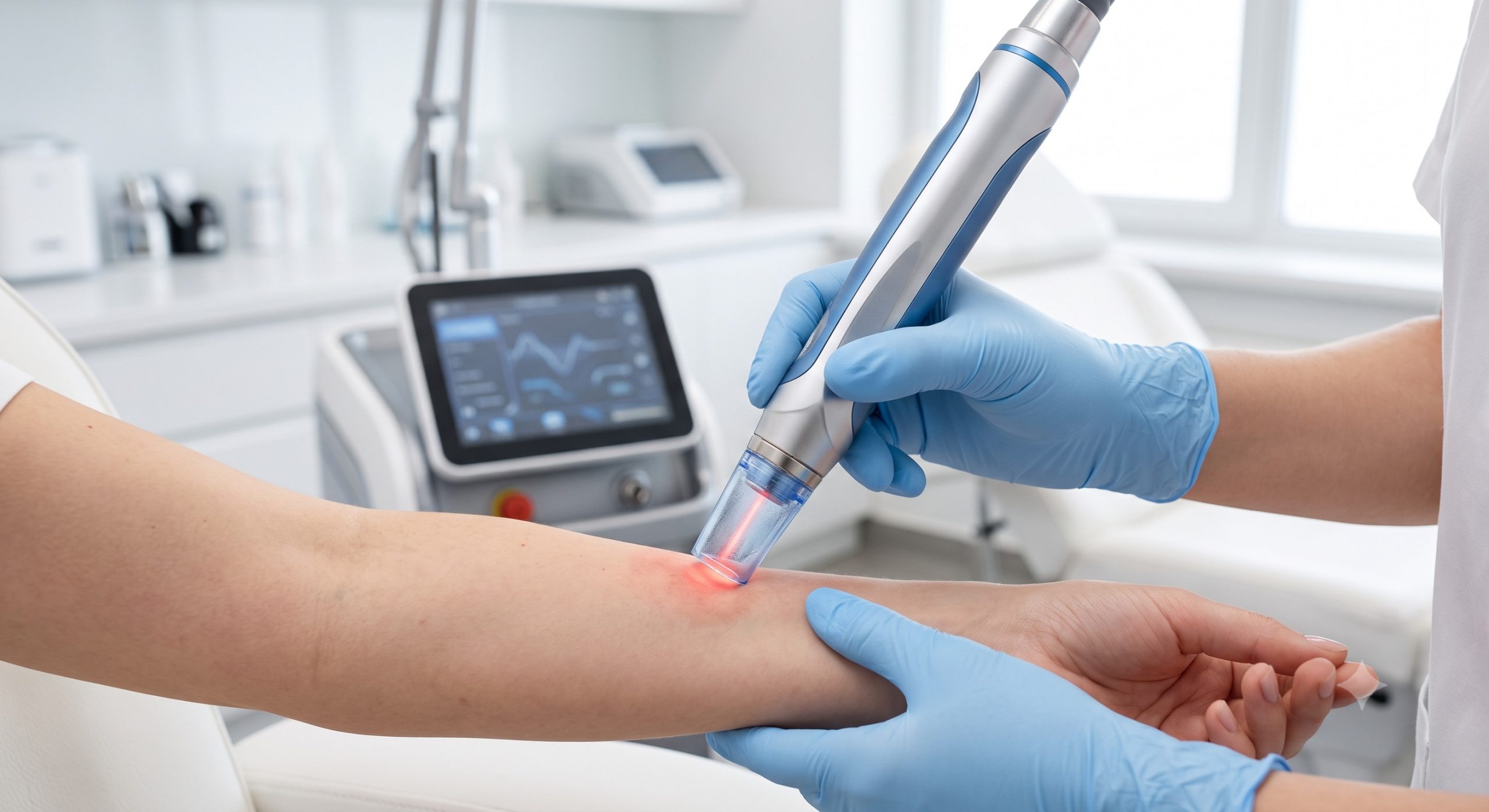
Ensuring Patient Safety and Perfecting Parameters
The risk management data within the TCF is crucial for developing safe protocols for all skin types, from Fitzpatrick I to VI. It provides the boundary conditions for safe operation, specifying the maximum permissible fluence (J/cm²) and pulse duration to avoid adverse effects. For example, the TCF will contain data on the epidermal cooling system—whether it uses sapphire contact cooling or cryogen spray—and will detail its performance in protecting the epidermis while allowing targeted heating of the dermal papilla or hair follicle. This is particularly important when treating darker skin types with longer wavelengths like 1064nm.
Maximizing ROI and Treatment Throughput
Devices with a robust TCF are typically built to higher quality standards, offering greater handpiece durability and consistent long-term output. This translates to lower total cost of ownership (TCO) and less downtime. Furthermore, a TCF that validates high-frequency operation and large spot sizes (e.g., up to 15mm x 20mm) confirms the device’s ability for high-throughput treatments. This allows your clinic to deliver faster, more comfortable treatments, increasing patient throughput and directly boosting your clinic’s profitability.
Conclusion: Due Diligence for the Discerning Clinic
In the competitive landscape of medical aesthetics, clinical excellence and business profitability go hand-in-hand. The Technical Construction File is more than a regulatory hurdle; it is a testament to a device’s engineering integrity and clinical safety. For clinic owners and medical directors, requesting to review a device’s TCF and verifying its certified specifications (such as its CE mark under the MDR and compliance with ISO 13485) is the ultimate mark of due diligence. It ensures that the technology you invest in is capable of delivering superior, safe, and consistent results, while protecting your practice from liability and maximizing your long-term return on investment. Choose devices with a transparent, comprehensive, and clinically robust TCF.