
Blog
The Ultimate Clinic Guide to Risk Management in Precision Component Design: Efficacy, Wavelengths, and ROI
2026年8月19日
Introduction: The High-Stakes Reality of Aesthetic Device Reliability
In the competitive landscape of medical aesthetics, clinics are under constant pressure to deliver superior clinical outcomes while maximizing operational efficiency. However, the cornerstone of any successful aesthetic practice is not just the technology itself, but the risk management in precision component design that ensures every treatment is safe, effective, and reproducible. A single component failure can lead to inconsistent energy delivery, patient burns, or costly downtime, directly impacting your clinic’s reputation and bottom line. This guide provides a clinical roadmap for evaluating precision components, focusing on technical metrics like wavelengths, fluence, and pulse width, and how they intersect with business ROI.
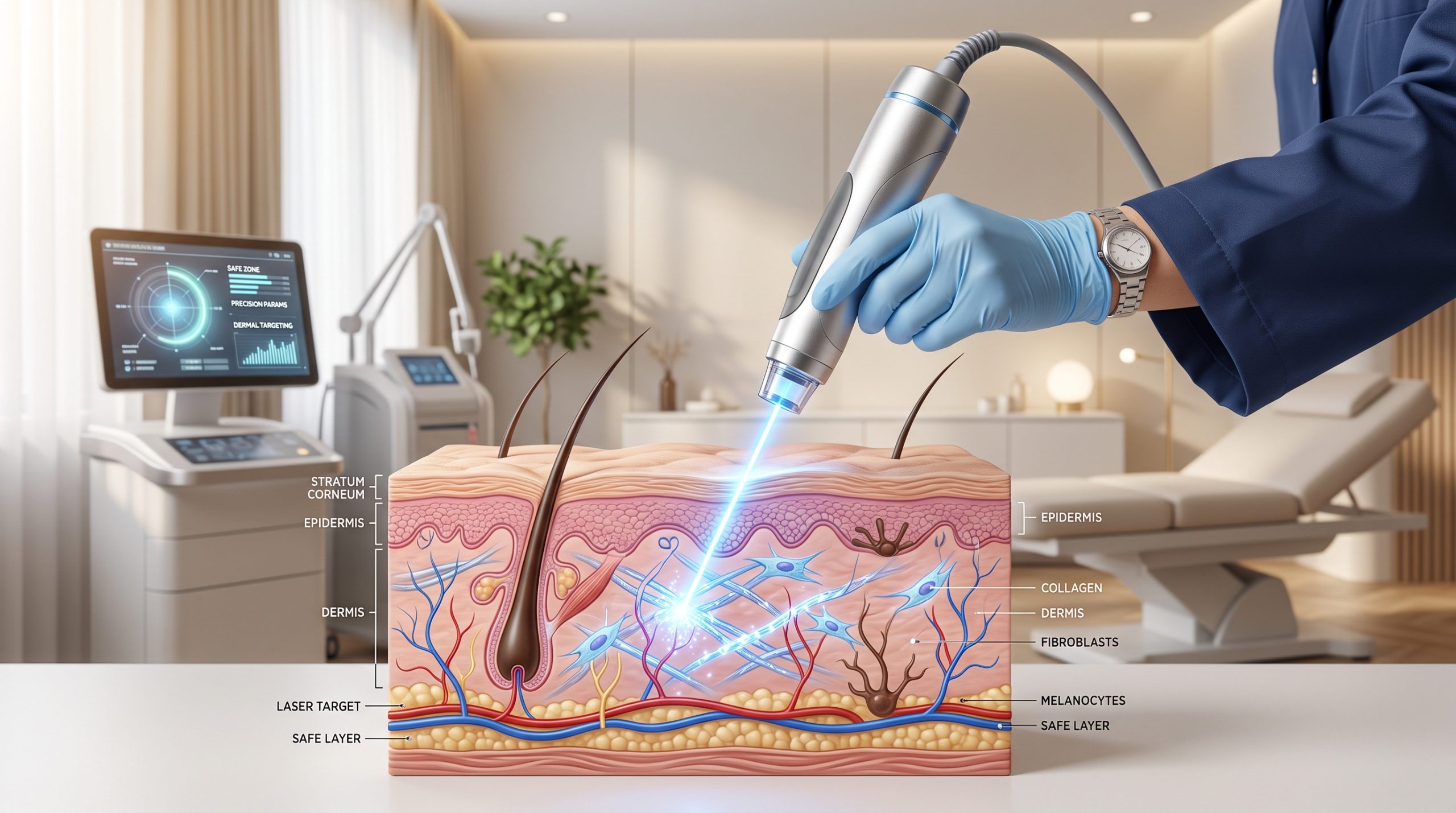
The Core Physics: Risk Mitigation through Selective Photothermolysis
At the heart of every high-quality aesthetic device lies the principle of selective photothermolysis. To achieve optimal results and minimize risk, the device must deliver precise energy parameters. Key metrics that define this precision include:
- Wavelength (e.g., 755nm, 808nm, 1064nm): Accurate wavelength selection is crucial for targeting specific chromophores (melanin or hemoglobin) while minimizing damage to surrounding tissue. A deviation of just a few nanometers can alter penetration depth and absorption efficacy, increasing the risk of scarring or hyperpigmentation. Precision engineering ensures the diode bars maintain exact spectral output.
- Energy Density (Fluence) and Spot Size: Risk management dictates that the device must maintain consistent energy density (J/cm²) across the entire spot size (e.g., up to 18mm). A non-uniform beam profile can lead to hot spots, causing epidermal burns, or cold spots, resulting in treatment failure. Advanced optical systems and high-precision lens assemblies are designed to provide a uniform ‘top-hat’ beam profile.
- Pulse Width: This is the duration of the laser pulse. For hair removal, pulse widths typically range from 5ms to 400ms. The ability to precisely control pulse width in accordance with the target’s thermal relaxation time is a direct function of component quality. A faulty capacitor or power supply can cause pulse width drift, increasing the risk of thermal damage to the dermis.
Adherence to standards like ISO 13485 and Medical CE certifications is non-negotiable. These standards mandate rigorous testing and validation of these parameters, ensuring the device performs within the specified tolerances over its lifetime.
Epidermal Protection: The Precision of Cooling Systems
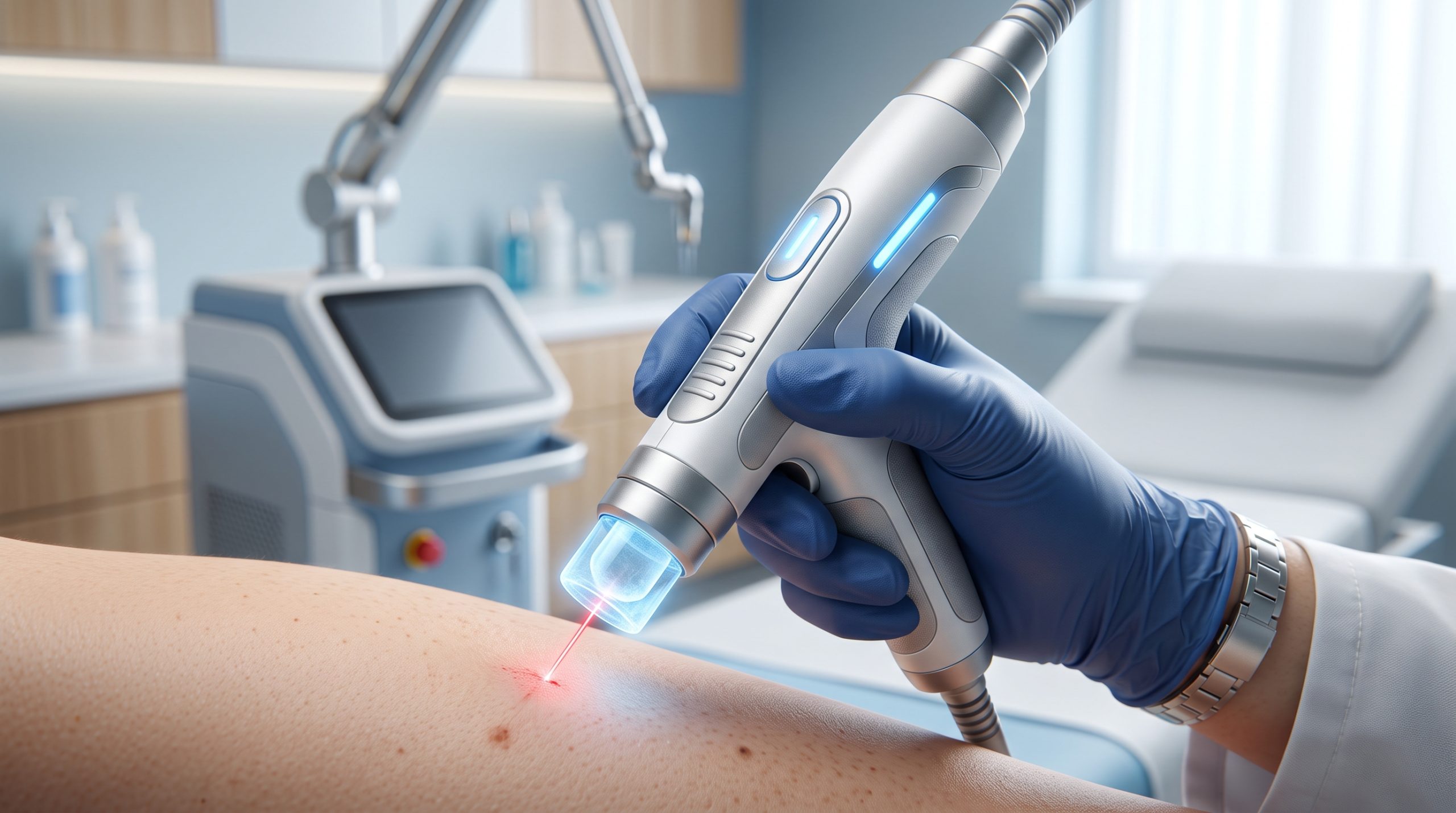
One of the most critical aspects of risk management is epidermal protection. Without effective cooling, even the most accurate laser parameters pose a significant burn risk. Advanced devices utilize Sapphire Contact Cooling or TEC (Thermoelectric Cooling) systems. The precision in component design here is vital; the cooling plate must maintain a stable temperature (e.g., -5°C to 5°C) and engage consistently before, during, and after the laser pulse. A failure in the thermistor or cooling circuit can lead to a dangerous rise in epidermal temperature.
| Key Parameter | Technical Specification & Clinical Impact |
|---|---|
| Wavelength / Laser Type | Multi-Wavelength (755nm, 808nm, 1064nm) Diode Laser Clinical Impact: Enables safe and effective targeting of melanin across Fitzpatrick Skin Types I-VI, minimizing risk of epidermal damage. |
| Cooling System | Advanced Sapphire Contact Cooling (Controlled at 0°C – 5°C) Clinical Impact: Crucial for epidermal protection and pain management, allowing for higher fluence delivery with significantly reduced burn risk. |
| Energy Density (Fluence) | Up to 100 J/cm² (depending on application) Clinical Impact: High, consistent fluence ensures clinical efficacy for permanent hair reduction, while precision control prevents tissue overheating. |
| Spot Size | Up to 18mm Clinical Impact: Larger spot sizes increase treatment speed and penetration depth, optimizing clinic throughput and ROI. |
| Pulse Width | Adjustable (e.g., 5ms – 400ms) Clinical Impact: Allows clinicians to match pulse duration to the thermal relaxation time of the target (hair follicle or vessel), enhancing selectivity and safety. |
Business Risk: Longevity and Total Cost of Ownership (TCO)
From a business consultancy perspective, risk management extends beyond patient safety to operational sustainability. Investing in a device with substandard components often leads to:
- Unplanned Downtime: Handpiece failures or pump issues can sideline your device for weeks, killing your revenue stream. High-quality Imported Laser Bars and durable handpiece assemblies are designed for high shot counts (e.g., >10 million pulses).
- Inconsistent Outcomes: If a device cannot maintain its energy output, you will see variable clearance rates, leading to patient dissatisfaction, refunds, and a damaged reputation.
- Consumable and Maintenance Costs: The Lifetime Cost of Ownership includes not just the initial capital expenditure (CapEx), but also the operational expenditure (OpEx) of replacing handpieces, diodes, and water cooling filters. A robust risk management strategy involves selecting a device with proven durability and a transparent maintenance schedule.
For high-throughput clinics, the ability to deliver consistent treatments with minimal maintenance is the key to maximizing profitability. A device with a large spot size and high frequency capability accelerates treatment speed, allowing you to see more patients per day, directly improving your clinic’s ROI.
Clinical Versatility: Treating Diverse Skin Types (Fitzpatrick I-VI)
Precision component design is the linchpin for safely treating a diverse patient demographic. The interaction of light with skin is heavily dependent on melanin content, as defined by the Fitzpatrick Scale. A device that relies on poorly controlled parameters poses a significant risk for patients with darker skin types (IV-VI), who are more susceptible to burns and hyperpigmentation. Advanced multi-wavelength platforms (combining 755nm, 808nm, and 1064nm) allow clinicians to select a wavelength that provides the optimal balance of melanin absorption and penetration depth for each skin type. The precision engineering ensures that the 1064nm wavelength, which penetrates deeper with less melanin absorption, is delivered with absolute consistency to safely treat darker skin types.
Conclusion: The Clinical and Commercial Verdict
The role of risk management in precision component design cannot be overstated. It is the invisible force that separates a reliable, profitable aesthetic platform from a liability. By scrutinizing the technical specifications, demanding ISO 13485 compliance, and understanding the engineering behind critical parameters like wavelength, fluence, and cooling efficiency, clinic owners and dermatologists can make informed decisions that safeguard their patients and secure their business’s future. In the world of medical aesthetics, precision is not just a feature—it is a fundamental risk management strategy.