
Blog
The Ultimate Clinic Guide to Preparing English-Language Packages for EU/NA Due Diligence : Efficacy, Wavelengths, and roi
2026年8月3日
Introduction: The Strategic Imperative of Due Diligence-Ready Packages
For medical aesthetic clinics and med-spas in the EU and NA, the decision to acquire a new laser platform is a high-stakes, multi-million dollar lifecycle commitment. The difference between a profitable, clinically superior asset and a costly, compliance-heavy liability often lies not in the device itself, but in the English-language technical and regulatory package prepared during the due diligence phase. A poorly documented package can halt insurance reimbursement, delay regulatory approval, and obscure the true cost of ownership. This comprehensive guide provides a clinical and business framework for dissecting device specifications, ensuring your next investment is built on a foundation of ISO 13485 compliance, verifiable clinical data, and robust ROI projections.
Our analysis goes beyond the marketing brochure, focusing on the quantifiable metrics that matter to clinicians, procurement specialists, and compliance officers. We will explore the physics of selective photothermolysis, the critical role of hardware engineering, and the financial modeling required to justify a capital expenditure in today’s competitive landscape. By the end of this guide, you will possess a clinical auditor’s eye for device quality and a strategic consultant’s mindset for business integration.
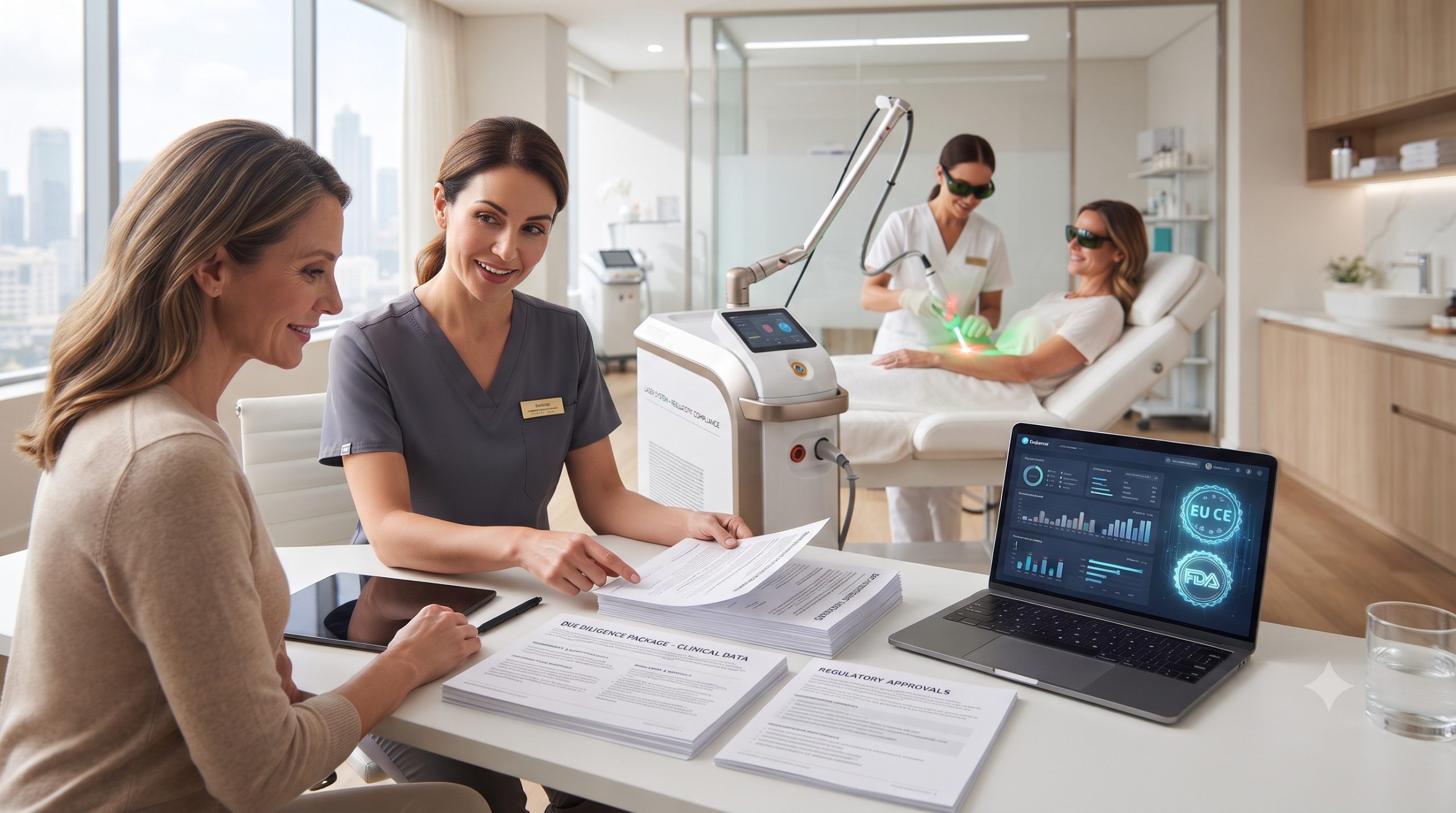
Clinical Physics & Technical Deep Dive: The Core Metrics
At the heart of every effective aesthetic laser is the principle of selective photothermolysis. This fundamental concept dictates that optimal clinical outcomes—whether for hair reduction, pigmentation clearance, or vascular lesions—depend on precisely matching the laser’s wavelength, pulse duration, and fluence to the target chromophore. A due diligence package must transparently communicate these parameters, supported by evidence from peer-reviewed literature or clinical trials.
Parameter Optimization: Wavelengths, Spot Size, and Fluence
Modern laser platforms, particularly diode lasers, often employ a multi-wavelength approach to treat a diverse patient demographic. The synergy of 755nm, 808nm, and 1064nm wavelengths is a hallmark of premium devices, allowing clinicians to adjust penetration depth and melanin absorption based on the Fitzpatrick Skin Type. For instance, the 755nm wavelength is highly absorbed by melanin, making it effective for lighter skin types (I-III), while the 1064nm wavelength penetrates deeper with less epidermal absorption, offering a safer profile for darker skin types (IV-VI). The due diligence package should clearly define the energy density (Fluence), typically measured in J/cm², and the pulse width (in milliseconds), which dictates the thermal relaxation time of the target tissue. A high-quality device will offer a wide range of spot sizes (e.g., from 10x10mm up to 20x20mm), enabling practitioners to balance treatment speed with energy delivery precision.
Hardware Integrity: The Role of Imported Laser Bars and Cooling Systems
The durability and consistency of a laser device are directly correlated with the quality of its core components. In a due diligence audit, specific attention must be paid to the provenance of the laser bars. Premium devices utilize imported laser bars from top-tier manufacturers, ensuring a longer operational lifespan and stable power output over millions of shots. This is complemented by advanced cooling mechanisms, such as Sapphire Contact Cooling or Thermoelectric Cooling (TEC) systems, which are crucial for patient comfort and epidermal protection. The package should specify the cooling temperature range (e.g., -5°C to 5°C) and the integration of real-time skin temperature monitoring to prevent burns. As industry consultants, we advise clinics to request documented evidence of the handpiece’s shot lifespan and the cooling system’s maintenance requirements, as these directly impact the Total Cost of Ownership.
Comprehensive Technical Specifications Matrix
The following table represents a critical audit tool for any due diligence team. It consolidates the essential technical metrics that must be verified against the manufacturer’s claims and clinical expectations.
| Key Parameter | Technical Specification |
|---|---|
| Wavelength / Laser Type | 755nm (Alexandrite) / 808nm (Diode) / 1064nm (Nd:YAG) |
| Cooling System | Advanced Sapphire Contact Cooling (-5°C to 5°C) with TEC Control |
| Spot Size Range | 10x10mm to 22x30mm (Variable, Interchangeable Handpieces) |
| Energy Density / Fluence | Up to 100 J/cm² (Adjustable, Application-Dependent) |
| Pulse Width | 5ms to 400ms (User-Adjustable for Thermal Relaxation Control) |
| Repetition Rate / Frequency | Up to 10Hz (High-Speed Treatment Capability) |
| Regulatory Compliance | Medical CE (MDR), FDA 510(k) Cleared, ISO 13485 Certified |
Regulatory Landscape & Compliance: CE Marking and FDA Clearance
For a device to be legally marketed and operated within the EU or NA, it must possess the requisite regulatory certifications. In the EU, the Medical CE mark (under the MDR) is non-negotiable, signifying that the device meets high safety, health, and environmental protection standards. In the U.S., FDA clearance (either 510(k) or De Novo) is mandatory. However, mere certification is insufficient; the due diligence package must include the actual certification documents, the device’s intended use as cleared by the regulatory body, and a comprehensive risk management file compliant with ISO 14971. Furthermore, the manufacturer’s quality management system should be certified to ISO 13485, which ensures consistency in design, production, and post-market surveillance. A red flag in any package is the absence of clear, verifiable regulatory documentation or an attempt to obfuscate the device’s classification. The language of the package—being English—must be precise and unambiguous to facilitate a smooth review by local health authorities and insurance providers.
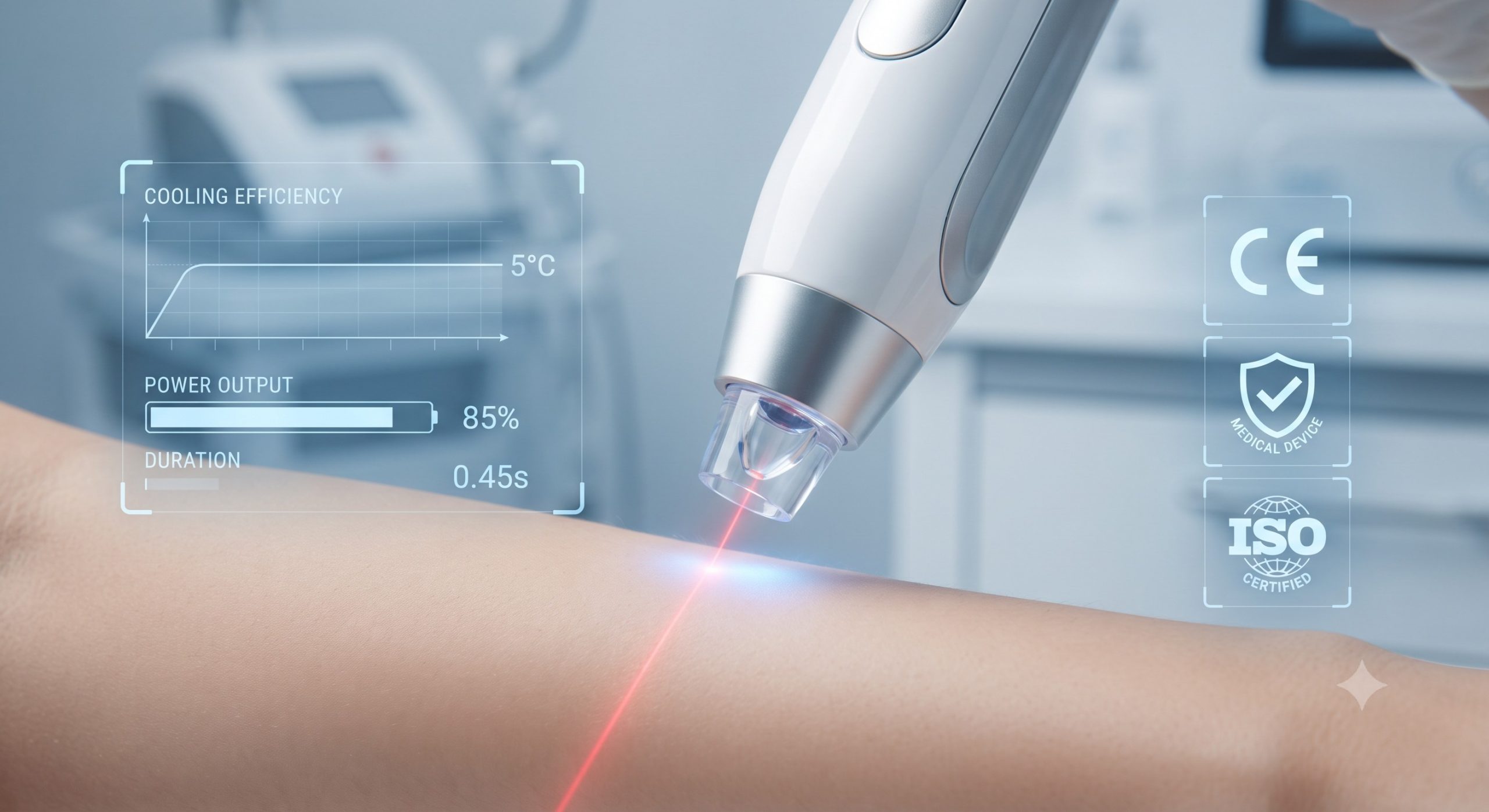
Clinic ROI & Strategic Integration: Beyond the Technology
While clinical efficacy and regulatory compliance are foundational, the ultimate decision to invest hinges on the device’s profitability. A comprehensive due diligence package should enable you to model the device’s return on investment based on specific service pricing and patient throughput. For instance, a high-powered diode laser with a large spot size (e.g., 22x30mm) can reduce a full-leg hair removal session to under 15 minutes, significantly increasing the number of billable appointments per day. The package should provide data on the consumable costs per shot and the predicted service life of the handpiece. We recommend calculating the cost per patient and comparing it against the local market rate to determine the net profit margin per treatment. Additionally, the package should include marketing materials and training resources that can be leveraged to launch the new service effectively. The ability to produce a detailed business plan, supported by the technical and clinical data from the package, is the hallmark of a successful acquisition.
Conclusion: A Blueprint for Confident Decision-Making
Preparing an English-language package for EU/NA due diligence is a process that demands scrutiny, technical knowledge, and a strategic business perspective. It is not merely a checklist but a deep dive into the operational, clinical, and financial future of your practice. By focusing on the core tenets of selective photothermolysis, verifying hardware quality, demanding full regulatory disclosure, and calculating a robust ROI, you transform a potential liability into a powerful asset. As an elite industry consultant, I encourage clinic owners and procurement teams to view the due diligence package as a dialogue with the manufacturer—one where every specification must be justified and every claim substantiated with evidence. This approach ensures that your investment not only meets the highest standards of care but also drives sustainable growth in a dynamic market.