
Blog
Le guide clinique ultime pour la gestion de la propriété intellectuelle lors de l'externalisation en Chine : efficacité, longueurs d'onde et retour sur investissement
2026年8月27日
The Strategic Imperative: Protecting Your Assets in a Global Supply Chain
For the discerning aesthetic clinic owner or medical director, the decision to outsource medical device manufacturing to China is driven by compelling economic logic: access to advanced diode laser technology at a fraction of the cost of Western counterparts. However, this pathway is fraught with risk. The global aesthetic device market is projected to reach $24.7 billion by 2033, yet the proliferation of generic, low-quality imitations has made intellectual property (IP) management the single most critical factor distinguishing a profitable, safe clinic investment from a liability that damages reputation and patient trust. This guide moves beyond simple legal advice, providing a clinically-driven blueprint for safeguarding your brand, ensuring patient safety, and securing a tangible return on investment (ROI) when engaging Chinese Original Equipment Manufacturers (OEMs) and Original Design Manufacturers (ODMs).
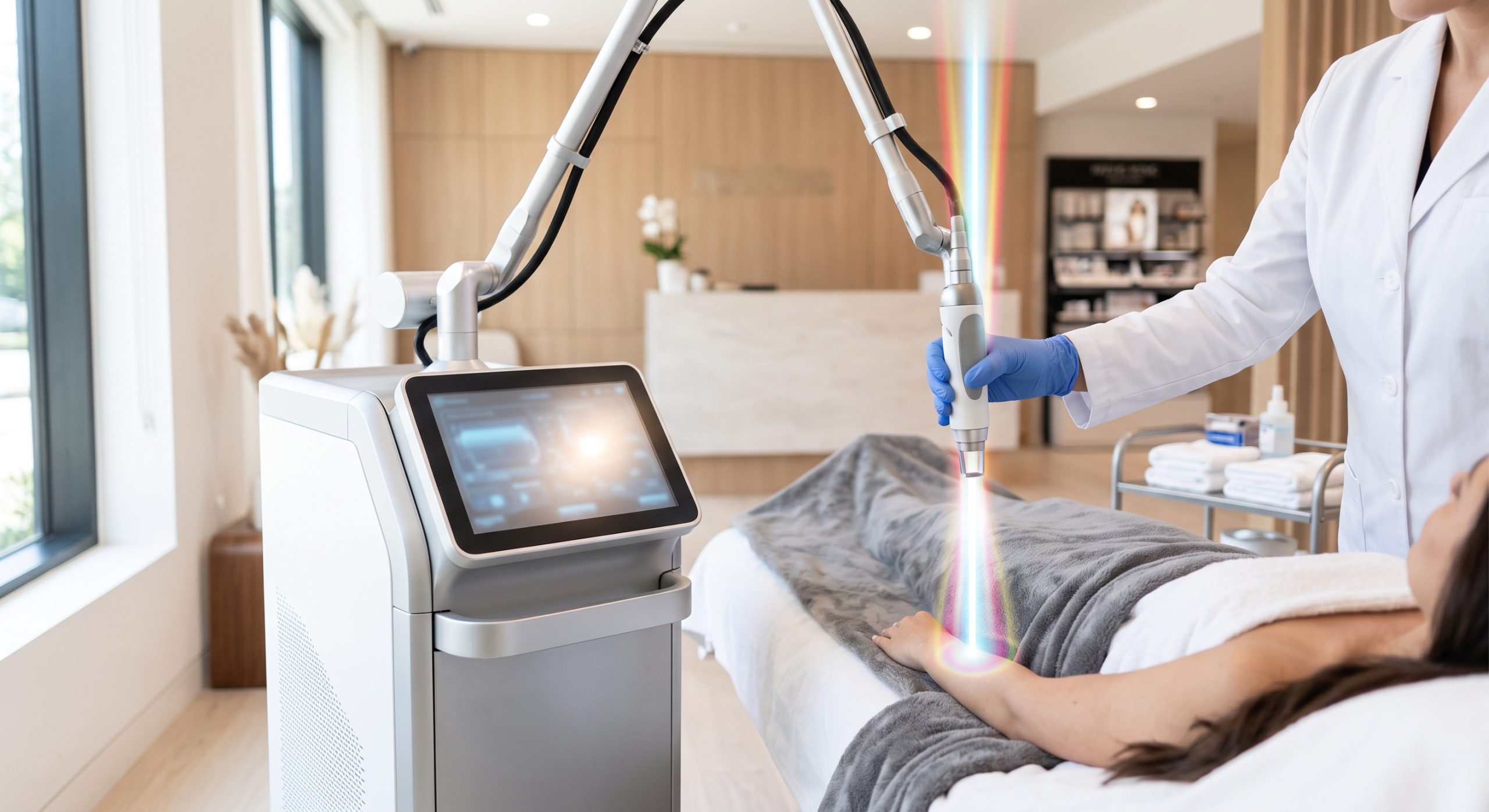
Clinical Physics and Technology Transfer: The Foundation of IP Value
The value of an aesthetic device is intrinsically tied to its clinical performance, which hinges on precise engineering and proprietary algorithms. When outsourcing, your IP isn’t just a logo or a design; it is the exact laser output parameters that achieve selective photothermolysis. This principle dictates that specific wavelengths are absorbed by target chromophores (melanin in hair, hemoglobin in vessels) while sparing surrounding tissue.
Key Performance Metrics to Secure
- Wavelength Accuracy (±2nm): For diode lasers, precise wavelengths like 755nm (for fair skin), 808nm (the “gold standard” for deep penetration), and 1064nm (for darker skin types) must be exact. A variance of just a few nanometers shifts absorption from melanin to water, leading to burns or inefficacy.
- Energy Density (Fluence): Typically ranging from 5 J/cm² to 40 J/cm² for hair reduction. Your IP agreement must guarantee the device can deliver stable fluence at the specified spot size (e.g., 10x10mm, 15x15mm, or 22x22mm for high-throughput clinics).
- Pulse Width (Milliseconds): Thermal relaxation time varies by hair diameter. A device that cannot adjust pulse widths (e.g., 5ms to 400ms) cannot safely treat the Fitzpatrick Scale I-VI demographic that constitutes a modern med spa clientele.
Your contract must stipulate that the OEM’s engineering team validates these metrics using calibrated Ophir power meters and beam profilers for every unit, ensuring that the delivered technology matches the blueprint you purchased.
Regulatory Compliance as an IP Shield: CE, FDA, and ISO 13485
In the B2B medical device sector, regulatory compliance is your strongest legal and commercial defense. Without it, your IP is not only vulnerable to infringement but also clinically useless. Many clinics and distributors focus solely on certifications like FDA 510(k) clearance or Medical CE Mark (Class IIb) for market access. However, for IP management, these certifications serve a dual purpose.
Audit Trails and Design Dossiers
Under ISO 13485 (Quality Management Systems for medical devices), the OEM is legally obligated to maintain a comprehensive Design History File (DHF) and Device Master Record (DMR). Your IP strategy must require that you, as the owner of the design, have full access and ownership rights to these technical files. This documentation is crucial if you need to transfer production to another factory or enforce your patents against copycats. Furthermore, IEC 60601-1 (electrical safety) and IEC 60825-1 (laser safety) compliance ensures your device won’t cause electrical fires or ocular damage—claims that would otherwise be directed at your clinic, not the factory.
| Key Parameter / Component | Technical Specification & Clinical Requirement |
|---|---|
| Wavelength / Laser Type | 755nm (Fair Skin), 808nm (Gold Standard), 1064nm (Deep/ Dark Skin) |
| Energy Density (Fluence) | Adjustable 5 – 40 J/cm² (Stable ±5% variance) |
| Pulse Width | Adjustable 5 – 400 ms (Thermal Relaxation Matching) |
| Cooling System | Active TEC + Sapphire Contact Cooling (-5°C to 5°C) |
| Laser Bar Source | Imported (e.g., Lumentum/Jenoptik) – 40-60 Million Shot Lifespan |
| Regulatory Certifications | Medical CE (Class IIb), FDA 510(k), ISO 13485, IEC 60601-1, IEC 60825-1 |
Critical Hardware Components: Consumables, Cooling, and Laser Bars
The true technological moat in a premium aesthetic laser lies in the consumables and cooling engineering. Low-quality copies often cut corners here, leading to high lifetime costs and patient pain.
Imported Laser Bars vs. Local Alternatives
Insist on imported laser bars from verified sources like Lumentum or Jenoptik. These components have a lifespan of 40-60 million shots, far exceeding the 10-20 million shots of generic Chinese alternatives. Your IP agreement should specify the exact model and supplier. This ensures consistent output, which prevents “hot spots” that can cause epidermal burns and scarring.
Sapphire ICE Contact Cooling
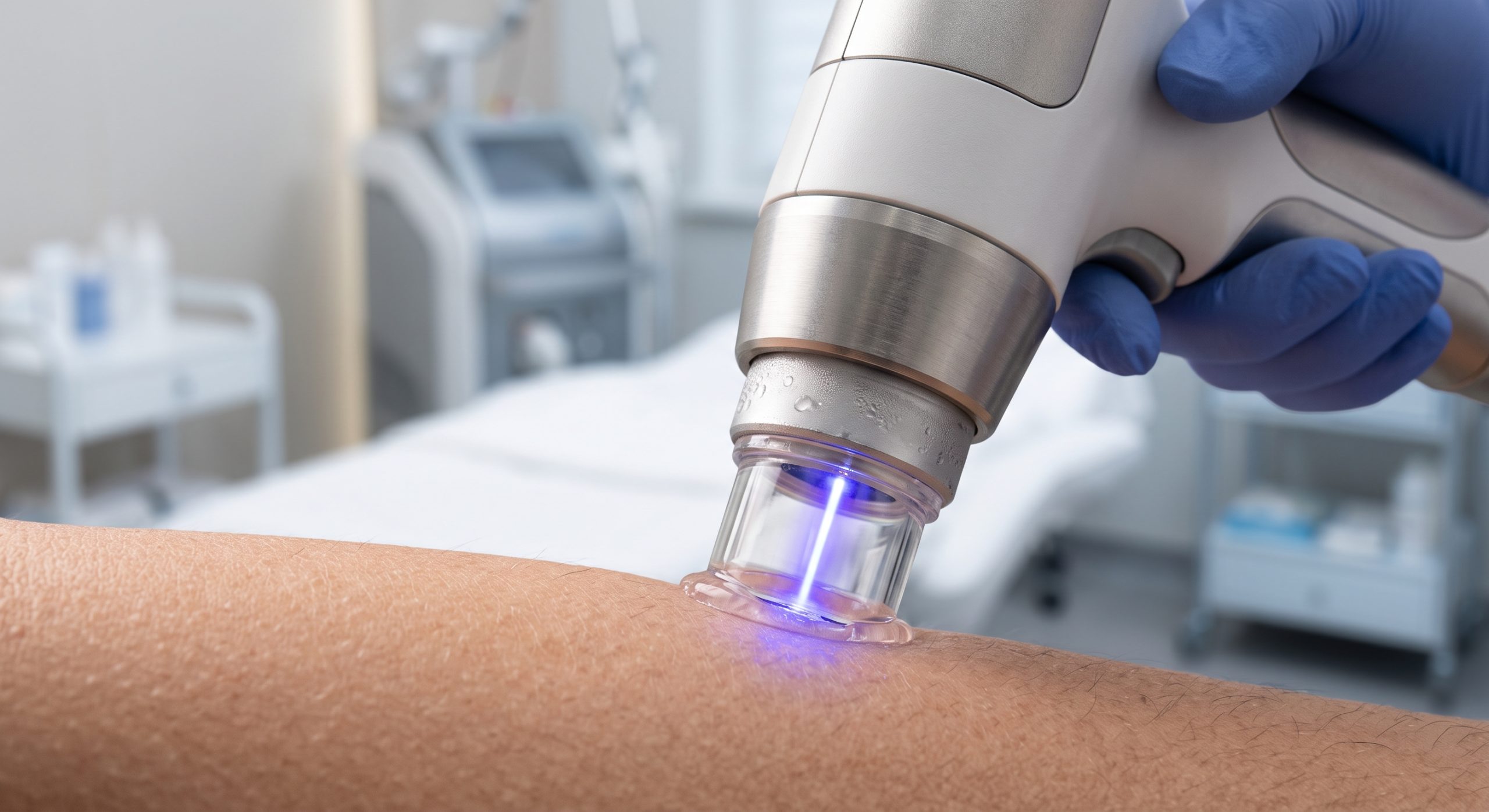
The cooling system is often overlooked but is central to comfort and safety. High-end systems utilize a thermoelectric cooler (TEC) to cool a sapphire window to temperatures between -5°C and 5°C. This cools the epidermis before, during, and after the laser pulse, allowing for higher fluences without pain or thermal damage. The IP you license must include the proprietary closed-loop feedback system that monitors real-time skin temperature and adjusts cooling accordingly. Generic systems use low-grade thermistors that fail, leading to sudden cooling loss and severe burns.
Handpiece Durability and Shot Count
The handpiece is the most replaced component. Your contract must include a warranty for the handpiece (e.g., 2 million shots or 12 months) and specify the maximum energy output allowed before replacement.
Strategic Recommendations for Clinic ROI and IP Risk Mitigation
Protecting your IP is not just about preventing others from copying your design; it’s about ensuring the longevity of your clinic’s investment and the safety of your patients. The economic argument for outsourcing to China remains valid, but it requires a sophisticated approach.
1. The Partnership Audit
Before signing an NDA, audit the factory’s R&D team credentials. Do they have laser physicists and electrical engineers? Are they willing to share test data for their units?
2. Component-Level Ownership
Structure your agreement so that you own the specific configuration files, source code for the UI, and the design of the treatment handpiece. This ensures the OEM cannot resell the exact device to a competitor under a different brand.
3. Dual Sourcing and Due Diligence
For critical components like laser bars and sapphire crystals, maintain a database of approved suppliers. This prevents the OEM from substituting cheaper parts after the first batch to increase margin, which would ruin your device’s performance and your clinic’s reputation.
4. Clinical Performance Guarantees
Include performance-based milestones in your contract. The device must achieve a clinical efficacy rate (e.g., 70-90% hair reduction after 6 sessions) as validated by independent dermatological review. If the unit fails to meet the Fitzpatrick Scale treatment protocols, the OEM is liable for remediation costs.
Conclusion: The Executive Verdict
Managing intellectual property when outsourcing to China is a complex but manageable endeavor. By focusing on clinical performance metrics like wavelength accuracy, energy density, pulse width, and cooling system integrity, and by demanding full transparency in regulatory compliance (CE, FDA, ISO 13485), you can transform a potential legal headache into a lucrative, sustainable B2B partnership. Remember, the cheapest laser is not the one with the lowest price tag, but the one that delivers consistent results, reduces adverse events, and builds a loyal patient base. Your IP is the cornerstone of that value proposition.