
Blog
Inside the Hardware: Epidermal Cooling and Imported Laser Bars of Diode Laser Hair Removal
2026年8月14日
Beyond the Aesthetic: The Critical Role of Hardware Engineering in Diode Laser Systems
For clinic owners and medical directors, the decision to purchase a diode laser hair removal device is often framed around marketing claims of ‘painless’ treatment and high efficacy. However, the true differentiator between a profitable, reliable asset and a costly, high-maintenance liability lies in the hardware that is seldom seen. The engineering choices behind the laser’s epidermal cooling system and the quality of its imported laser bars are the primary determinants of clinical outcomes, patient safety, and long-term return on investment (ROI). This technical blog dissects the internal architecture of a premium medical aesthetic device, providing clinic owners with the objective, data-driven insights needed to evaluate hardware integrity and compliance with ISO 13485 manufacturing standards.
Epidermal Cooling: The Engineering Frontier of Patient Comfort
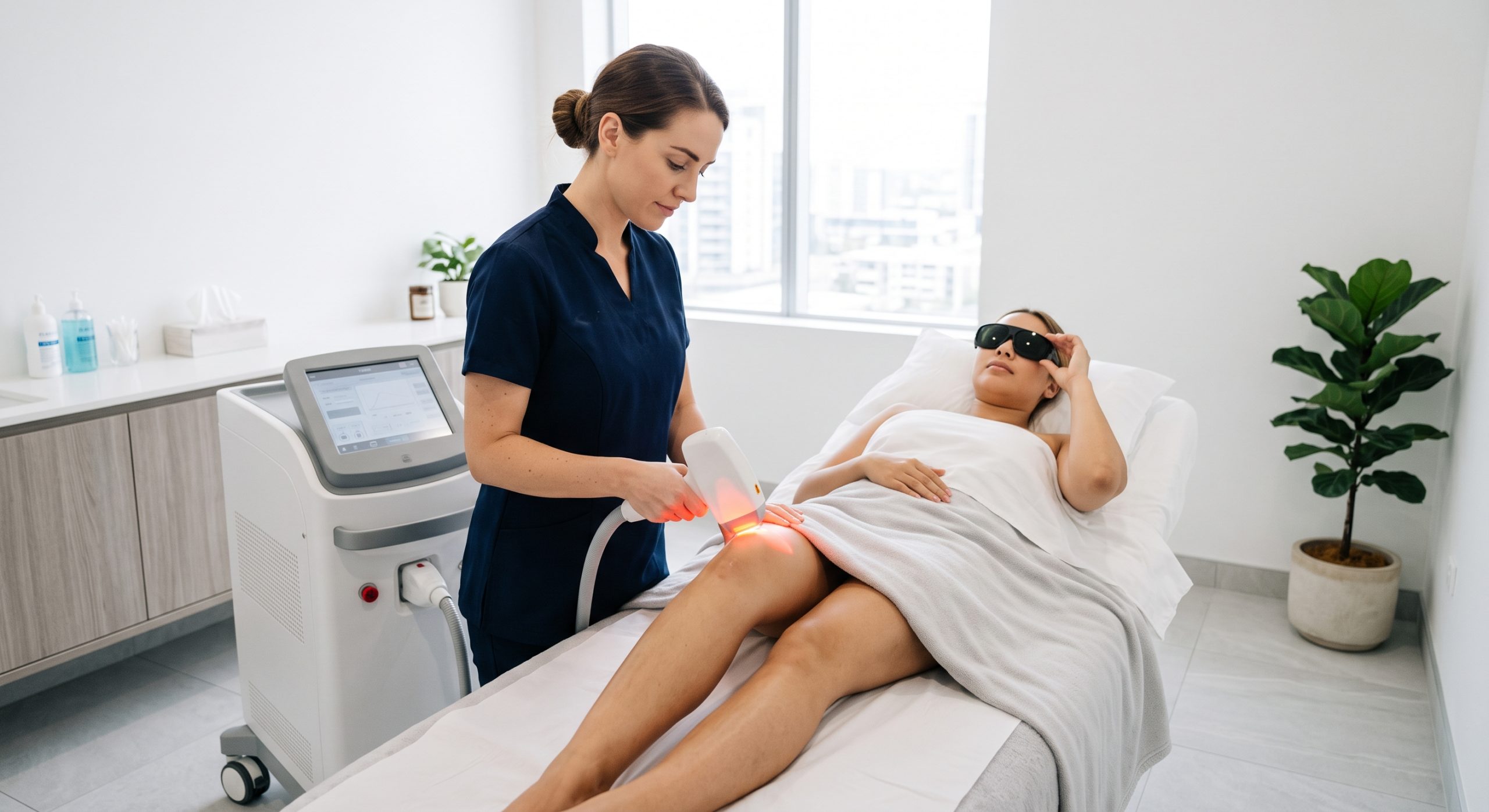
Patient comfort is no longer a luxury; it is a prerequisite for high-volume clinic throughput. The Sapphire contact cooling system represents the pinnacle of this technology, distinguishing professional-grade devices from consumer alternatives. The principle is straightforward yet demanding: to protect the epidermis from thermal injury while delivering therapeutic fluence (typically 10-40 J/cm²) to the dermal hair follicle. The performance of this system is quantified by its ability to rapidly cool the skin’s surface to temperatures between -5°C and 5°C within milliseconds of the laser pulse.
Comparative Cooling Technologies and Clinical Metrics
Understanding the engineering differences between cooling methods is crucial for evaluating a device’s clinical stability and efficacy.
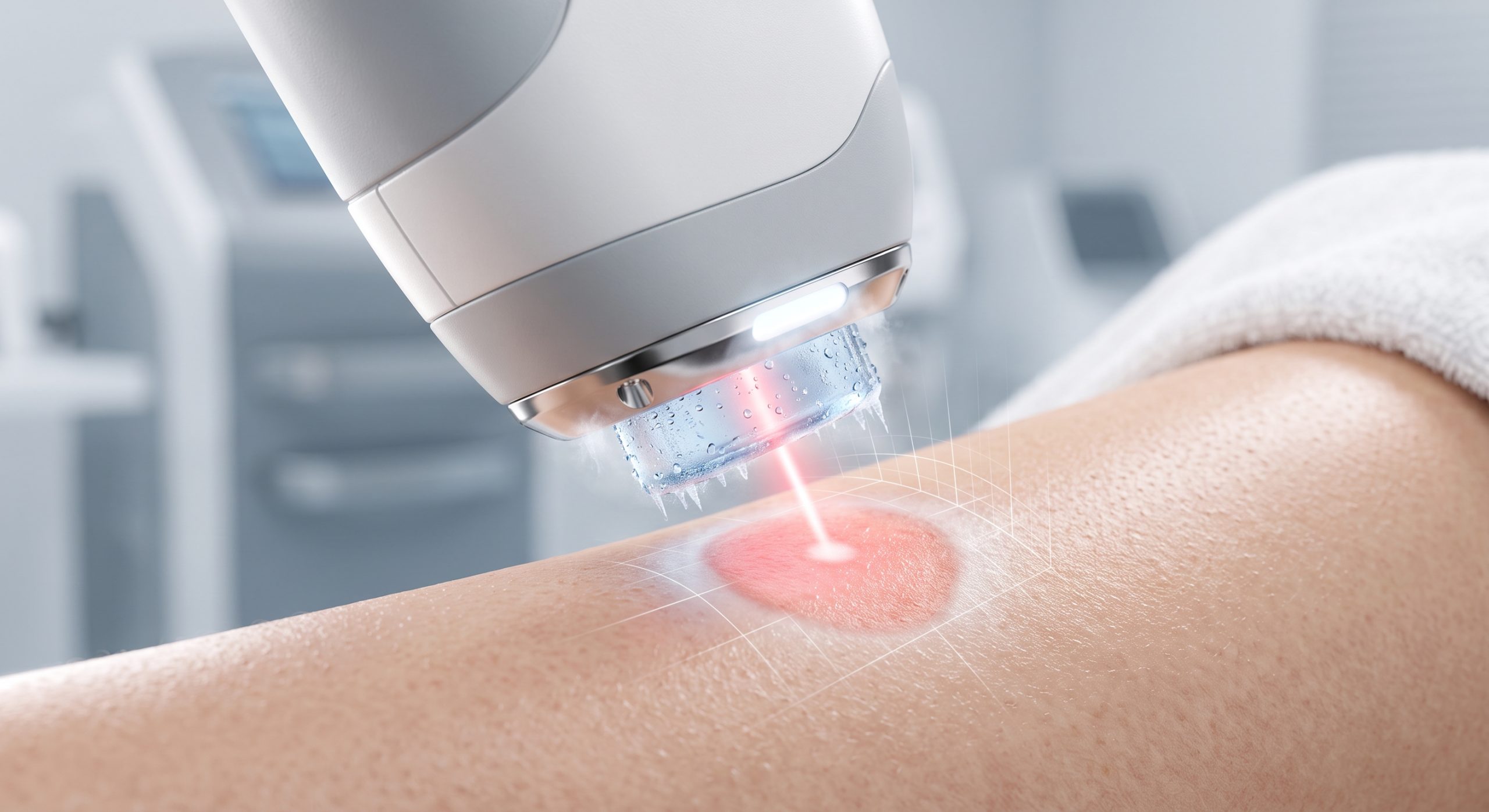
- Sapphire Contact Cooling (Gold Standard): This active cooling method is the most advanced and reliable. The sapphire crystal window, which is in direct contact with the skin, is chilled by a thermoelectric (TEC) cooler. Its high thermal conductivity ensures efficient heat extraction immediately before, during, and after the laser pulse. This allows for higher fluences to be used safely, leading to faster and more permanent hair reduction results.
- Cryogen Spray Cooling (CSC): While effective, CSC involves a burst of refrigerant onto the skin’s surface. This can be less consistent, as it depends on the skin’s reflectivity and the timing of the spray. It also introduces consumable costs and potential for operator error.
- Air Cooling: This is the least effective method for protecting the epidermis during high-fluence laser hair removal. It provides surface-level comfort but does not offer the deep, rapid cooling required to prevent thermal burns at therapeutic energy densities.
ISO 13485: The Benchmark for Cooling System Safety
The engineering of a contact cooling system must be rigorously validated. Under ISO 13485, manufacturers must demonstrate that the cooling system maintains its set point temperature with high precision over thousands of treatment cycles. A poorly engineered cooling circuit or a substandard TEC cooler can lead to temperature drift, which is the primary cause of adverse events like blistering and hyperpigmentation. Clinics should prioritize devices that provide real-time temperature monitoring and automatic shut-off mechanisms to ensure patient safety, which are hallmarks of a CE marked and FDA cleared system.
Imported Laser Bars: The Heart of Consistent Clinical Power
The laser bar is the engine of the device. Its quality dictates the power output, beam profile, and overall lifespan of the system. While many manufacturers claim to use ‘imported’ components, the origin and quality grade are paramount. Premium diode laser hair removal systems utilize high-power, multi-junction laser bars from top-tier global suppliers, typically sourced from the United States or Europe. These components are the only type capable of delivering the stable, high-energy output required for professional, high-throughput clinical environments.
From Beam to Skin: The Science of Energy Delivery
The efficacy of laser hair removal is governed by selective photothermolysis. This principle requires the laser’s wavelength to be preferentially absorbed by melanin in the hair follicle while sparing the surrounding tissue. The architecture of the laser bars directly impacts the device’s ability to execute this principle.
- Wavelength Stability: Premium laser bars produce a highly stable, narrow spectrum of light. For a 808nm diode laser, a deviation of even a few nanometers can reduce efficacy in the dermis. A stable wavelength ensures consistent absorption by the targeted chromophore (melanin), maximizing clinical clearance rates.
- Peak Power & Pulse Width: High-quality laser bars are capable of delivering high peak powers, which allows for shorter pulse widths. A typical pulse width for a diode laser is between 5-400ms. The ability to use shorter pulse widths at high fluence is crucial for effectively treating finer and lighter hair without causing epidermal damage. The consistency of these parameters pulse-to-pulse is a direct function of the laser bar’s quality and its driver electronics.
| Feature | Premium 808nm Diode System | Standard 808nm Diode System |
|---|---|---|
| Laser Bar Origin | Imported (USA/Europe) | Generic/Imported (Asia) |
| Cooling Technology | Advanced Sapphire Contact | Basic Contact or Air |
| Max Fluence | >40 J/cm² | ~30 J/cm² |
| Handpiece Shot Lifespan | >20 Million | <5 Million |
| Pulse Width Range | 5-400ms (Customizable) | 10-300ms (Limited) |
| Cooling Set Point Stability | ± 1°C | ± 5°C |
Evaluating Hardware Quality: A Comparative Analysis
The following table contrasts the performance characteristics of premium vs. standard medical aesthetic laser hardware, highlighting the impact on clinical and business metrics.
The Business Case: Durability, Consumables, and TCO
The upfront cost of a laser device is a fraction of its Total Cost of Ownership (TCO). Hardware quality is the single most significant factor influencing a clinic’s long-term profitability. An investment in a device built with premium, ISO 13485-certified components yields measurable returns.
Handpiece Lifespan and Shot Count
The handpiece, containing the laser bar and cooling system, is the most heavily utilized and critical component of the system. Its durability is directly linked to the quality of its internal engineering.
- Premium Devices: Typically offer a handpiece lifespan of over 20 million shots. This high shot count ensures that the device can perform thousands of treatments (average 1,000-2,000 shots per full-body treatment) over many years without the need for costly replacements.
- Standard Devices: Often have a much lower shot count, sometimes as low as 1-2 million. The replacement cost of a new handpiece can be prohibitively expensive, potentially erasing any initial savings from a lower purchase price.
Consumables and Maintenance: The Hidden Operational Costs
Operational expenses are a direct reflection of hardware sophistication. Premium systems are engineered for efficiency.
- Water & Electrical Efficiency: A robust internal cooling circuit, often using distilled water, prevents the laser bar from overheating. Premium devices have well-sealed, high-quality pumps and radiators that require less frequent maintenance and reduce electricity consumption compared to less efficient systems that may require external chilling units.
- Calibration and Service Intervals: Devices adhering to Medical CE and ISO 13485 standards are designed for long-term output stability, requiring less frequent and less expensive calibration checks. This minimizes clinic downtime and ensures a consistent treatment experience for patients.
Conclusion: Hardware is the Bedrock of Clinical and Business Success
For the discerning clinic owner or medical director, the selection of a diode laser hair removal system must be a technically informed decision. The allure of a lower sticker price is often outweighed by the hidden costs of inferior hardware: inconsistent results, higher complication rates, increased maintenance expenses, and shortened device lifespan. Prioritizing systems that feature proven Sapphire cooling technology, high-quality imported laser bars, and full compliance with ISO 13485 is not merely a technical preference; it is a strategic business imperative.
Investing in superior hardware ensures a safer, more effective treatment that fosters patient loyalty and generates a consistent, high-margin revenue stream. It is the foundation upon which a thriving, reputable medical aesthetics practice is built.
Key Takeaways for Your Investment Decision
- Prioritize systems with active Sapphire contact cooling to ensure patient safety and enable high-fluence treatments.
- Scrutinize the origin and quality of the laser bar; it is the heart of the device and dictates its clinical power and longevity.
- Evaluate the TCO by comparing the handpiece shot count and the cost of consumables, not just the purchase price.
- Always demand ISO 13485 compliance as a non-negotiable benchmark for manufacturing quality and patient safety.
- A robust cooling system and high-quality laser bar are essential for achieving high clinical clearance rates on a variety of Fitzpatrick skin types.