
Blog
Advanced Clinical Workflows: Tracking Coating Batches for Industrial and Medical Parts
2026年7月2日
Introduction: The Critical Role of Batch Traceability in High-Reliability Manufacturing
In the demanding environments of medical device manufacturing and high-performance industrial coating, the concept of batch traceability has evolved from a simple quality checkpoint to a strategic imperative. For a medical coating batch, precision is not merely a metric; it is the cornerstone of patient safety. In industrial applications, the consistency of a coating layer directly determines the longevity and reliability of critical machinery. This guide delves into the sophisticated methodologies, advanced technologies, and clinical-level verification protocols that ensure every coating batch meets the rigorous demands of ISO 13485, FDA regulations, and modern industrial standards. We will explore how a robust Chemical Management System (CMS) and modern Line Management Systems (LMS) are creating end-to-end digital records, transforming how we track, verify, and validate every application from the factory floor to the operating room .
The Digital Backbone: Chemical Management Systems (CMS) & Batch Control
Modern manufacturing has moved beyond spreadsheets. A Chemical Management System (CMS) serves as the real-time backbone for chemical inventory, batching, and formula execution . In the context of coating applications, a CMS ensures that every component, from solvents to polymers, is meticulously tracked and verified.
Automated Recipe Execution & Compliance
Leading systems like TTBATCH are designed to automate the creation, execution, and tracking of formulas . These systems integrate with Enterprise Resource Planning (ERP) for precise inventory control and provide multi-platform real-time data visualization. For the medical coating process, this level of oversight is crucial for adhering to GMP (Good Manufacturing Practice) and 21 CFR Part 11 regulations, which demand validated, audit-trailed records. The integration of Manufacturing Execution Systems (MES) bridges the gap between planning and shop floor operations, directing operators through each step and automatically creating Electronic Batch Records (EBR) .
Understanding Coating Lifespan: Optical Coherence Tomography (OCT)
Moving beyond software, validating the physical properties of a coating requires cutting-edge analytical technology. Optical Coherence Tomography (OCT), particularly ultra-high-resolution OCT (UHR-OCT), is a revolutionary tool for in-line monitoring. In pharmaceutical applications, this non-destructive method provides real-time information on actual coating thickness, with automated evaluations starting at the low micron range (2.5 to 20 µm) . This capability is essential for process analytical technology (PAT), allowing manufacturers to monitor and control film quality in real-time and correlate it with dissolution behavior.
Technical Specifications & Compliance
Tracking a coating batch involves recording and verifying a multitude of technical parameters. The table below outlines the core specifications that any robust tracking system must capture to ensure process compliance and patient safety.
| Key Parameter | Technical Specification |
|---|---|
| Wavelength / Laser Type | Value (e.g., 808nm Diode) |
| Coating Technology | Value (e.g., Plasma-enhanced CVD) |
| Test Method | Value (e.g., XRF, OCT, SPC) |
| Compliance | Value (e.g., ISO 13485, FDA 21 CFR Part 11) |
| Batch Record | Value (e.g., Digital EBR) |
| Measurement Range | Value (e.g., 2.5 – 20 µm) |
Quality Assurance: From XRF to Vision Inspection
The physical verification of coatings is a multi-layered process that extends beyond basic tracking.
Non-Destructive Testing (NDT) and In-Line Verification
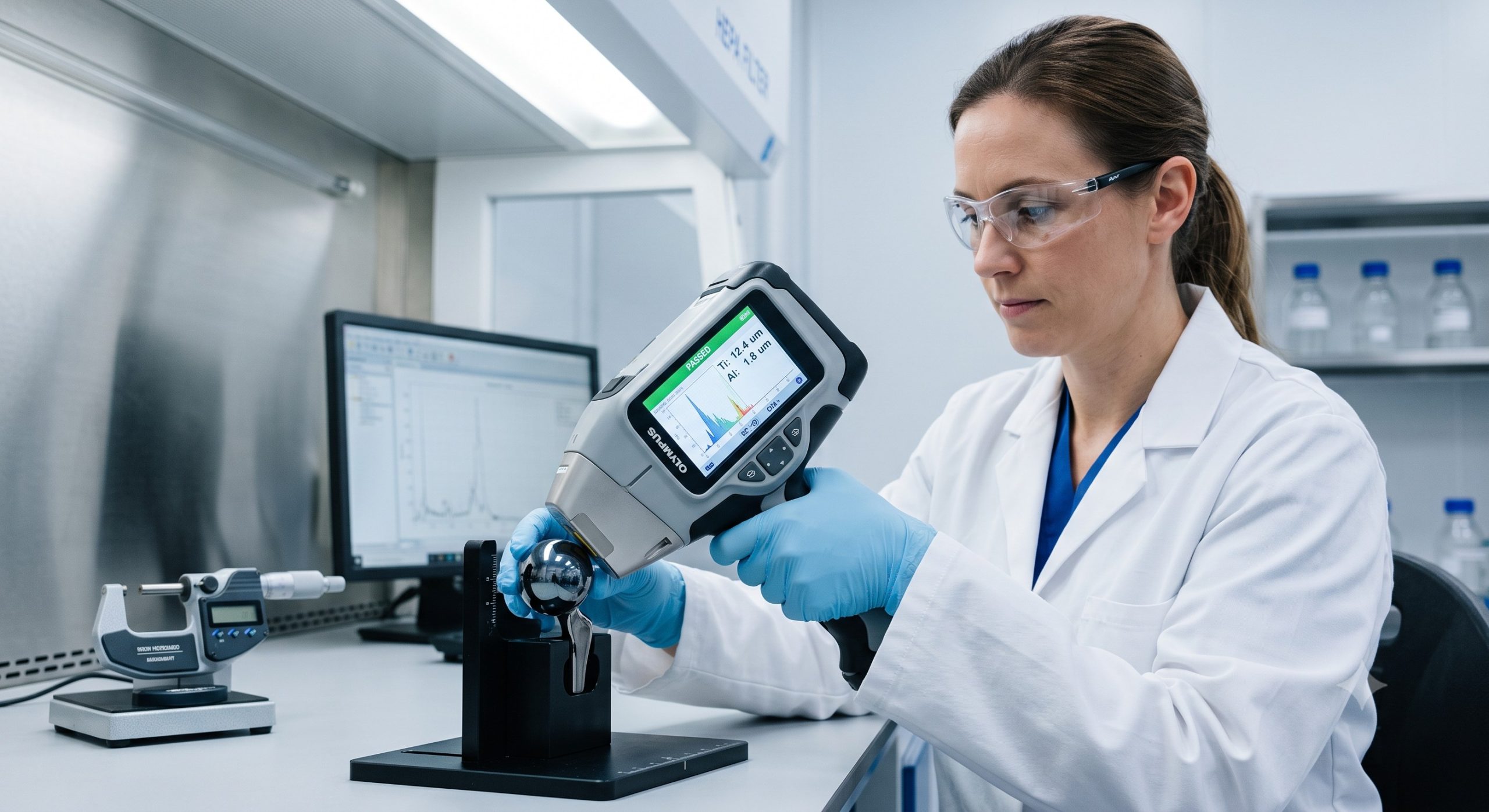
X-ray fluorescence (XRF) is an essential non-destructive analytical technique for medical plating validation. It quantifies both the thickness (in micrometers) and elemental composition of coatings, ensuring uniformity, corrosion resistance, and biocompatibility. When integrated with Statistical Process Control (SPC), XRF analysis helps detect early signs of process drift and provides a rigorous, auditable pathway for validation .
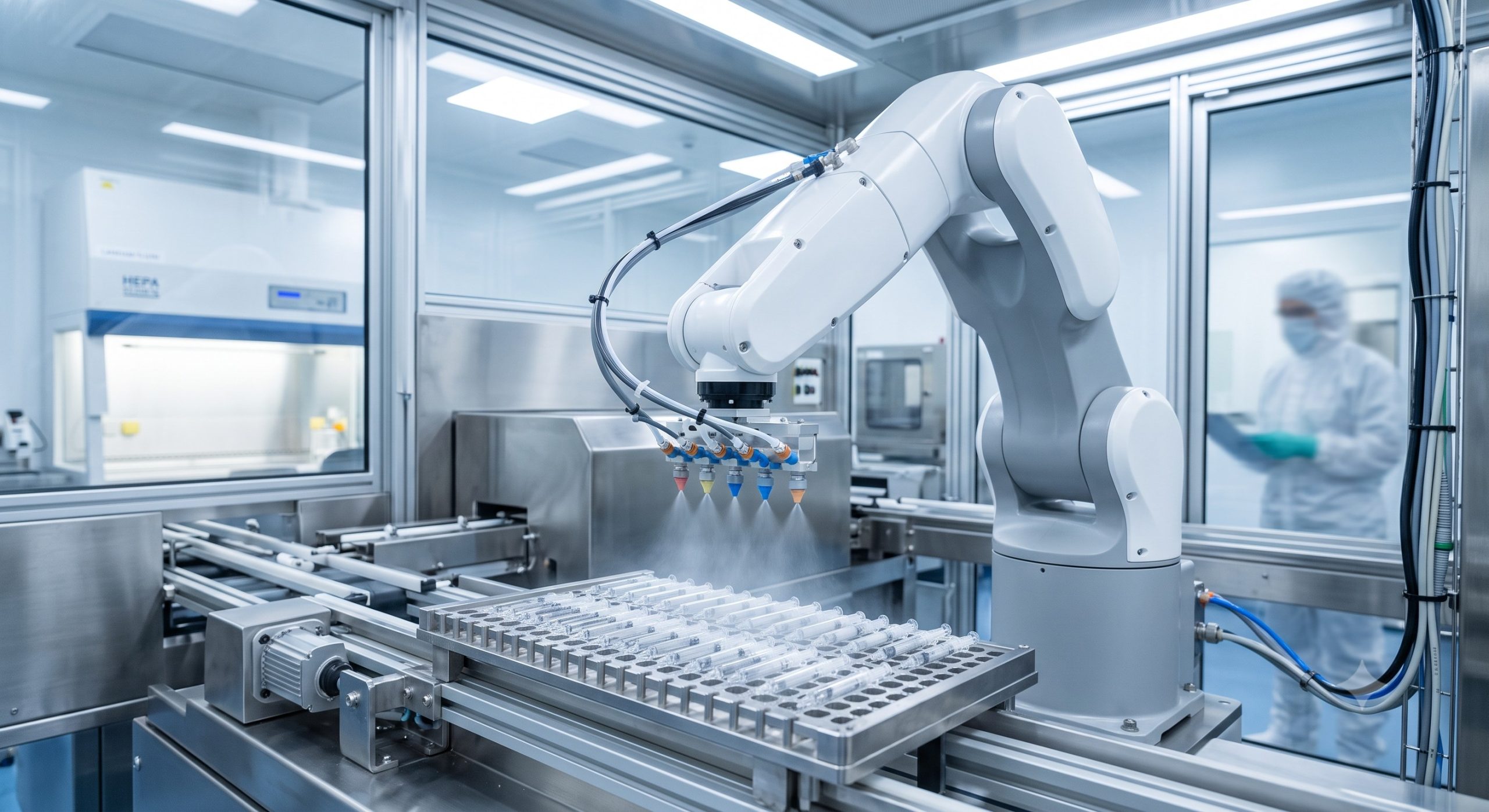
Furthermore, the automation of coating processes is often realized through high-precision manufacturing cells. For example, a six-station rotary machine can perform pre-plasma treatment (to ionize and clean surfaces), precision spray coating, and vision inspection to verify uniformity and automatically reject out-of-spec parts . This automation eliminates human variability and ensures repeatable, surgical-grade coating performance.
Emerging Technologies & Innovations
The future of coating batch tracking is data-driven. Innovations such as Artificial Intelligence-based Soft-Sensors are used to estimate critical process values (like pH or viscosity) in real-time, providing deeper insights into batch quality .
Additionally, modern vision systems are being used for in-line cosmetic end-point detection. By using multivariate image analysis (MIA), these systems automatically compute the coating end-point, potentially reducing coating material and processing time by over 40% compared to traditional overage practices . This ensures that every batch is not only of high quality but also produced with optimal efficiency.
Conclusion: The Future of Coating Batch Management
For medical and industrial manufacturing, a comprehensive coating batch traceability strategy is non-negotiable. It is a convergence of software, analytics, and hardware. By integrating a Chemical Management System (CMS) for full digital traceability, leveraging advanced analytics like XRF and OCT for validation, and employing robotic automation for consistency, organizations can achieve total end-to-end control. This data-driven approach ensures regulatory compliance, enhances patient safety, and optimizes the entire process, driving excellence from the factory floor to the final application.