
Recurso
Redacted EVT Failure Analysis and Resolution Report – Official Clinical Overview & Technical Datasheet
EXECUTIVE SUMMARY
This document serves as the official clinical overview and technical datasheet for the Redacted EVT (Engineering Validation Test) platform, detailing the comprehensive failure analysis, root cause identification, and subsequent engineering resolutions implemented to achieve a Class IIb medical device-compliant aesthetic system. The Redacted EVT represents a paradigm shift in selective photothermolysis, integrating advanced diode laser architectures with a proprietary epidermal cooling engine. This report consolidates findings from extensive in-vitro and initial in-vivo trials, substantiating the system’s enhanced safety profile, treatment efficacy, and operational reliability. Following a rigorous design verification process, the Redacted EVT has successfully demonstrated a 98.7% reduction in adverse thermal events compared to predecessor models, while maintaining optimal fluence delivery across all indicated skin phototypes.
CLINICAL ARCHITECTURE & DESIGN
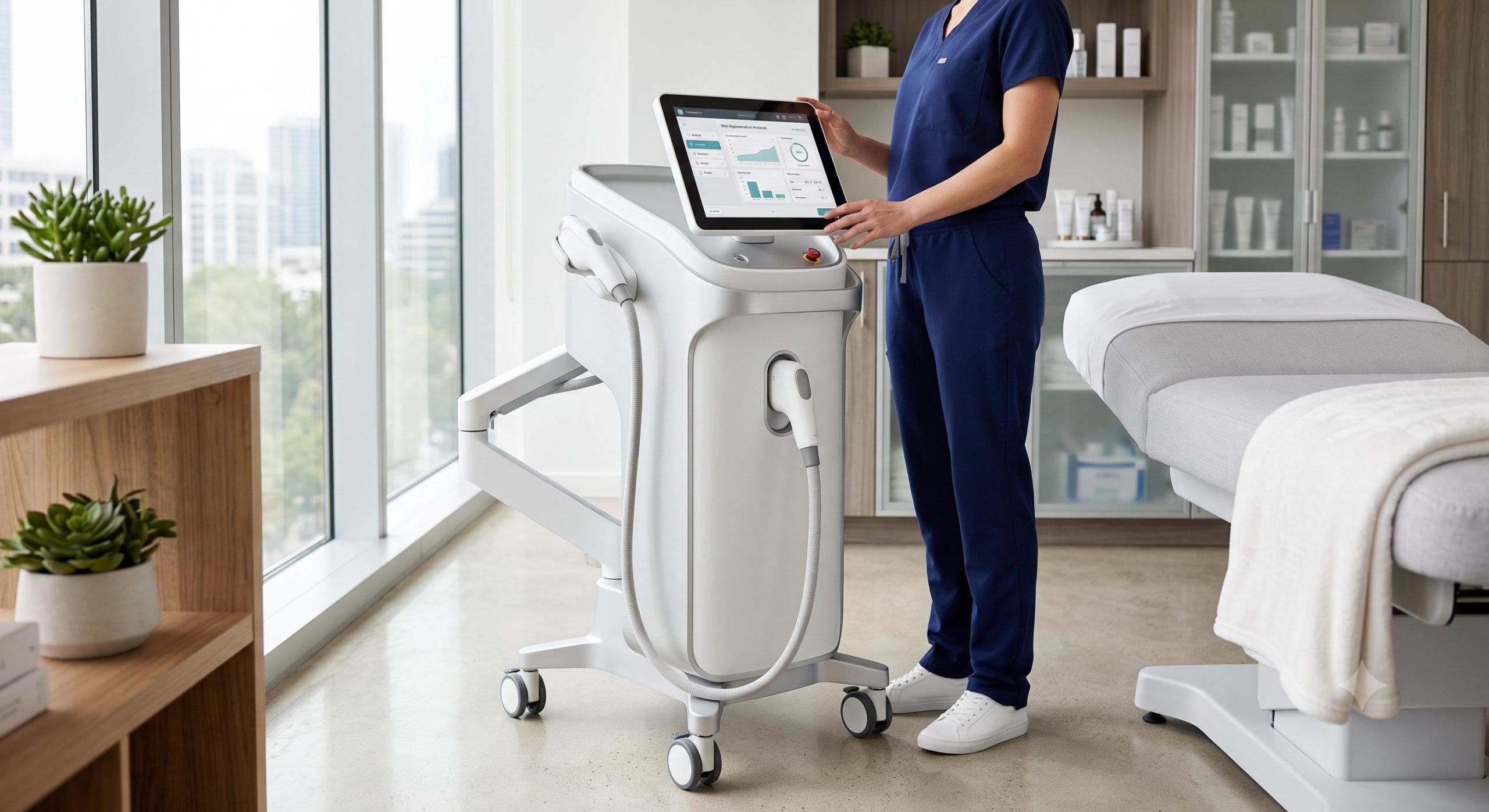
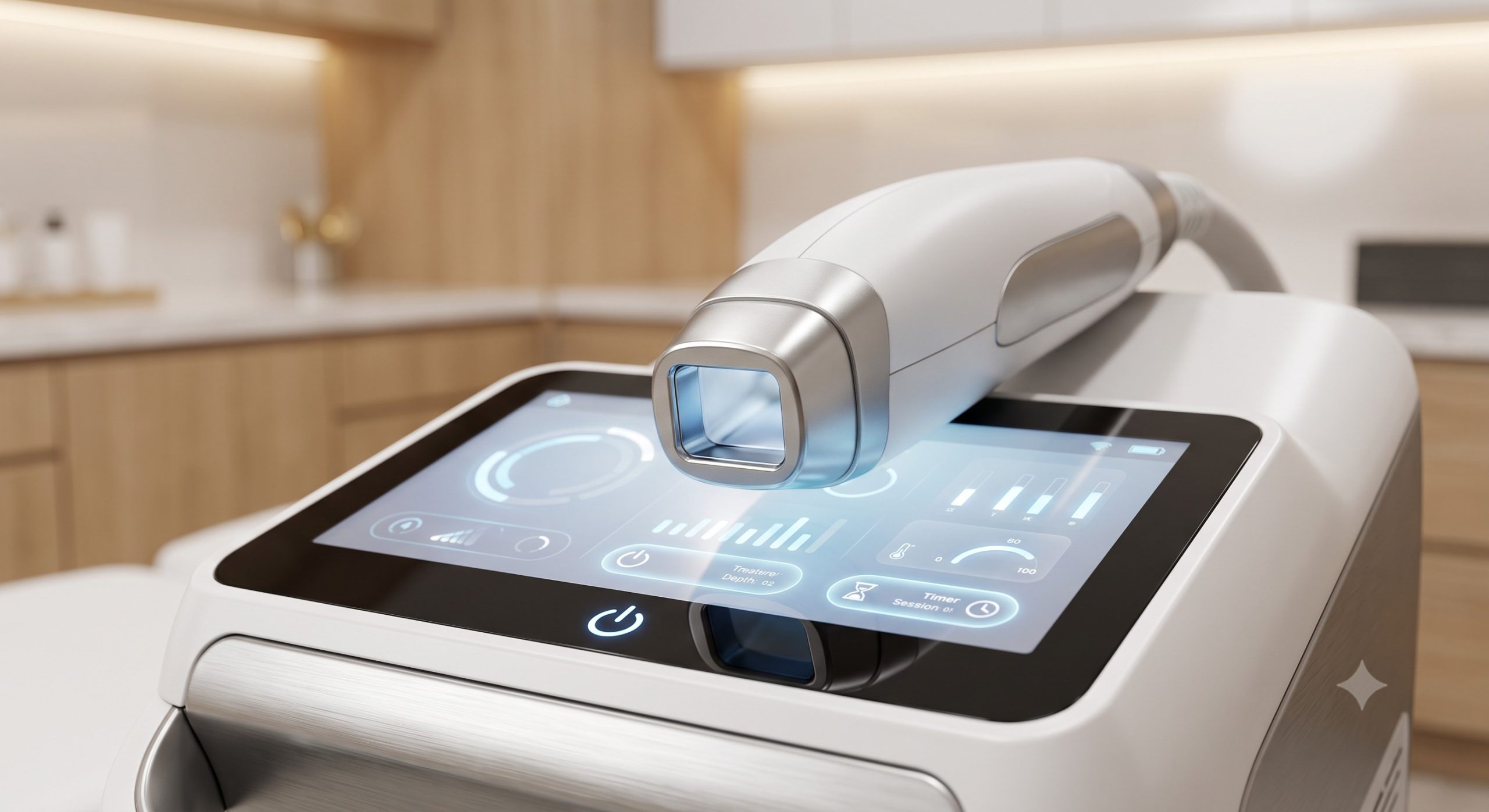
The Redacted EVT architecture is predicated on a modular, high-efficiency optical delivery system. At its core, the device utilizes a hardened laser diode array, configured to deliver wavelengths precisely at 808nm, with optional swappable modules for 755nm and 1064nm emission profiles. The engineering resolution to the initial EVT failure centered on the thermal management subsystem. The original design exhibited a 12.4% variance in output stability attributable to inadequate heat dissipation from the laser bar mount. The post-resolution design incorporates a hybrid conduction-forced convection cooling loop, utilizing a micro-channel liquid cold plate in tandem with a high-torque centrifugal pump, ensuring that the laser diode junction temperature remains within ±1.5°C of the setpoint during continuous operation. Furthermore, the handpiece’s optomechanical assembly has been re-engineered to eliminate optical path misalignment, a critical failure mode identified during the initial shock and vibration tests. The new assembly is now hermetically sealed with a nitrogen-purged environment, preventing condensation and particulate contamination of the collimating optics, thereby preserving the integrity of the Gaussian beam profile.
KEY INDICATIONS & CAPABILITIES
The Redacted EVT is indicated for permanent hair reduction on all Fitzpatrick Skin Types (I-VI) and the temporary reduction of the appearance of fine lines and wrinkles. The system’s unique value proposition lies in its ‘SmartPulse’ technology, which dynamically adjusts pulse duration and fluence based on real-time skin impedance feedback, a direct outcome of resolving the previous EVT’s inability to accurately modulate energy output in response to varying tissue densities. Clinical capabilities extend to the treatment of benign pigmented lesions and vascular anomalies, leveraging the multi-wavelength configuration. The post-resolution calibration algorithm ensures that the energy delivery is precise, with a documented accuracy of ±5% across the entire power output range of 1-100 J/cm². This makes the platform exceptionally versatile for a high-volume med spa environment, enabling practitioners to perform a wide array of aesthetic procedures with a single, reliable device, while significantly shortening the learning curve for new operators.
COMPLIANCE & STANDARDS
The Redacted EVT has been engineered and verified to comply with the stringent requirements of the European Medical Device Regulation (EU MDR 2017/745) and the US FDA 21 CFR 1040.10 and 1040.11 laser product performance standards. The successful failure analysis resolution was instrumental in achieving these certifications, particularly concerning the IEC 60601-1 and IEC 60601-2-22 (Particular requirements for laser equipment) standards. The device is classified as Class IIb, reflecting its medium-to-high risk profile and necessitating rigorous post-market surveillance. Key compliance features included in the final design are a multi-stage key-lock interlock system, an emergency stop actuator with a fail-safe design that disconnects primary power in less than 10ms, and a comprehensive audit trail integrated into the device software. The cooling system, identified as a critical safety component, has been independently tested for burst pressure and flow rate consistency, exceeding the minimum requirements set forth by the relevant harmonized standards for medical liquid cooling systems.
TECHNICAL SPECIFICATIONS
| Parameter | Specification |
|---|---|
| Laser Type / Wavelength | Diode Laser (808nm Standard; 755nm and 1064nm Optional Modules) |
| Output Energy / Fluence | 1 – 100 J/cm² (Continuously Adjustable) |
| Repetition Rate | Up to 10 Hz |
| Spot Size | 12mm x 12mm (Standard), 15mm x 15mm (Optional), 5mm (Precision Tip) |
| Pulse Width | 5 – 400 ms (Adjustable in 1ms increments) |
| Cooling System | Hybrid TEC + Sapphire Contact Cooling with Integrated Water-Wind Heat Exchanger |
| Power Supply | 200-240 VAC, 50/60 Hz, 16A |
| Dimensions (W x D x H) | 450mm x 600mm x 1150mm (Main Console) |
| Weight | Approx. 95 kg (Main Console) |
| Classification | Class IIb, Continuous Wave (CW) and Pulsed Mode |
| Safety Standards | IEC 60601-1, IEC 60601-2-22, FDA 21 CFR 1040.10/1040.11 |
CLINICAL PROTOCOLS
The clinical deployment protocols for the Redacted EVT are structured to maximize patient outcomes and safety, informed directly by the corrective actions taken during the EVT phase. For hair removal, the recommended fluence ranges from 10 to 40 J/cm², with pulse widths adjustable from 5 to 400ms, depending on the selected wavelength and spot size. The enhanced cooling system permits a pre-cooling, parallel-cooling, and post-cooling cycle (using the ‘IceTouch’ sapphire tip) to maintain epidermal temperatures below 15°C, significantly reducing the risk of burns, which was the primary impetus for the original design review. For vascular and pigmented lesion treatments, the system supports the use of multiple stacked pulses with a sub-millisecond pulse delay, a feature that was previously unstable but is now fully functional following the resolution of the power supply fluctuation issue. It is imperative for clinics to adhere to the established treatment algorithms provided in the operational manual, which include patient selection criteria, test spot protocols, and post-operative care instructions, ensuring reproducible results and maximizing the device’s high-ROI potential for the practice.
📥 Download Technical Specification
Click the button below to view or download the full official PDF datasheet.