
FAQ
Preguntas frecuentes sobre cavitación ultrasónica: respuestas de expertos para clínicas estéticas
Overview
Ultrasonic cavitation is a non-invasive aesthetic treatment that utilizes low-frequency ultrasound waves to disrupt adipose tissue, making it a staple in modern clinics for body contouring. For B2B buyers, from procurement specialists to lead dermatologists, understanding the technical, operational, and financial facets of this technology is crucial for a sound investment. This FAQ article consolidates expert technical support and clinical insights to address the most critical pre-sales and post-sales questions, designed to help you optimize your clinic’s workflow, ensure patient safety, and maximize return on investment.
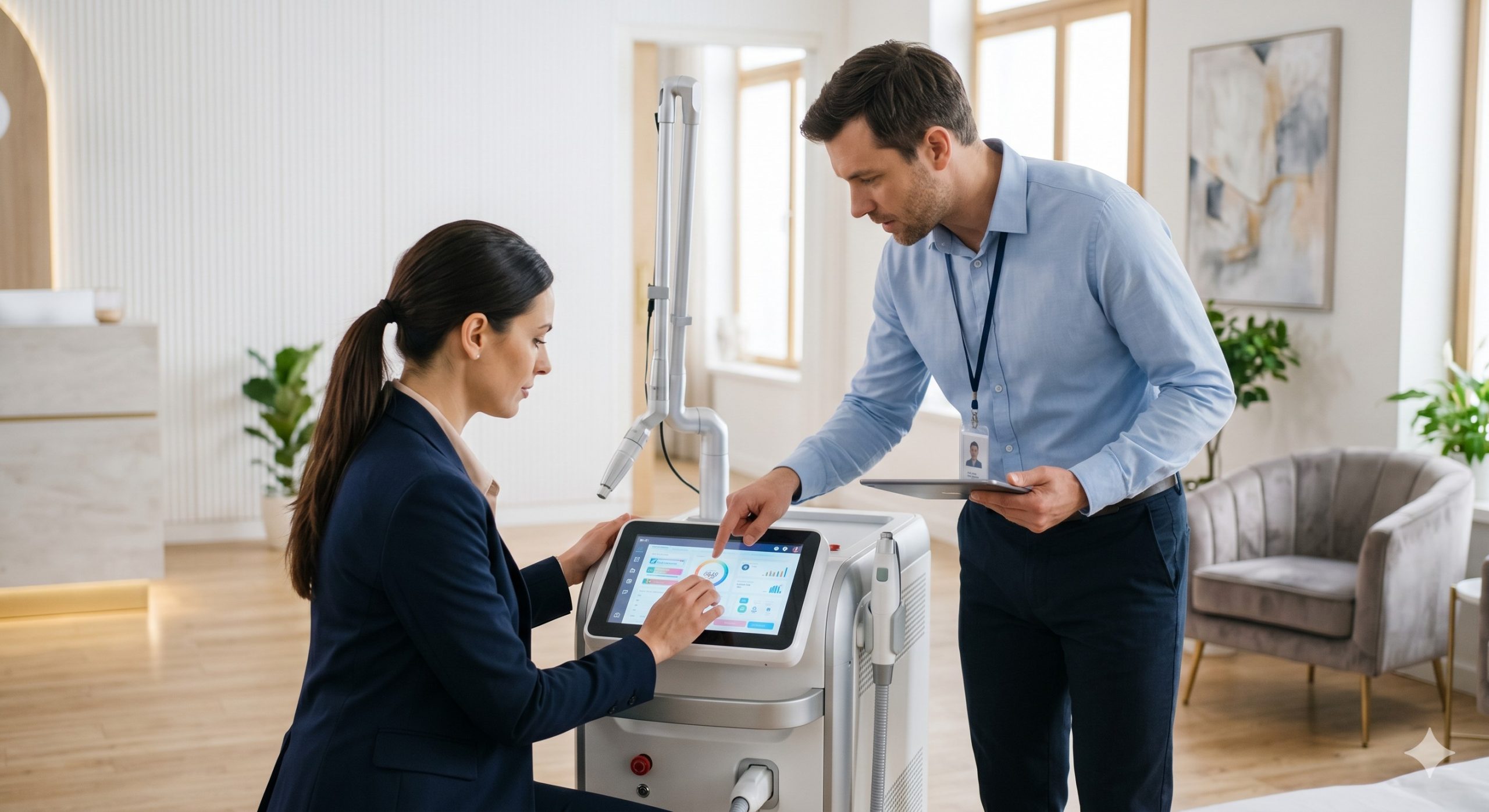
Frequently Asked Questions
Q1: Is ultrasonic cavitation safe for all skin types, and what epidermal protection mechanisms are in place?
Yes, it is safe and effective for all Fitzpatrick skin types (I-VI). This safety is not dependent on melanin absorption, making it inherently safer for darker skin tones compared to light-based devices. Advanced devices feature integrated contact cooling systems that maintain the epidermis at a constant, safe temperature during the procedure, protecting it from thermal injury while the ultrasonic energy selectively targets subcutaneous fat cells. Pre-treatment assessments are always recommended to ensure patient candidacy.
Q2: What is the typical handpiece lifespan, and what are the ongoing consumable costs?
For premium ultrasonic cavitation systems, the handpiece’s functional lifespan is approximately 20,000,000 pulses. This translates to roughly 2,000 to 3,000 treatment sessions, depending on the specific application and energy settings. Consumable costs are remarkably low, primarily limited to the coupling gel and spare membranes, with minimal expenditure per patient. This low consumable burden is a key factor in achieving a rapid return on investment for aesthetic clinics.
Q3: How does the ROI compare to legacy technologies like IPL?
Ultrasonic cavitation offers a superior ROI compared to legacy aesthetic lasers due to a combination of high-demand treatment applications and low operational costs. While an IPL has higher upfront and maintenance costs (including costly flash lamps), a cavitation device provides a faster payback period. Its broad application for non-surgical fat reduction attracts a large patient demographic, and its minimal consumable expenditure ensures that a higher proportion of each treatment fee directly contributes to profitability.
Q4: What are the standard technical specifications, and what do they mean for clinical outcomes?
Typical technical specifications for a clinical-grade device include a frequency range of 20-40 kHz and adjustable energy intensity. The 40kHz frequency is optimal for deep penetration to target adipose tissue without damaging the skin’s surface. Clinically, these parameters mean a higher treatment throughput, with average session times of 30-45 minutes per area, leading to effective patient clearance within 6-12 sessions.
Q5: Does the device come with comprehensive post-sales technical support and a warranty?
Yes, reputable B2B suppliers provide a standard 12-24 month warranty on the main unit, covering parts and labor. This is complemented by comprehensive post-sales technical support, including remote troubleshooting and access to an online knowledge base. Many suppliers also offer on-site training and unlimited online training sessions to ensure your clinical staff can operate the device with precision and confidence.
Q6: What safety and compliance certifications should I look for?
For a device to be fit for a clinical setting, it must hold rigorous medical certifications. Look for a Medical CE certificate, which verifies compliance with European health, safety, and environmental protection standards, and ISO 13485 certification, which specifies requirements for a quality management system in the medical devices industry. These certifications confirm the device’s safety and reliability for professional aesthetic use.
Q7: What are the key maintenance protocols for the device?
Critical maintenance protocols include regularly checking and maintaining the water circulation system to ensure optimal thermal regulation. This prevents the handpiece from overheating during extended use. Daily cleaning of the handpiece and console with non-abrasive solutions, along with periodic software updates, will sustain the device’s performance and prolong its lifespan.
Q8: How can I troubleshoot common errors to minimize downtime?
For common issues like reduced output or system errors, the first step is to verify the water level and circulation in the cooling system, as this is the most frequent cause. If the issue persists, consult the device’s error code chart, which is typically integrated into the smart touchscreen interface. For any hardware-related issues beyond basic troubleshooting, immediate contact with your supplier’s technical support team is recommended to resolve the problem and minimize clinic downtime.