
FAQ
Production Scaling FAQ: Expert Answers for Aesthetic Clinics & Dermatologists
Overview
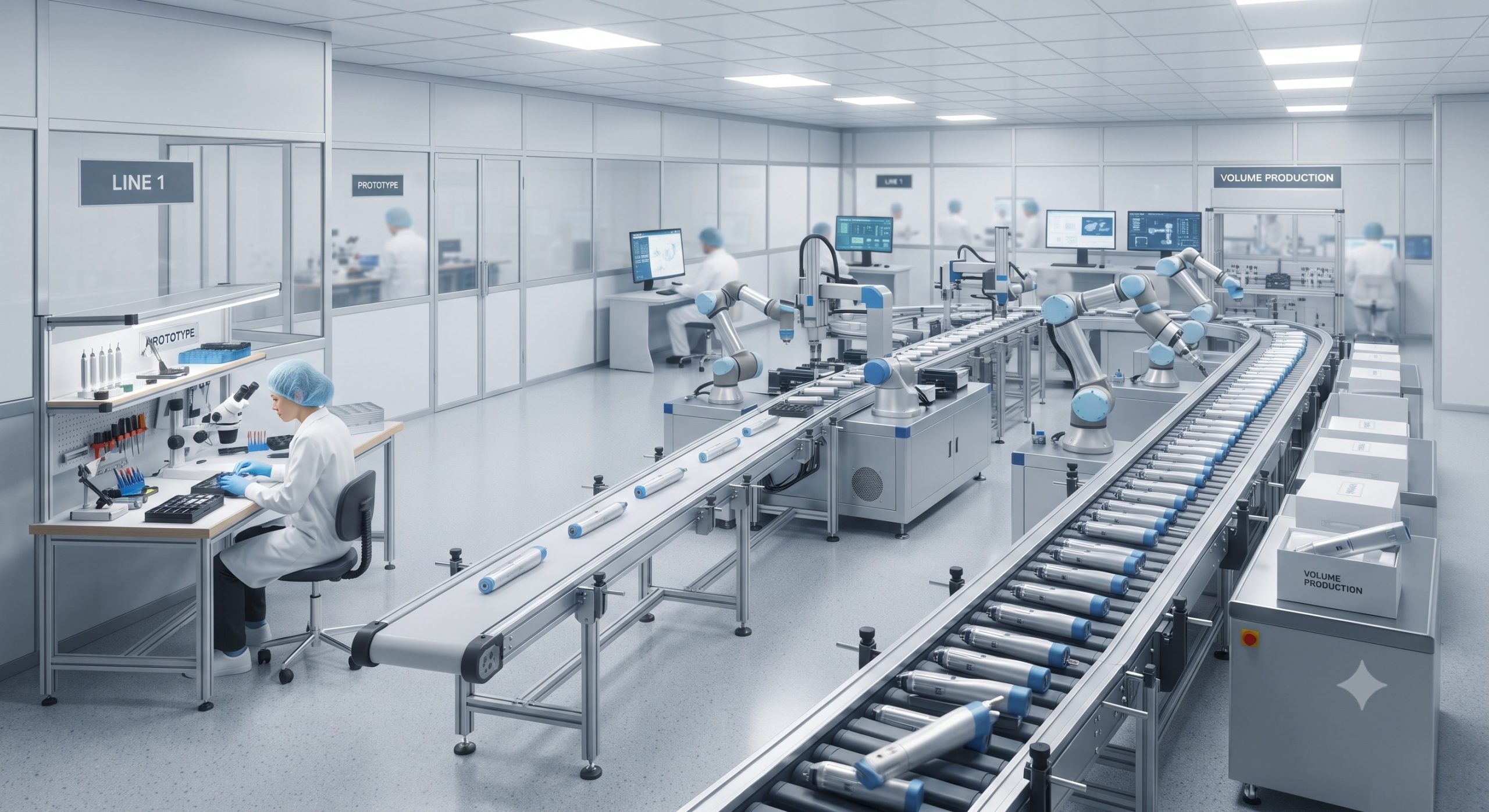
Successfully scaling a medical aesthetic device from pilot production to mass volume is a critical juncture for any manufacturer. This transition demands rigorous quality control, robust supplier management, and a deep understanding of regulatory compliance to ensure device performance and patient safety remain consistent. This FAQ addresses the core concerns of B2B clinic buyers and dermatologists, providing expert insights into the processes that safeguard your investment and clinical outcomes.
Frequently Asked Questions
Q1: What are the primary risks when scaling from a pilot run to mass production?
The primary risks are component variability, process drift, and loss of quality control. During pilot production, components are often hand-selected and processes are closely monitored by engineers. As volume increases, reliance on automated systems and broader supplier batches can introduce subtle variations in materials, tolerances, and assembly procedures, potentially affecting laser energy output, cooling efficiency, or device lifespan.
Q2: How can I verify a supplier’s quality control processes for mass production?
Verification requires a multi-layered audit of their quality management system (QMS). Insist on proof of ISO 13485 certification, which is specific to medical devices. Additionally, request a detailed Process Failure Mode and Effects Analysis (PFMEA) and statistical process control (SPC) data for key components like the laser bars and cooling pumps. This data demonstrates their ability to maintain critical parameters within specified limits across thousands of units.
Q3: How does a manufacturer ensure consistent performance between a pilot unit and a mass-produced unit?
Manufacturers ensure consistency through design transfer protocols and first-article inspection (FAI). The design transfer process formally documents and validates that the production process can reliably reproduce the device as specified. FAI involves testing the first units off the mass production line against the exact engineering specifications of the pilot unit, ensuring all performance metrics, such as energy density and spot size uniformity, are identical.
Q4: What role does supply chain management play in successful scaling?
Supply chain management is the cornerstone of scaling, as it ensures the availability of critical, high-quality components. Effective management involves qualifying secondary and tertiary suppliers for key parts (like diodes, capacitors, and water pumps) to mitigate the risk of single-source dependency. It also requires establishing clear specifications and quality agreements with all suppliers to prevent last-minute substitutions that could compromise device integrity.
Q5: How does scaling affect the device’s regulatory compliance and CE/FDA markings?
Scaling directly impacts regulatory compliance, as the entire production process, not just the final product, falls under scrutiny. Any change in materials, suppliers, or assembly methods must be evaluated under the manufacturer’s quality system and may require regulatory notification or a new submission. The CE and FDA markings are contingent on the device being manufactured according to the approved specifications; a change in production scale is a change in process that must be validated to maintain these certifications.
Q6: What should I expect regarding lead times and inventory management during the scaling phase?
Expect initial lead times for mass-produced components to be longer than for pilot parts due to the need for high-volume tooling and supplier lead times. A reliable manufacturer will provide a transparent supply chain map and a firm delivery schedule. They should also implement a buffer stock strategy for critical long-lead components to protect your clinic from supply chain disruptions.
Q7: How is the final quality audit conducted on mass-produced devices before shipment?
The final quality audit is conducted through a combination of automated in-line testing and batch sampling according to Acceptable Quality Level (AQL) standards. Every device typically undergoes automated functional testing to verify energy output, cooling, and safety interlocks. An independent quality team then performs a rigorous AQL-based inspection on a statistical sample from the batch, checking for cosmetic defects, packaging integrity, and operational performance before shipment is authorized.