
FAQ
Medical CE & FDA Regulatory FAQ: Compliance Standards for Your Controlled Document Library
Overview
For B2B aesthetic clinics and dermatology practices, a controlled document library is the backbone of regulatory compliance, audit readiness, and consistent patient safety. Whether you are evaluating a new device supplier or tightening post-sales governance, these expert answers cover the pre-sales and post-sales questions clinic owners and technical managers ask most about controlled document management.
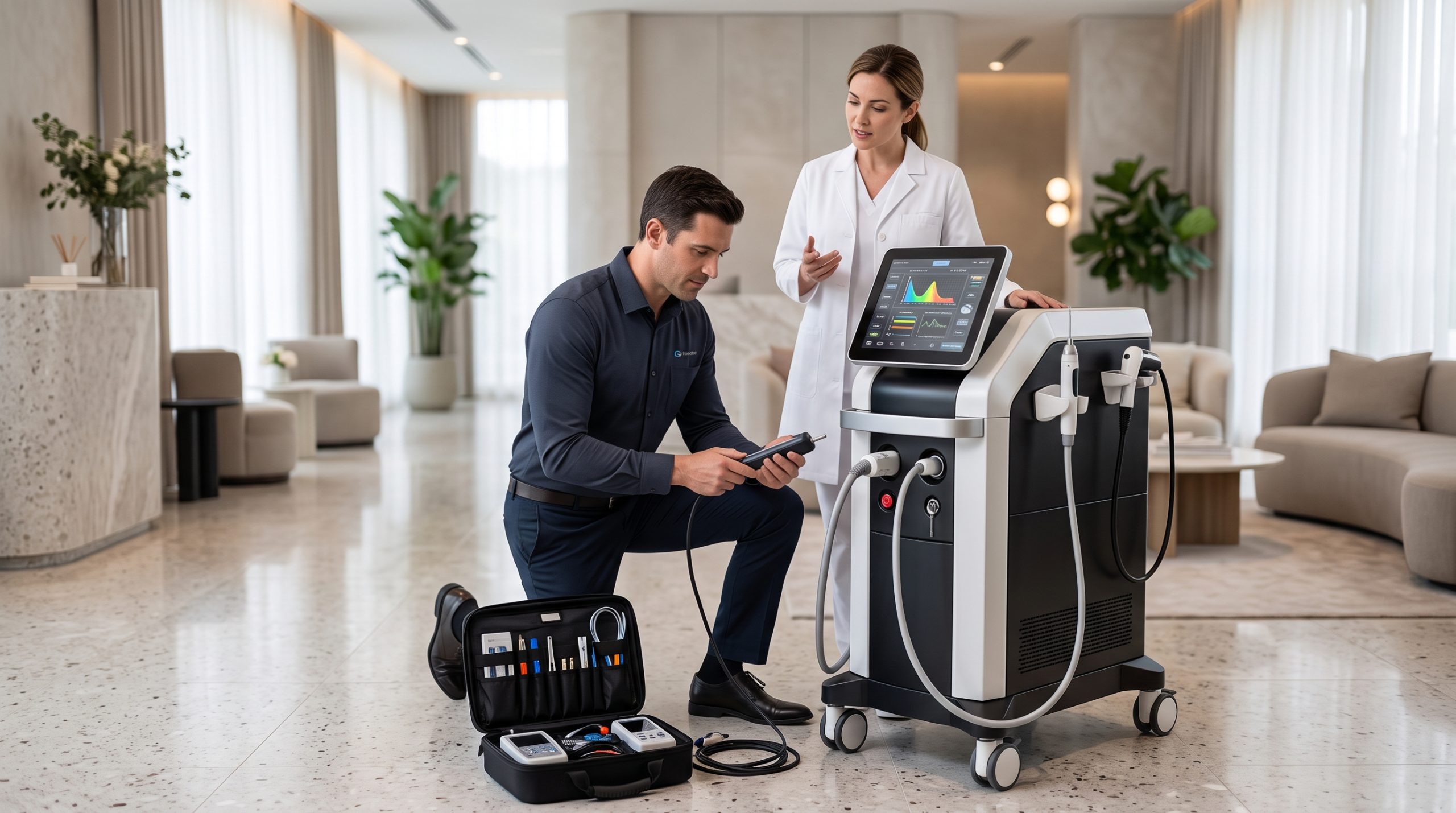
Frequently Asked Questions
Q1: What is a controlled document library in an aesthetic clinic?
A controlled document library is a centralized, version-controlled system that stores all regulatory, technical, and clinical documents required to operate an aesthetic device legally and safely. It typically includes Medical CE certificates, FDA clearances, ISO 13485 quality documentation, user manuals, training records, maintenance logs, and calibration certificates. The library ensures every document is current, traceable, and retrievable during an audit or inspection.
Q2: Which documents are mandatory for Medical CE and FDA compliance?
For Medical CE compliance, the mandatory core set includes the EC Declaration of Conformity, Medical CE certificate, technical file summary, IFU (Instructions for Use), risk assessment, and ISO 13485 quality management evidence. For FDA compliance, clinics should retain the 510(k) clearance letter or device listing, labeling, and any applicable post-market surveillance documentation. Keeping these in a single controlled library prevents version confusion during inspections.
Q3: How do you keep a controlled document library audit-ready?
An audit-ready controlled document library uses version numbering, approval signatures, review dates, and access logs for every document. Best practice is to assign a document controller, schedule annual reviews, and archive superseded versions rather than deleting them. This creates a clear audit trail that satisfies ISO 13485, Medical CE, and FDA inspectors within minutes of a request.
Q4: How are operator training records managed within the document library?
Operator training records are managed as controlled documents linked to each device serial number and staff member. Each record should capture the training date, trainer, protocol version, and competency sign-off. This ensures clinics can prove that every operator using the device was trained on the correct parameters and safety procedures, which is essential for both CE and FDA compliance.
Q5: What happens during a regulatory audit if documents are missing?
Missing documents during a regulatory audit can result in non-conformance findings, corrective action requests, device quarantine, or temporary suspension of clinical use. In severe cases, repeated gaps may affect the clinic’s ability to claim compliance with Medical CE or FDA standards. A controlled document library with automated reminders and backup storage significantly reduces this risk.
Q6: How should post-sales technical documentation be updated?
Post-sales technical documentation should be updated whenever firmware changes, consumables are revised, or maintenance schedules are amended. Suppliers should push updated IFUs, service bulletins, and calibration guides directly into the clinic’s controlled document library. Clinics should then archive the previous version and retrain staff where the change affects treatment parameters or safety.
Q7: Can a controlled document library be digital-only for B2B clinics?
Yes, a digital-only controlled document library is fully acceptable for B2B clinics provided it meets traceability and access-control requirements. Cloud-based systems with role-based permissions, audit logs, and encrypted backups are common. However, clinics should confirm that their digital library satisfies local health authority rules, as some regions still require a physical copy of key certificates on-site.
Q8: How does a controlled document library support after-sales service and warranty claims?
A controlled document library supports warranty claims by providing proof of purchase, serial number records, maintenance history, and calibration logs. When a handpiece or core component fails, the supplier can verify warranty eligibility quickly using these records. This shortens downtime, reduces disputes, and keeps the clinic’s treatment schedule uninterrupted.