
FAQ
Medical CE & FDA Regulatory FAQ: Compliance Standards for NDA-Backed Redacted Compliance Excerpts
Overview
For B2B aesthetic device procurement, suppliers routinely sign a mutual non-disclosure agreement (NDA) before releasing redacted compliance excerpts — this is standard, buyer-friendly practice, not an unreasonable request. The NDA protects both parties’ confidential commercial terms while the redactions remove pricing, customer identities, and proprietary engineering details, leaving the regulatory substance intact. This FAQ answers the pre-sales and post-sales compliance questions clinic owners, dermatologists, and procurement teams ask most often when vetting a device manufacturer.
Frequently Asked Questions
Q1: Can you sign an NDA before sending redacted compliance excerpts?
Yes — a reputable B2B aesthetic device manufacturer will sign a mutual NDA before sharing redacted compliance excerpts, and this should be treated as a standard pre-sales step rather than a red flag. The NDA typically covers pricing sheets, customer lists, and proprietary design data, while the compliance excerpts themselves (CE certificates, FDA 510(k) clearances, ISO 13485 certificates) remain verifiable through public registries. Expect the process to take 1-3 business days for legal review, after which redacted PDFs are released under the agreement.
Q2: What exactly should be redacted — and what must never be redacted — in compliance excerpts?
Acceptable redactions are limited to commercial and personal data: pricing, distributor names, end-customer identities, and internal engineering annotations. Never accept redactions on the certificate number, issuing notified body, device model/classification, expiry date, or the scope of the quality management system — these are the elements a clinic’s legal and biomedical teams must verify against the original registry. If a supplier redacts certificate numbers or notified body names, request the unredacted certificate directly from the issuing body’s public database instead.
Q3: Are redacted compliance documents legally sufficient for clinic audits and accreditation?
No — redacted excerpts support pre-sales due diligence, but formal clinic audits and accreditation require unredacted originals or registry-verified copies. Regulators and accreditation bodies (and hospital biomedical departments) generally require the full certificate or a verification letter from the issuing notified body. The practical workflow is: use redacted excerpts under NDA to shortlist suppliers, then obtain unredacted originals or registry verification before signing the purchase contract or accepting delivery.
Q4: Which compliance documents should a B2B buyer request alongside the NDA?
A complete pre-sales compliance pack should include Medical CE certificates with notified body details, FDA 510(k) clearance numbers where applicable, ISO 13485 certification, a Declaration of Conformity, and the device’s technical file summary. Also request the clinical safety documentation for the specific indications you plan to treat and the electrical safety test report. Cross-check every certificate number against the EU NANDO database or the FDA 510(k) database — legitimate suppliers welcome this verification.
Q5: Does signing an NDA with one supplier restrict our ability to compare other devices?
No — a properly drafted mutual NDA protects confidential information without restricting your ability to evaluate competing devices or share general requirements with other suppliers. Avoid clauses that impose exclusivity, non-compete terms, or restrictions on benchmarking; those belong in commercial agreements, not pre-sales NDAs. Have your legal counsel confirm the NDA is mutual, time-limited, and scoped only to the disclosed documents.
Q6: How does post-sales compliance support work once the device is installed?
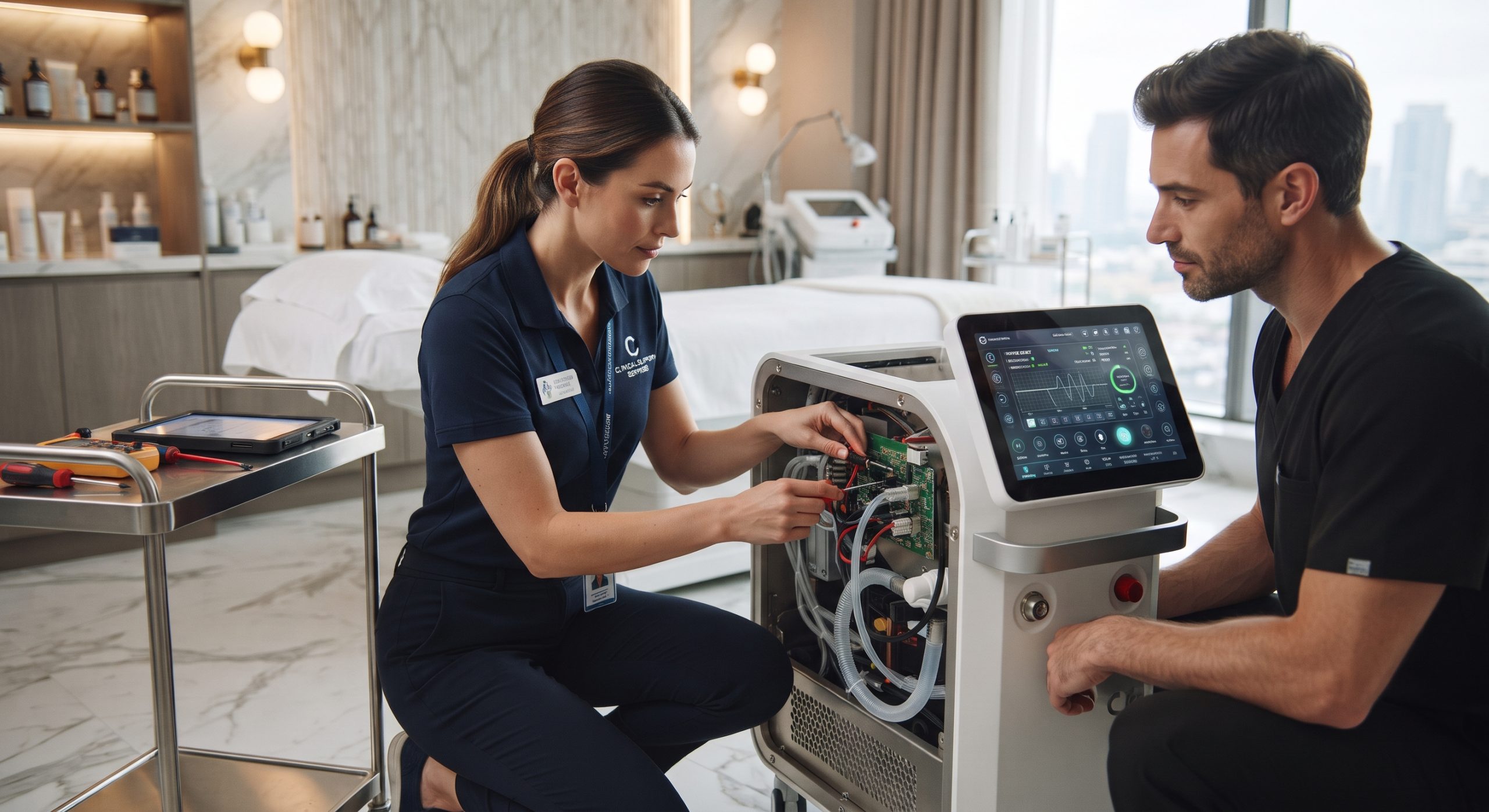
Post-sales compliance support should include annual certificate renewals, vigilance and adverse-event reporting procedures, updated technical documentation on request, and support during regulatory inspections. Confirm in the contract who is responsible for post-market surveillance reporting and how quickly updated certificates are provided when a notified body reissues them. A supplier that provided transparent pre-sales documentation typically maintains the same standard after installation — request references from clinics in your region.
Q7: What shipping, warranty, and training terms should be tied to the compliance documentation?
Warranty, training, and shipping terms should be documented in the same contract that references the verified compliance certificates, so accountability is unambiguous. Standard expectations are a 12-24 month warranty covering core components, on-site or virtual clinical training with a signed competency record, and DDP shipping with customs documentation matching the certified device model. Mismatches between the shipped model and the certified model are a common audit finding — verify the serial number against the certificate scope at goods receipt.
Q8: What is the fastest way to verify a supplier’s compliance claims before signing an NDA?
The fastest verification path is to request the certificate numbers and issuing bodies first, then check them directly in the EU NANDO database, the FDA 510(k) database, and the supplier’s ISO 13485 certification body registry. This public verification can be done before any NDA is signed and takes only minutes. Suppliers who hesitate to share certificate numbers for registry checks — as opposed to redacting pricing or customer data — warrant additional scrutiny.