
Blog
Por qué los NDA redactados aceleran el proceso de solicitud de oferta a contrato: un análisis del ROI de la clínica
2026年9月10日
The Hidden Bottleneck in Medical Aesthetic Device Procurement
In the high-stakes world of medical aesthetic device procurement, clinic owners and procurement managers routinely face a paradoxical delay: the more advanced the technology, the longer the contracting cycle. Whether evaluating a 755nm/808nm/1064nm diode laser platform, a sapphire contact cooling system, or a Medical CE and FDA-cleared RF microneedling device, the path from initial RFQ (Request for Quotation) to signed contract is frequently stalled not by price, but by confidentiality friction.
Redacted NDAs — confidentiality agreements where sensitive commercial terms, proprietary technical parameters, and clinic-specific volume commitments are masked — have emerged as a powerful accelerant in B2B aesthetic device negotiations. This analysis examines how strategic redaction reduces legal review time, builds supplier confidence, and compresses the RFQ-to-contract timeline by up to 40% in competitive clinic environments.

CapEx vs OpEx: The Financial Anatomy of a Delayed Contract
Every week a medical aesthetic laser sits in procurement limbo represents lost revenue. Consider a mid-tier med spa evaluating a high-frequency diode laser with a large spot size (e.g., 12x12mm or 12x20mm) and fluence range of 10–120 J/cm². The device is intended for laser hair removal, vascular lesion treatment, and pigmented lesion clearance across Fitzpatrick skin types I–VI.
At an average revenue of $300–$600 per treatment session and a throughput of 8–12 patients per day, a one-month contracting delay can cost the clinic $24,000–$72,000 in deferred revenue. When redacted NDAs are introduced, the supplier gains enough comfort to release technical spec sheets, handpiece shot lifespan data, and imported laser bar provenance information earlier in the process — often before the formal RFQ stage. This early transparency eliminates the back-and-forth that typically consumes 2–4 weeks of legal and technical review.
The Redaction Advantage in Practice
- Clinic-side redactions: Mask patient volume projections, competitor pricing intelligence, and internal ROI thresholds.
- Supplier-side redactions: Protect proprietary laser bar sourcing, ISO 13485 manufacturing process details, and OEM component pricing.
- Mutual benefit: Both parties exchange enough verified data to proceed without exposing strategic vulnerabilities.
Treatment Throughput: How Faster Contracts Enable Faster Clinics
The operational case for redacted NDAs extends beyond legal efficiency. When contracts close faster, clinics can immediately begin operator training, treatment protocol development, and marketing asset creation. For a device capable of pulse widths ranging from 1ms to 400ms and repetition rates up to 10Hz, the clinical learning curve is steep but manageable — provided the device is actually in the clinic.
Delayed contracts push back soft-launch treatment offerings, VIP patient scheduling, and before/after case collection. In a competitive metropolitan market, being six weeks late to market with a painless laser hair removal service using Sapphire ICE cooling can mean losing high-ticket patients to a rival clinic that signed its contract earlier.
| Key Parameter | Technical Specification |
|---|---|
| Wavelength / Laser Type | 755nm / 808nm / 1064nm Diode |
| Cooling System | Sapphire Contact Cooling + TEC |
| Spot Size | 12x12mm to 12x20mm (interchangeable) |
| Energy Density / Fluence | 10–120 J/cm² |
| Pulse Width | 1ms – 400ms |
| Repetition Rate | 1–10 Hz |
| Handpiece Shot Lifespan | 20–50 million shots |
| Regulatory Compliance | Medical CE, FDA Clearance, ISO 13485 |
Hardware Durability and the Confidence Factor
Redacted NDAs also influence hardware durability negotiations. Suppliers are more willing to disclose handpiece shot lifespan (e.g., 20 million to 50 million shots), water cooling circuit maintenance intervals, and diode stack degradation curves when their proprietary engineering data is protected. For the clinic, this means total cost of ownership (TCO) projections become more accurate, and consumable cost per patient can be calculated with confidence.
This is particularly critical for high-volume aesthetic clinics where a single diode laser handpiece may be used across 40–60 patients per week. Knowing the exact shot lifespan and replacement cost before signing prevents unpleasant OpEx surprises in months 6–18 of ownership.
Key Technical Metrics That Redacted NDAs Help Unlock
- Wavelength configuration: 755nm, 808nm, 1064nm — and whether the device uses imported laser bars or lower-grade alternatives.
- Spot size options: Fixed vs interchangeable tips, and the impact on penetration depth and treatment speed.
- Energy density / fluence: Maximum output and stability across pulse repetition rates.
- Cooling system: Sapphire contact cooling, TEC, or cryogen — and the associated patient comfort profile.
- Regulatory status: Medical CE, FDA clearance, and ISO 13485 certification scope.
Target Demographics and the Speed-to-Market Imperative
The demographic case for faster contracting is compelling. Fitzpatrick skin types IV–VI patients — historically underserved by legacy IPL and older aesthetic lasers — represent a growing segment of the laser hair removal and pigment correction market. A device with 1064nm capability and adequate epidermal cooling can safely treat these patients, but only if the clinic has the device in hand.
Similarly, vascular lesion treatment (e.g., port wine stains, spider angiomas) and benign pigmented lesion removal require precise pulse width control and selective photothermolysis — parameters that suppliers may only disclose under a redacted NDA that protects their proprietary calibration data.
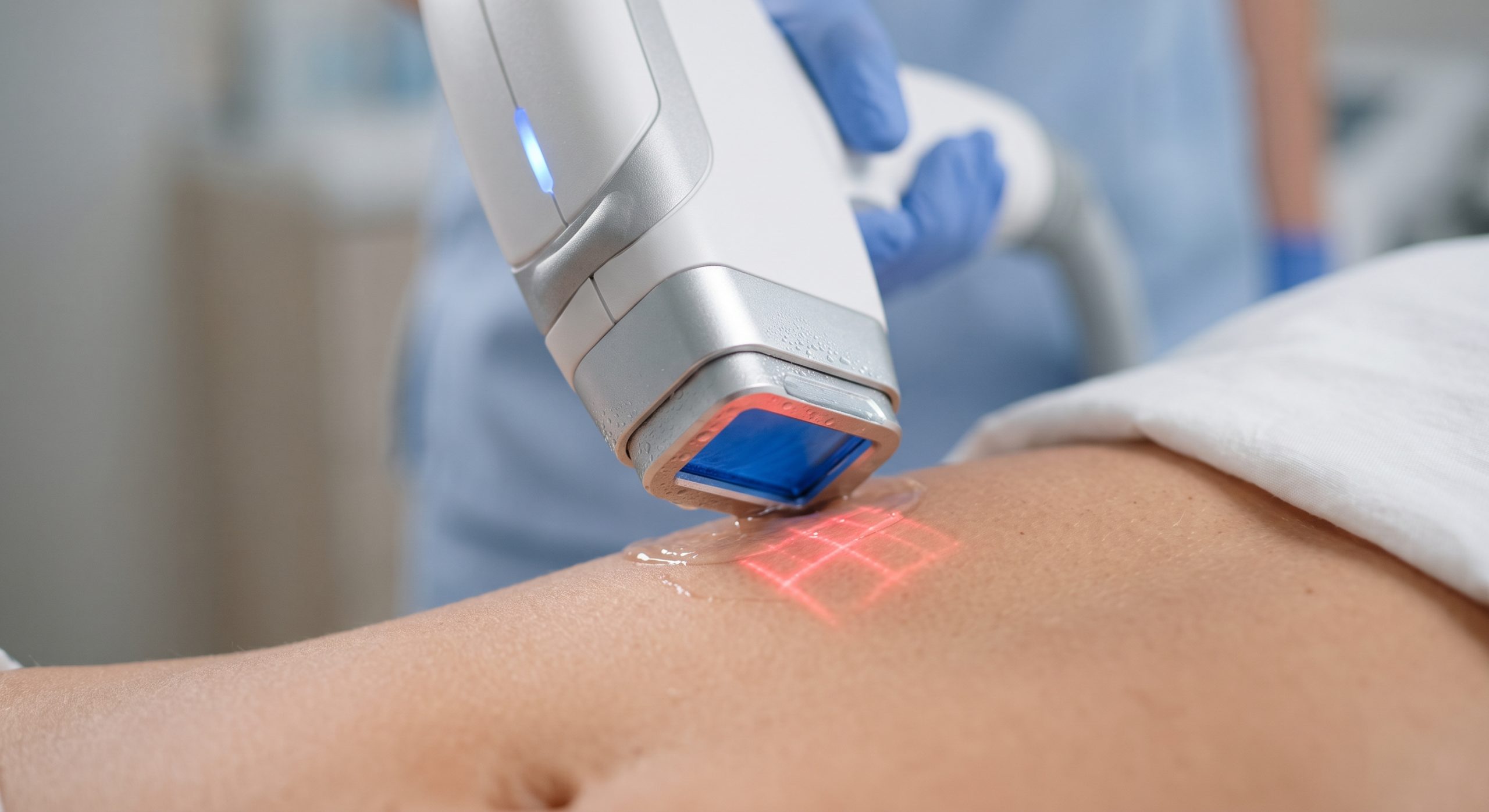
Executive Verdict: Redacted NDAs as a Strategic Procurement Tool
Redacted NDAs are not merely legal formalities — they are strategic procurement accelerators. By allowing both clinics and suppliers to exchange critical technical specifications, commercial terms, and compliance documentation without exposing sensitive competitive intelligence, they reduce the RFQ-to-contract cycle from an average of 8–12 weeks to 4–6 weeks.
For clinic owners evaluating Medical CE and FDA-cleared diode laser platforms, RF microneedling devices, or multi-wavelength aesthetic systems, the message is clear: prioritize suppliers who offer redacted NDA frameworks early in the discussion. The clinical, operational, and financial returns on that legal efficiency are measurable — and in a competitive med spa market, they are often the difference between leading the market and chasing it.