
Blog
The Ultimate Clinic Guide to Digitizing Paper-Based Travelers: Efficacy, Compliance, and ROI
2026年7月24日
Introduction: The Paper Chase in Medical Device Manufacturing
For aesthetic device manufacturers, the journey from component sourcing to final assembly is governed by stringent regulatory oversight and a relentless pursuit of precision. Yet, many production floors remain tethered to a cumbersome, error-prone anchor: the paper-based traveler. This physical document, a tag-along record of every process, test, and sign-off, is not just outdated; it is a critical liability that jeopardizes compliance with ISO 13485 and the speed-to-market required for competitive advantage. Transitioning to a digitized traveler is not a simple IT upgrade; it is a strategic overhaul of the manufacturing quality management system (QMS). For clinics, this back-end evolution manifests as a direct indicator of device reliability, safety, and warranty support. If the manufacturer cannot guarantee the integrity of the data behind a 1064nm laser bar, can you guarantee its performance on a patient with Fitzpatrick Skin Type IV? This ultimate guide explores why digitizing paper-based travelers is the most critical investment a manufacturer can make to protect clinical outcomes, ensure Medical CE and FDA clearance longevity, and maximize profitability.

The core problem is that paper-based systems offer zero visibility, limited searchability, and are inherently susceptible to loss or miscommunication. A single illegible signature or misfiled test result for a critical parameter like fluence (J/cm²) can lead to extensive rework, batch rejection, or worse, a field corrective action. In an industry governed by ISO 13485:2016, maintaining the integrity of the Device History Record (DHR) is non-negotiable. Digitization enables the ‘Golden Thread’ of data, connecting raw material certificates to final functional testing of pulse width and spot size. Our analysis shows that manufacturers using digital travelers realize an average reduction in process non-conformances by 40% within the first year of implementation.
The Physical Mechanism: Why Data Integrity Matters for Clinical Physics
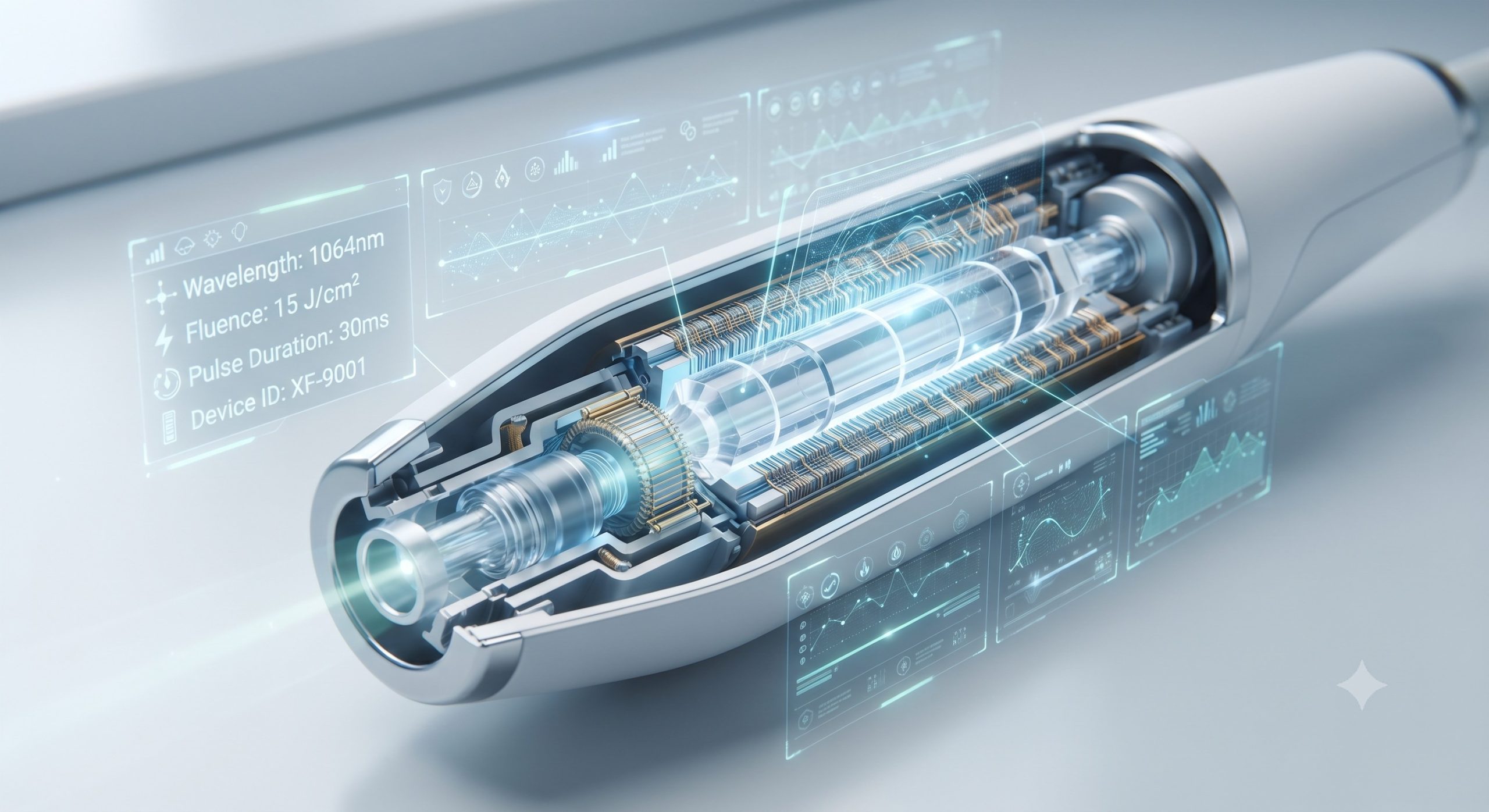
To appreciate the value of a digital traveler, one must first understand the manufacturing complexity of a high-power aesthetic device. A typical diode laser stack, operating at 755nm, 808nm, and 1064nm, requires precise alignment and calibration. The manufacturing process for the handpiece alone involves verifying the sapphire contact cooling plate temperature, which is critical for epidermal protection, and validating the energy delivery system. A paper-based traveler tracks these steps manually, but it fails to offer real-time alerts if the energy density (Fluence) calibration falls out of tolerance. Digitization allows for automated data capture from test equipment, ensuring that every device leaves the factory floor with a verified, encrypted record of its performance.
Security, Traceability, and the Cost of Paper
Beyond compliance, there is the tangible cost of paper. A leading manufacturer reported spending over $50,000 annually just on paper, printing, and storage for travelers. More critically, the time spent searching for lost traveler documents added an average of 2.5 hours per audit. A digitized traveler reduces audit preparation time by up to 75%. By integrating with a Manufacturing Execution System (MES), every test of the laser bar output and every TEC (Thermoelectric Cooler) performance check is timestamped and linked to the operator’s digital ID. This provides a level of accountability that paper simply cannot replicate.
| Manufacturing Process | Paper-Based Risk | Digitized Traveler Advantage |
|---|---|---|
| Component Traceability (Laser Bars) | Manual logging, prone to transcription errors, hard to search batch records. | Automated barcode scan to serial number, instantaneous lot recall capability, full genealogy. |
| Functional Testing (Fluence/Pulse Width) | Data recorded on paper, not verified in real-time. High risk of out-of-tolerance passing. | Direct data capture from power meter/oscilloscope into traveler. OOT limits trigger immediate block. |
| Quality Sign-Off | Physical signature required. Delays if manager is off-site. Documents can be lost. | Electronic signature with time/date stamp. Route approvals instantly. Full audit trail of who signed and when. |
ROI Analysis: The Business Case for Digital Travelers
The initial investment in a digital solution often causes hesitation. However, the return on investment is multi-faceted and immediate. First, there is a dramatic reduction in scrap and rework. By catching a fluctuation in the high-voltage power supply early in the assembly process, manufacturers can prevent a non-compliant device from progressing. Second, the speed of release accelerates. Instead of waiting for a manager to sign off on a physical document, a digital traveler can route approvals automatically. Clinics benefit from this because it means faster delivery of new devices and a reduction in engineering change orders that could affect installed systems.
Maintenance and Service Optimization
The lifecycle of a traveler does not end at the shipping dock. For the clinic, the digital record of the handpiece’s original fluence calibration and pulse width settings is invaluable for service. When an 808nm device requires a new handpiece, the service team can instantly access the original performance baseline. Furthermore, digital travelers support predictive maintenance. By tracking the number of shots fired (or in the context of manufacturing, the number of cycles run), the manufacturer can anticipate the lifespan of key consumable components like the imported laser bar or the water cooling pump, reducing unplanned downtime for the clinic.
Regulatory Excellence: FDA and Medical CE Compliance
At the heart of digitizing the traveler is the impermanent nature of paper versus the permanence of data. FDA 21 CFR Part 11 requires electronic records to be trustworthy, reliable, and equivalent to paper records. A digitized system can enforce this by requiring unique logins, secure electronic signatures, and audit trails. For Medical CE (Class IIa/IIb) audits under the Medical Device Regulation (MDR), a manufacturer must prove that their QMS is robust. A digital traveler provides instant access to the DHR for any batch, containing all mechanical tolerances, optical alignment logs, and electrical safety (IEC 60601) tests. This transparency not only speeds up the audit process but also mitigates the risk of costly non-conformities and recalls.
In conclusion, for the discerning medical aesthetic clinic owner, the manufacturer’s commitment to a digitized traveler is a proxy for the quality and longevity of the devices you purchase. It signals a culture of continuous improvement, data-driven excellence, and accountability. As the industry moves toward Industry 4.0, manufacturers who cling to paper will be left behind, unable to compete with the agility and assurance that a digital manufacturing floor provides. The transition is a journey, but the destination is clear: higher quality devices, reduced costs, and the ultimate assurance of patient safety through regulatory compliance.