
Blog
The Ultimate Clinic Guide to Traceability Compliance for Medical Device Machined Parts: Efficacy, Standards, and ROI
2026年7月13日
Introduction: The Non-Negotiable Imperative of Traceability in Medical Device Manufacturing
In the high-stakes environment of medical aesthetics, the reliability of a laser device is directly proportional to the traceability of its components. For clinic owners, medical directors, and procurement specialists, understanding traceability compliance for medical device machined parts is not merely a regulatory checkbox—it is the bedrock of patient safety, device efficacy, and long-term business profitability. A single non-conforming part, such as a cooling system fitting or a precision-engineered handpiece component, can compromise the delivery of therapeutic wavelengths (e.g., 755nm, 808nm, 1064nm), leading to adverse events or suboptimal clinical outcomes .
This guide provides a comprehensive, authoritative analysis of traceability compliance, bridging the gap between complex manufacturing standards and clinic-level operational requirements. We will dissect the technical, regulatory, and financial dimensions to empower you to make informed procurement decisions that safeguard your practice and maximize return on investment (ROI).
Understanding the Regulatory Landscape: ISO 13485, FDA, and MDR
The foundation of traceability compliance rests on a framework of international standards and regulatory requirements. For any medical device, from a diagnostic tool to a high-powered aesthetic laser, adherence to these standards is mandatory for market access and clinical deployment. The primary standard governing quality management systems (QMS) for medical devices is ISO 13485. This standard mandates that manufacturers maintain comprehensive traceability of materials, processes, and finished products to guarantee patient safety and product efficacy .
Key Regulatory Drivers
- ISO 13485: Requires documented traceability for all critical components, from raw material sourcing to final assembly. This includes maintaining Device History Records (DHRs) and Device Master Records (DMRs) .
- FDA 21 CFR Part 820: The Quality System Regulation (QSR) for medical devices sold in the United States enforces similar requirements for lot control, process validation, and electronic signatures .
- EU MDR 2017/745: The European Union Medical Device Regulation mandates the use of Unique Device Identification (UDI) codes and requires full supply chain transparency to ensure patient safety and facilitate rapid recalls .
- Unique Device Identification (UDI): This system, driven by the FDA and global health authorities, requires that medical devices bear a UDI, comprising a Device Identifier (DI) and Production Identifier (PI), linking a device directly to its manufacturing history .
In practice, these regulations extend their reach from the finished device manufacturer down to the suppliers of machined parts. Contract manufacturers of components, such as those producing housings, fluid connectors, or precision-molded implant parts, are now held accountable to the same rigorous documentation standards as OEMs .
Material and Process Traceability: The Technical Backbone of Compliance
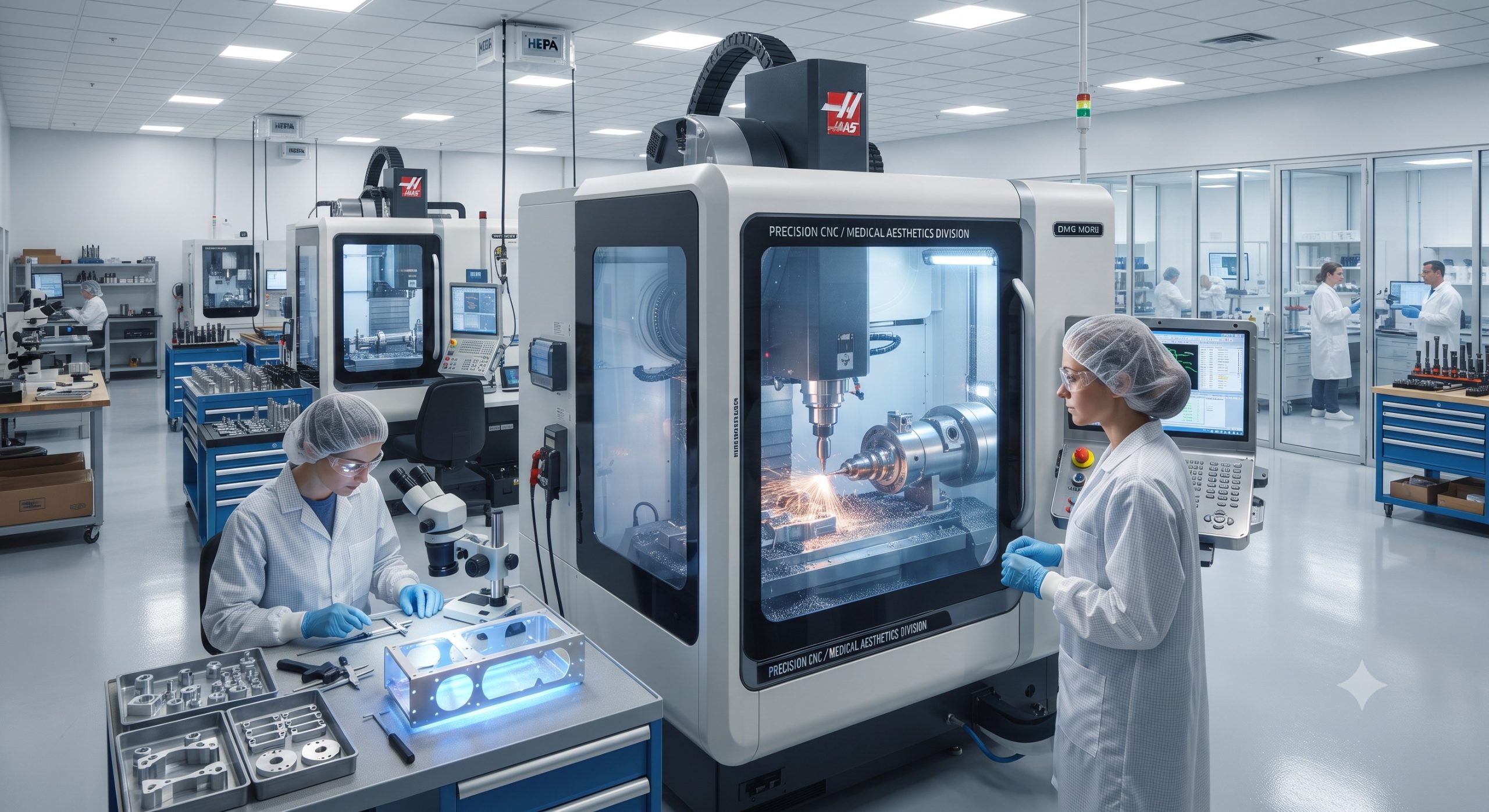
Effective traceability is a dual-layered system that tracks both the origin and the transformation of materials. This complete genealogy ensures that every critical component can be traced backward (to identify root cause of a failure) and forward (to isolate parts in a recall) .
1. Material Traceability
This dimension focuses on the raw material used to create a component. It involves meticulous tracking of supplier information, batch numbers, material certifications (e.g., EN10204 3.1), and chemical/mechanical test results. For instance, a titanium handpiece tip used in a 1064nm laser must be traceable to its original alloy batch to verify its strength and thermal conductivity under high fluence levels .
2. Process Traceability
This layer tracks the transformation of raw material into a finished part. It captures critical manufacturing data such as CNC machine parameters, operator identification, tool usage, program versions, environmental conditions (temperature/humidity), and in-process inspection results . For a water-cooling manifold in a 755nm laser, process traceability ensures that the internal pathways were machined to precise tolerances, preventing leaks and maintaining cooling efficiency.
Modern manufacturing relies on Manufacturing Execution Systems (MES) and Enterprise Resource Planning (ERP) software to automate this data capture, creating a seamless digital thread that connects design, production, and quality assurance . This digital documentation serves as a powerful asset during audits, transforming the compliance burden into a competitive advantage .
| Compliance & Traceability Element | Clinical & Business Impact |
|---|---|
| ISO 13485 Quality Management System | Ensures standardized processes and full component genealogy, supporting device reliability and regulatory audits. |
| FDA 21 CFR Part 820 & EU MDR | Mandates UDI and lot traceability for rapid recalls and patient safety, protecting clinics from liability. |
| Material Traceability (e.g., EN10204 3.1) | Verifies the origin and composition of critical parts (e.g., titanium handpieces), ensuring performance under high-fluence conditions. |
| Process Traceability (MES/ERP Data) | Captures machining parameters and inspection results, enabling consistent device output and predictive maintenance. |
| Certificate of Conformance (CoC) | Provides auditable proof that a component met all specifications, essential for demonstrating clinical safety. |
Clinical Impact: From Certifications to Patient Outcomes
While traceability and compliance are often viewed as manufacturing issues, their clinical relevance is profound. The connection between a certified component and a successful patient outcome is direct and measurable.
Device Efficacy and Consistency
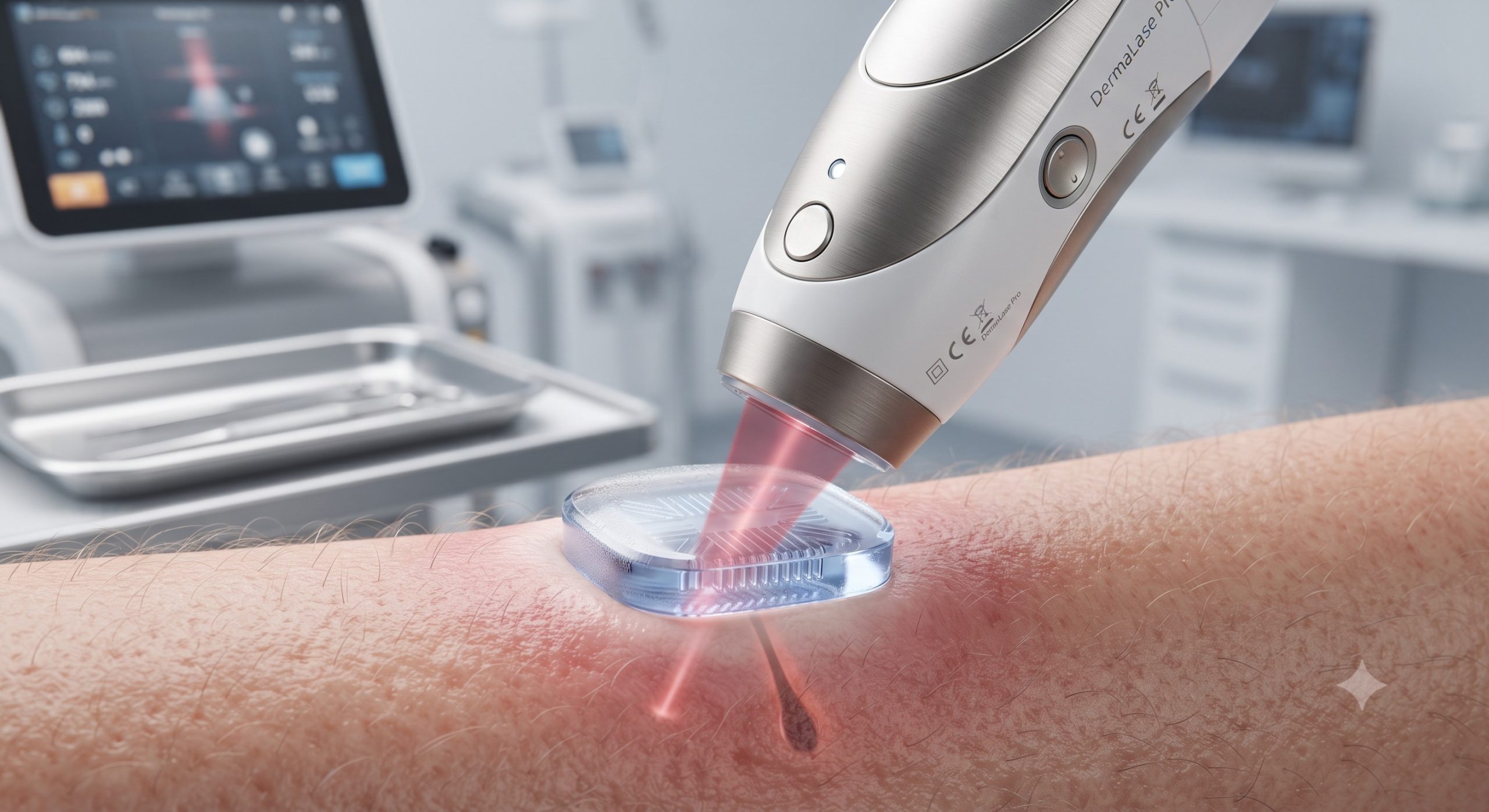
Laser parameters are interdependent. A laser’s ability to deliver the correct Energy Density (Fluence in J/cm²) and Pulse Width (ms) is dependent on the mechanical and optical integrity of its components. High-quality, traceable parts ensure that the device output remains consistent with its certified specifications (e.g., the clinically proven 30 J/cm² for hair reduction on Fitzpatrick Skin Type III). Any variance in the manufacturing of a mirror mount or a laser bar can negatively impact the selective photothermolysis process, reducing efficacy or increasing the risk of thermal injury .
Patient Safety and Audit Protection
In the event of a patient adverse event (e.g., a blister or burn), clinic owners are legally and professionally obliged to demonstrate that the device was functioning within its clinical parameters. Traceability documentation, such as a Certificate of Conformance (CoC) for the device’s machined parts, provides auditable proof that the equipment met its design and safety specifications . This documentation is critical for defending against malpractice claims and satisfying regulatory inspections.
Handpiece Durability and Shot Lifespan
High-throughput clinics rely on the durability of their laser handpieces. Traceability ensures that the internal components—like the imported laser bars and sapphire windows—are sourced from certified suppliers and manufactured to withstand millions of shots. This directly impacts the Total Cost of Ownership (TCO) and profitability of the clinic, as a longer handpiece lifespan translates to a better ROI .
The Competitive Advantage of Full Transparency: A Clinic ROI Perspective
Investing in devices from manufacturers committed to full traceability is an investment in business resilience and brand reputation. For a Med Spa or a dermatology clinic, this translates into tangible business benefits.
Accelerating Revenue and Reducing Downtime
Manufacturers with robust traceability can quickly isolate and resolve quality issues. An MES system enables predictive maintenance and rapid root-cause analysis, ensuring that production lines and the supply chain for your clinic’s consumables (like handpieces) remain uninterrupted . This reliability minimizes costly treatment downtime and ensures consistent revenue streams.
Enhancing Brand Trust and Credibility
Clinics that prioritize safety and compliance can use this as a powerful marketing differentiator. Marketing the use of FDA-cleared or CE-marked devices that comply with ISO 13485 traceability standards builds patient trust and enhances the clinic’s reputation as a premium, safety-conscious provider .
Streamlined Procurement and Long-Term Savings
By partnering with suppliers who provide complete documentation—including material certs, inspection reports, and CoCs—you reduce the burden of internal audits and simplify the validation of new equipment . This efficiency in procurement and quality assurance reduces operational costs, directly contributing to the bottom line.
Conclusion: Traceability as a Strategic Imperative
In conclusion, traceability compliance for medical device machined parts is the critical link between regulatory adherence and superior clinical results. It ensures that the energy from a 808nm diode laser is delivered safely and effectively, that the sapphire cooling system performs as intended to protect the epidermis, and that your clinic is protected from liability.
When evaluating new aesthetic devices, it is imperative to demand proof of traceability. Request detailed documentation on the supply chain, process validation, and quality control of the machined parts within the device. Choosing a partner that prioritizes full transparency—from material certification to final inspection—is not just a compliance decision; it is a strategic business decision that ensures operational excellence, patient safety, and sustained profitability in the competitive MedTech landscape .