
Blog
FDA & Medical CE Compliance: Ensuring Patient Safety with The Legal Importance of Archiving Calibration Certificates
2026年7月22日
Introduction: The High-Stakes Reality of Aesthetic Device Compliance
In the rapidly evolving landscape of medical aesthetics, clinics are often laser-focused on clinical outcomes and return on investment (ROI). However, a critical, non-negotiable pillar of a sustainable practice is often overlooked until an audit occurs: the rigorous legal importance of archiving calibration certificates. For clinics utilizing high-powered devices such as diode lasers operating at 755nm, 808nm, and 1064nm wavelengths, the failure to maintain a comprehensive, verifiable record of calibration is not merely an administrative oversight; it is a significant legal and financial liability. This blog serves as an authoritative guide for clinic owners, medical directors, and compliance officers, detailing why a robust archiving protocol is as vital as the clinical protocols themselves. We will dissect the technical, legal, and operational imperatives, ensuring your practice is shielded from regulatory penalties, malpractice claims, and operational downtime, all while maintaining the highest standard of patient safety.
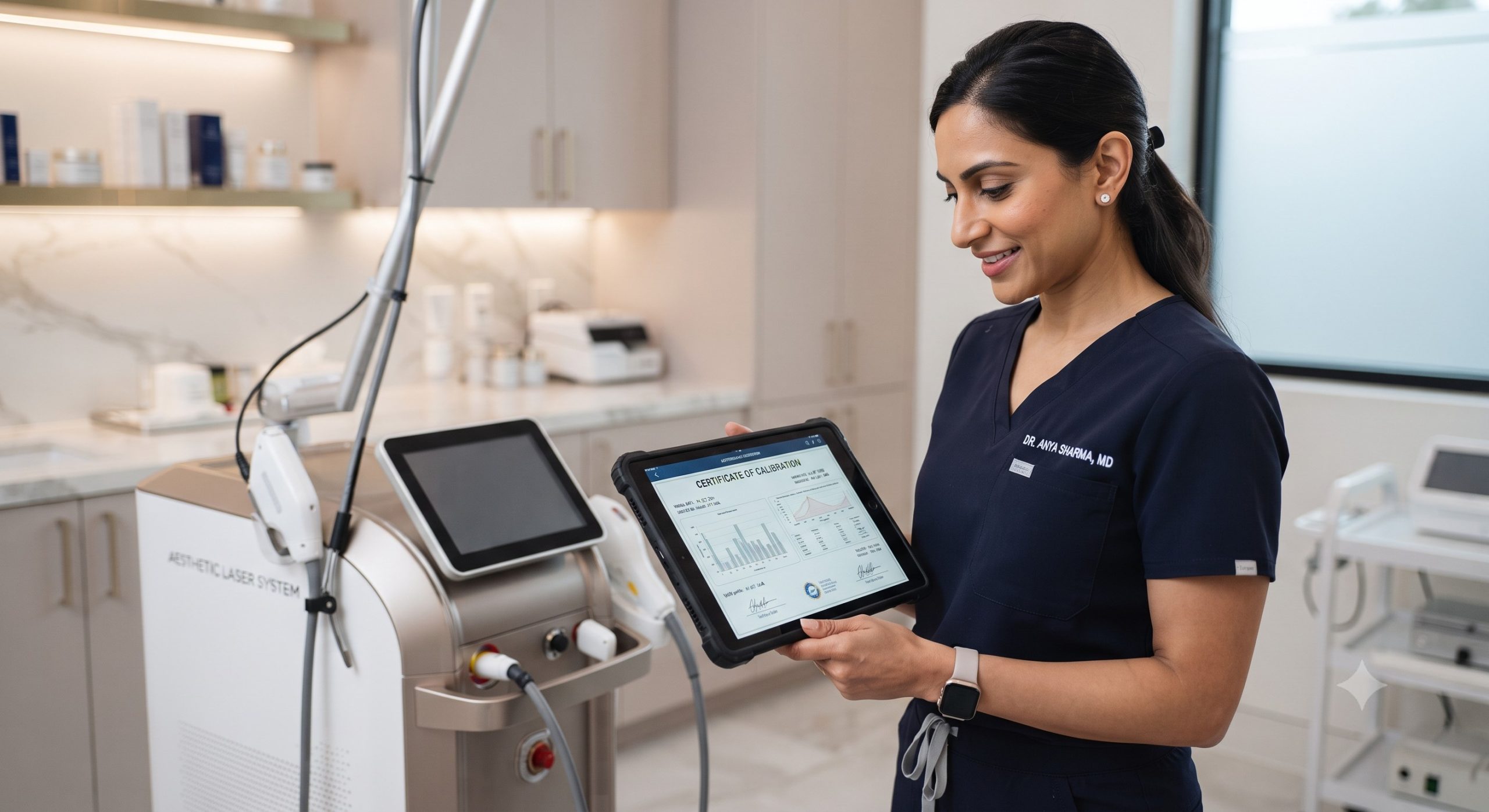
The Non-Negotiable Compliance Landscape: FDA, CE, and ISO 13485
Medical aesthetic devices, particularly Class IV lasers, are subject to some of the most stringent regulatory frameworks in the world. The legal importance of archiving calibration certificates is directly tied to these frameworks, which are designed to ensure patient safety and device efficacy.
Regulatory Mandates and Audit Trails
Regulatory bodies such as the U.S. Food and Drug Administration (FDA) and the European Union’s Medical Device Regulation (MDR) mandate that devices meet specific performance standards. More importantly, they require that clinics demonstrate adherence to these standards through meticulous documentation. A calibration certificate is the primary evidence that a device is emitting the precise output it claims. For instance, if your device is set to deliver a fluence of 15 J/cm² at a pulse width of 10ms, the calibration certificate validates that the energy output is within an acceptable tolerance range (typically ±5-10%). Without this proof, your clinic is non-compliant.
- FDA Clearance (510(k) & PMA): While the FDA clears devices for market, it is the clinic’s responsibility to ensure the device remains safe and effective. Archiving calibration certificates is a critical component of this post-market surveillance. Failure to produce these documents during an FDA inspection can result in warning letters, product seizures, and substantial fines.
- Medical CE Marking: In Europe, the CE mark signifies conformity with health, safety, and environmental protection standards. The ISO 13485 standard for medical devices requires a robust quality management system. This system must include procedures for the control of monitoring and measuring equipment, directly mandating the archiving of calibration results. This is not optional; it is a fundamental aspect of the legal importance of archiving calibration certificates for clinical governance.
Technical Precision: What Calibration Actually Guarantees
To appreciate the legal importance of archiving calibration certificates, one must understand the physics and engineering involved. High-energy aesthetic lasers are complex electromechanical systems. Over time, due to thermal stress, vibration, and component aging (like the degradation of the laser bars), these systems can drift out of specification. This drift, if undetected and unrecorded, can have profound clinical and legal consequences.
Critical Output Metrics Under Scrutiny
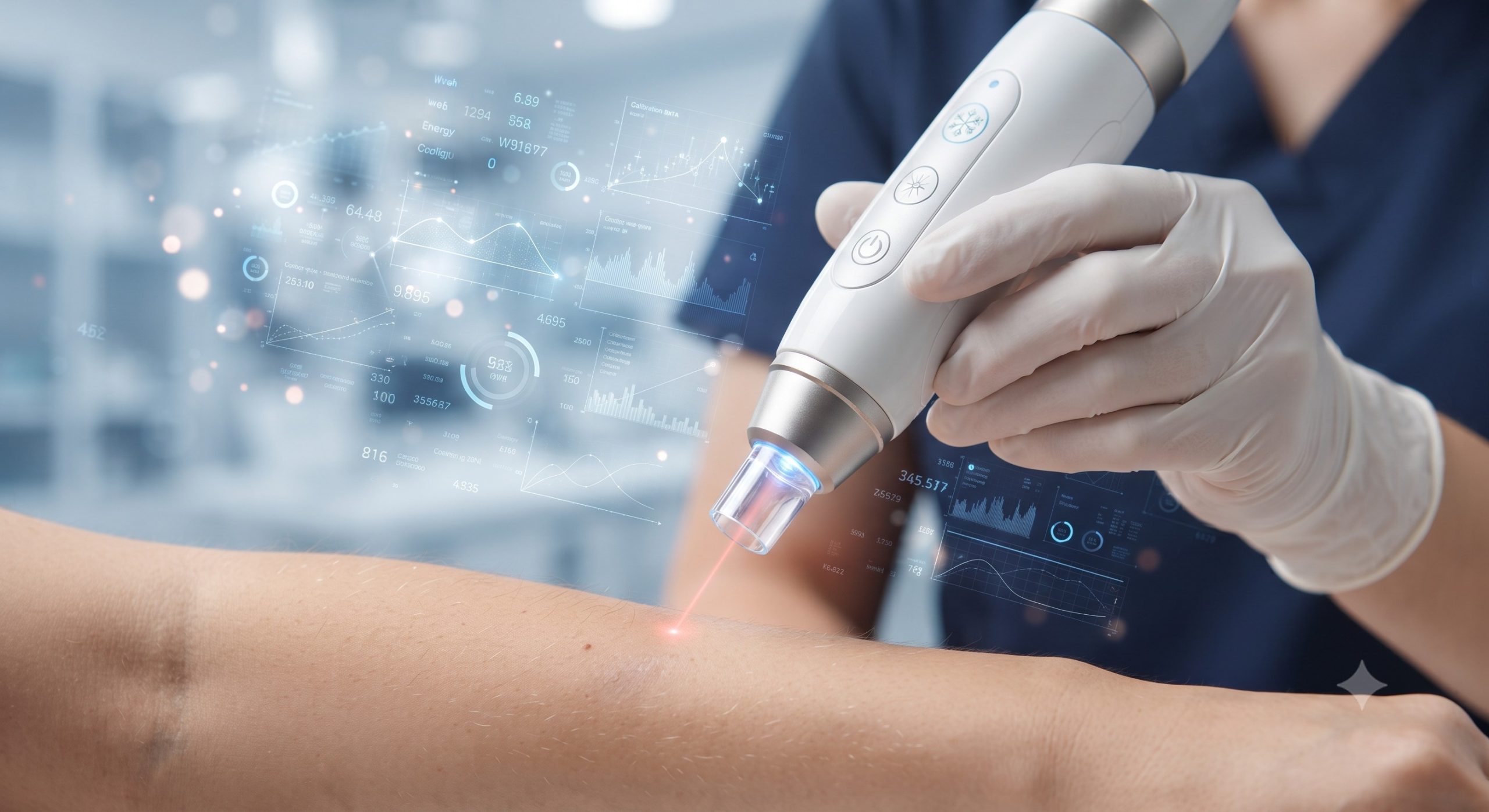
Calibration services verify the fundamental parameters that define the laser’s interaction with tissue. These are the same parameters that must be accurate to ensure safety and efficacy. A detailed calibration certificate will document these metrics, often before and after adjustment:
- Wavelength Accuracy (e.g., 755nm, 808nm, 1064nm): While most diode lasers are stable, shifts can occur, potentially targeting a less chromophore-specific area. The certificate validates the precise wavelength output.
- Energy Density (Fluence): Measured in Joules per square centimeter (J/cm²), this is a primary determinant of clinical effect. A miscalibrated fluence (e.g., outputting 20 J/cm² when the display reads 15 J/cm²) can lead to severe burns, scarring, or, conversely, ineffective treatments and patient dissatisfaction.
- Pulse Width (Duration): Often measured in milliseconds (ms), this parameter determines the thermal relaxation time of the target. An incorrect pulse width, due to a faulty capacitor bank, can cause unintended thermal damage to the surrounding dermis.
- Spot Size and Beam Profile: The uniformity of the energy across the spot size is critical. An irregular beam profile can lead to hot spots, increasing the risk of adverse events. The calibration certificate verifies the integrity of the beam.
By archiving these certificates, a clinic creates a historical performance log. This log is invaluable in proving due diligence. In the event of a patient complaint or malpractice claim, these records can serve as a powerful legal defense, demonstrating that the device was functioning within its specified parameters at the time of treatment.
| Key Parameter | Technical Specification |
|---|---|
| Wavelength / Laser Type | 755nm (Alexandrite), 808nm (Diode), 1064nm (Nd:YAG) |
| Fluence Range | 5 – 30 J/cm² (Adjustable per indication and skin type) |
| Pulse Width | 1 – 100ms (Adjustable for thermal relaxation time) |
| Cooling System | Sapphire Contact Cooling (-5°C to 5°C) |
| Calibration Tolerance | ±5% for Fluence; ±2nm for Wavelength |
Operational and Financial Benefits of Proactive Archiving
While the primary driver for focusing on the legal importance of archiving calibration certificates is compliance, the operational and financial benefits are substantial. A systematic approach to archiving not only protects against legal action but also enhances practice efficiency and profitability.
Streamlining Audits and Insurance Claims
Insurance providers, particularly for malpractice and liability coverage, are increasingly scrutinizing clinic operations. A well-organized archive of calibration certificates demonstrates a commitment to risk management, which can lead to more favorable insurance premiums. Furthermore, should a claim be filed, the immediate availability of these documents can significantly expedite the claims process and strengthen the clinic’s defense.
- Audit Readiness: Regulatory audits are unpredictable. Maintaining a digital and physical archive that is easily searchable ensures that your clinic can respond to any request for documentation in minutes, not weeks. This preparedness minimizes the stress and disruption of an audit.
- Financial Liability Protection: The financial repercussions of a successful malpractice suit can be devastating, often exceeding a million dollars. The legal importance of archiving calibration certificates is paramount in mitigating this risk. It provides tangible, objective evidence that the clinic acted with a standard of care that exceeded industry norms.
Building a Robust Archiving Protocol: A Step-by-Step Guide
Implementing a protocol to address the legal importance of archiving calibration certificates is a straightforward process that yields outsized benefits. It involves integrating this task into the clinic’s quality management system and standard operating procedures (SOPs).
Actionable Steps for Clinical Governance
A robust archiving protocol is a multi-faceted process that ensures data integrity and accessibility. A clinic should focus on the lifecycle of the certificate, from receipt to disposal.
- Centralized Digital Repository: Move beyond filing cabinets. Implement a secure, cloud-based document management system with robust search functionality. Index each certificate by the device serial number, date of calibration, and the service provider. This system should be backed up offsite to prevent data loss.
- Expiration Alerts: Calibration certificates typically have a validity period of 12 to 24 months. A proactive system should trigger automated alerts to the clinical manager and the biomedical engineer 30, 60, and 90 days before expiration. This ensures that recalibration is scheduled without interruption to clinical services.
- Integration with the Device Logbook: Every device should have a detailed logbook that tracks its clinical usage, maintenance, and repair history. The calibration certificate is a key entry in this logbook. Attach a copy of the certificate to the device’s record, creating a complete, chronological history of its lifecycle.
- Retention Policy: Establish a formal retention policy in line with your jurisdiction’s legal and regulatory requirements. Typically, medical records, including device maintenance logs and calibration records, must be retained for a minimum of 7 to 10 years, or longer in some cases.
Conclusion: Compliance as a Cornerstone of Clinical Excellence
The legal importance of archiving calibration certificates transcends mere regulatory compliance; it is a fundamental element of a high-quality, patient-centric, and financially responsible medical aesthetics practice. From the precise delivery of therapeutic fluence (J/cm²) to the assurance that a 1064nm Nd:YAG laser is performing within its intended clinical range, the documentation of calibration is a cornerstone of clinical governance. By implementing a strategic archiving protocol—comprising a centralized digital repository, automated alerts, and clear retention policies—clinics can effectively mitigate liability, enhance operational efficiency, and, most importantly, safeguard their patients. In the high-stakes world of aesthetic medicine, a simple, systematic archiving process is an indispensable tool for ensuring both legal protection and clinical excellence, ultimately solidifying the clinic’s reputation and long-term success.