
Blog
Automated Probe Calibration Logs: FDA & Medical CE Compliance for Metrology Accuracy
2026年11月24日
Why Manual Calibration Logs Fail Modern Aesthetic Laser Audits
In the high-stakes environment of a medical aesthetic clinic, metrology accuracy is not merely a technical footnote—it is the bedrock of patient safety and clinical efficacy. For diode laser platforms operating at 755nm, 808nm, and 1064nm, a drift of even 10% in energy density (fluence) can transform a predictable selective photothermolysis session into either a sub-therapeutic disappointment or a thermal injury risk. The FDA mandates that laser power measurement equipment be calibrated to within 20% of absolute standards at NIST, yet this regulatory floor often proves insufficient for the precision required in modern hair removal and pigment clearance . When clinics rely on paper-based, intermittent calibration checks, they introduce a critical gap in the chain of traceability. This is where Automated Probe Calibration Logs emerge as the definitive compliance and quality assurance solution for the forward-thinking B2B device operator.
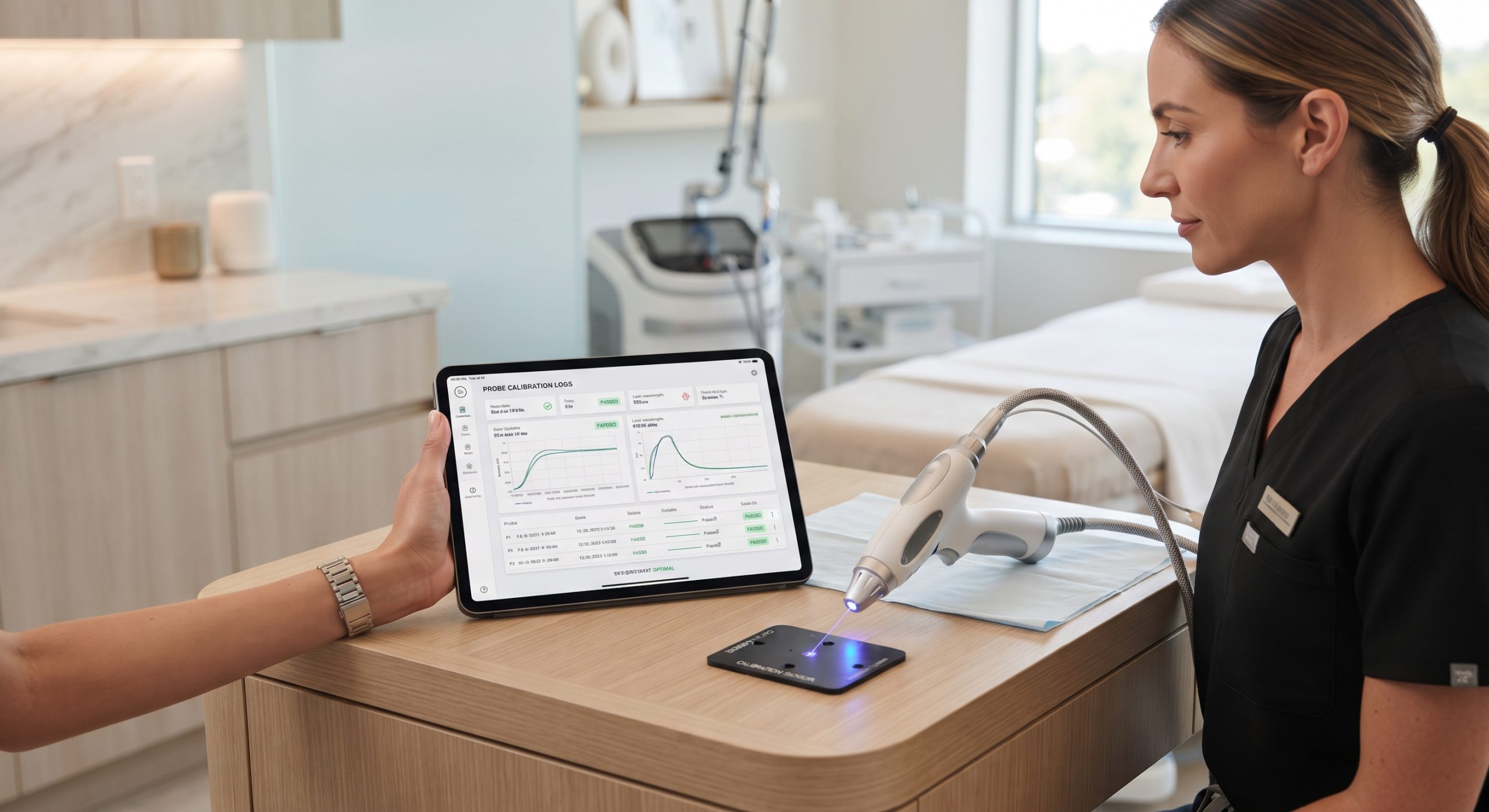
The Physics of Drift: Why 808nm Diode Bars Require Continuous Verification
Unlike legacy IPL systems, medical diode lasers rely on precise current-to-light conversion within the laser bar stack. Over hundreds of thousands of pulses, thermal cycling degrades the diode junction and the optical coating of the sapphire cooling window. Without a digital audit trail, a clinic cannot definitively prove that the fluence delivered on a Tuesday afternoon matches the parameters validated during the morning startup. The pulse width—often adjustable from 10ms to 400ms—places cumulative stress on the power supply and the handpiece’s internal optics. Automated logging systems solve this by performing user verification tests that compare the console‘s displayed output against an external power meter reading, automatically flagging deviations that exceed the acceptable tolerance (typically ±10% for clinical diode systems).
Trigger Events for Mandatory Recalibration
Industry-standard operator manuals for premium platforms (such as those from Cynosure) dictate that calibration must be initiated not just after power-on, but after specific delivery system changes. These include:
- Replacing or cleaning the handpiece window or slider attachment.
- Switching between different spot sizes (e.g., from a 12x20mm large spot to a smaller precision tip).
- Any event where the system enters a standby state exceeding 30 minutes, allowing thermal equilibrium to shift .
An automated log captures the timestamp, operator ID, and the measured vs. displayed fluence for every single trigger event, creating an immutable record for ISO 13485 quality management reviews .
Technical Specifications for Metrology-Grade Calibration
To satisfy both Medical CE and FDA audit requirements, the calibration log must capture the specific operational parameters that define the device’s therapeutic window. The following table outlines the critical data points that an automated system must record and cross-reference against the master device record.
| Key Parameter | Technical Specification | Calibration Relevance |
|---|---|---|
| Wavelength / Laser Type | 755nm / 808nm / 1064nm Diode Stack | Verifies spectral match to chromophore absorption peaks; ensures selective photothermolysis. |
| Cooling System | Sapphire Contact Cooling (TEC + Water) | Logs tip temperature to correlate epidermal protection with delivered fluence. |
| Spot Size | 12mm x 20mm (Standard Large Spot) | Ensures energy density calculations remain valid across handpiece changes. |
| Energy Density (Fluence) | Up to 120 J/cm² (Adjustable) | Core metrology metric; must be verified against NIST-traceable power meter. |
| Pulse Width | 10ms – 400ms | Affects peak power and thermal relaxation; logged to ensure protocol adherence. |
| Repetition Rate | 1 Hz – 10 Hz | Validates throughput consistency during high-volume sessions. |
The Role of Sapphire Cooling in Parameter Stability
It is a common misconception that calibration is purely an electrical function. In reality, the sapphire contact cooling system directly influences the effective energy delivered to the epidermis. If the cooling plate temperature oscillates or fails to reach the setpoint (e.g., 0°C to 5°C), the operator may be forced to reduce the fluence to maintain patient comfort, thereby altering the clinical protocol. An automated log that integrates cooling telemetry alongside optical output data provides a holistic view of treatment consistency. This is particularly vital when treating Fitzpatrick Skin Types IV-VI, where epidermal protection is paramount to preventing Post-Inflammatory Hyperpigmentation (PIH).
Audit-Proofing the Clinic: From Paper Trails to Digital Traceability
Regulatory bodies and insurance carriers are increasingly scrutinizing the traceability of energy-based device maintenance. A handwritten log is easily lost, illegible, or—in the worst-case scenario—falsified. In contrast, an automated probe calibration log generates a time-stamped, encrypted record that satisfies the documentation requirements of ISO 13485:2016 . When a notified body auditor asks for evidence that the 1064nm handpiece was operating within specification during a specific treatment month, the clinic can export a report showing every calibration cycle, the reference meter’s serial number, and the environmental conditions (temperature/humidity) at the time of verification.
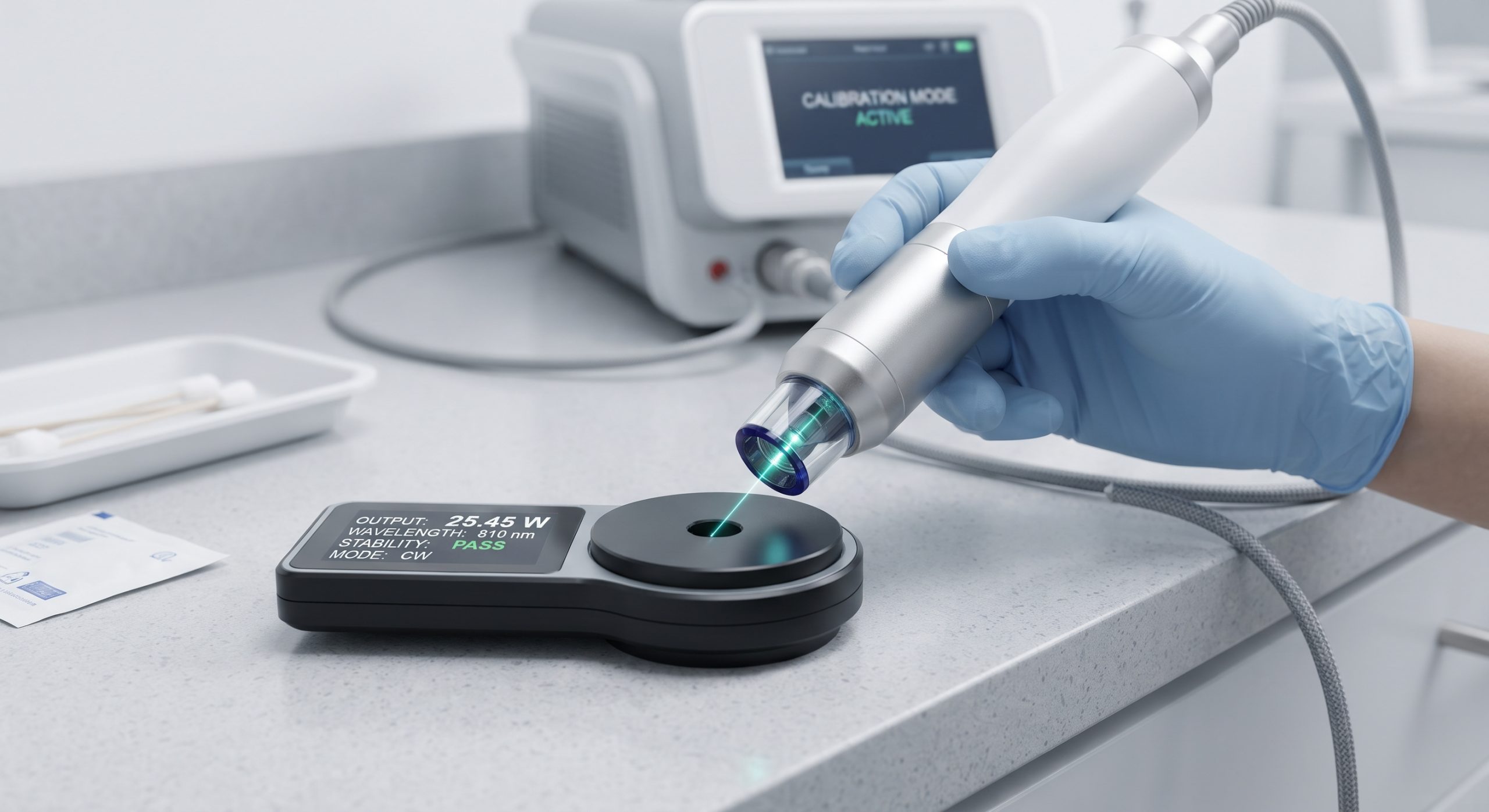
Operational ROI: Reducing Downtime and Consumable Waste
Beyond compliance, automated calibration logs serve as a powerful diagnostic tool. By analyzing trends in the calibration data, a clinic’s biomedical engineer or service partner can predict handpiece degradation before a catastrophic failure occurs. For instance, if the log reveals that the required drive current to achieve a specific fluence is steadily increasing over a 50,000-pulse window, this indicates optical coating degradation or diode aging. Scheduling a preventive handpiece replacement or refurbishment during a low-booked period avoids last-minute cancellations and protects revenue. Furthermore, accurate calibration ensures that the clinic is not over-treating (wasting pulse count and consumable lifespan) or under-treating (requiring additional sessions, which erodes patient trust and clinic profitability).
Integrating Logs with Smart Clinic Management Systems
The modern aesthetic clinic operates on a turnkey software stack. The most advanced diode platforms allow calibration data to be exported via USB or network integration directly into the clinic’s practice management software. This allows for automated billing verification: if a treatment protocol requires a specific fluence and the calibration log shows the device was operating at 15% below that threshold due to an uncorrected fault, the system can flag the session for a complimentary touch-up or a clinical review. This level of data integration transforms metrology from a regulatory burden into a patient retention and risk mitigation asset.
Conclusion: The Standard of Care for the Data-Driven Clinic
As the aesthetic device market matures, the distinction between a premium clinical outcome and a mediocre one increasingly hinges on process control. Automated probe calibration logs are no longer a luxury for the OEM or the high-volume chain; they are a fundamental requirement for any clinic that values metrology accuracy, regulatory defensibility, and long-term capital equipment ROI. By implementing a digital verification protocol that aligns with Medical CE and FDA expectations, clinic owners and medical directors can confidently assert that every pulse delivered—whether at 755nm for melanin affinity or 1064nm for deep dermal penetration—is exactly as prescribed.