
BLOG
The Ultimate Clinic Guide to nd yag laser: Efficacy, Wavelengths, and ROI
2026年6月18日
Understanding the Versatility of 1064 nm Technology in Modern Aesthetics
For clinic owners and medical directors, selecting the right aesthetic laser platform is a critical decision that impacts treatment efficacy, patient safety, and practice profitability. The neodymium-doped yttrium aluminum garnet (Nd:YAG) laser, particularly its 1064 nm wavelength, has emerged as a cornerstone technology in dermatology and medical aesthetics due to its unique tissue interaction profile and safety across diverse patient demographics.
Unlike ablative lasers that primarily target superficial water, the 1064 nm Nd:YAG wavelength offers deeper tissue penetration while exhibiting lower melanin absorption. This characteristic makes it uniquely suited for treating a broad range of indications, from hair removal on darker skin types to non-invasive skin rejuvenation and vascular lesion clearance. By understanding its underlying science and clinical applications, practitioners can maximize both patient outcomes and return on investment.
Deep Dive into Physical Mechanisms and Parameter Optimization
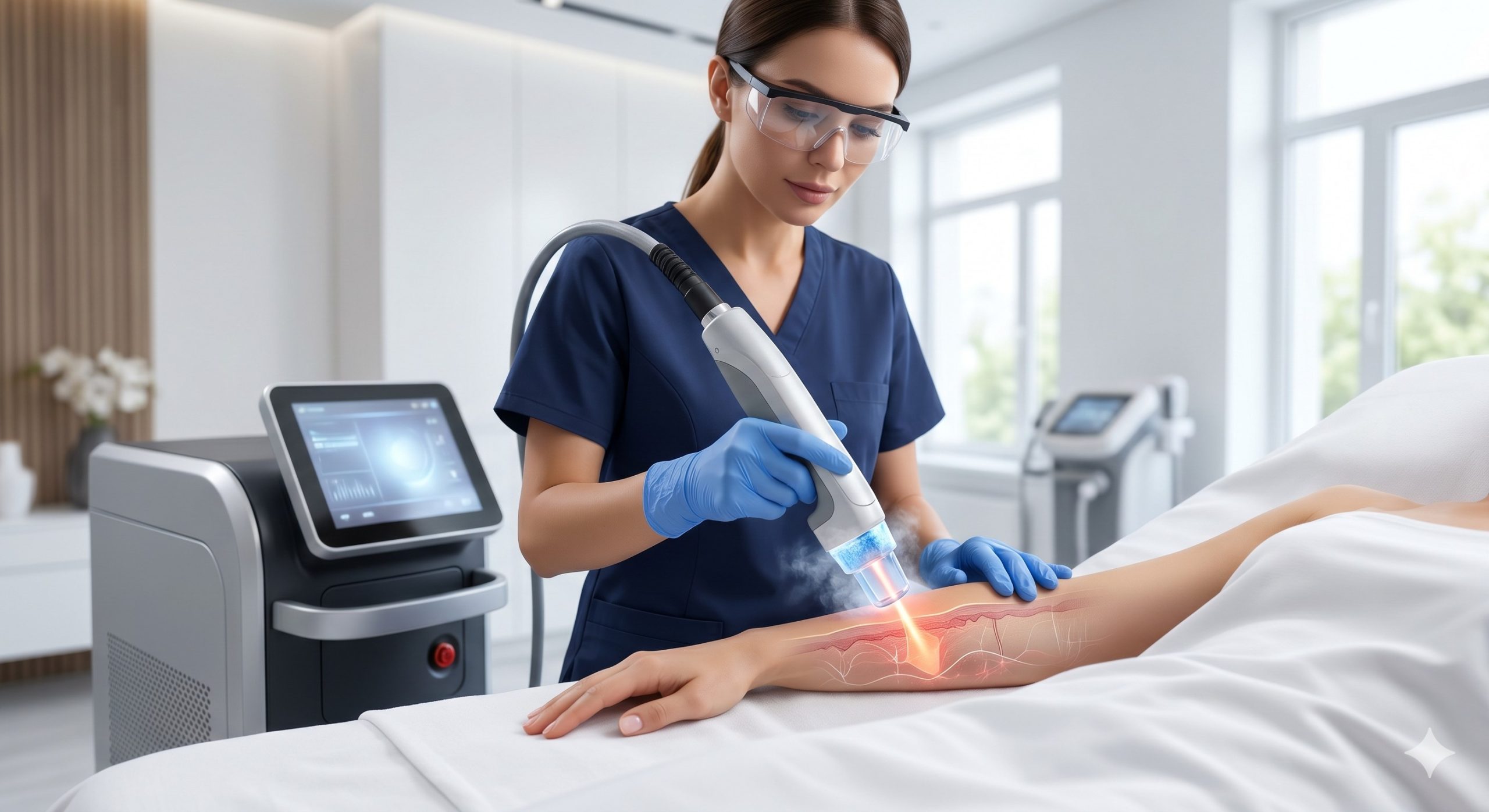
At the core of the Nd:YAG laser’s efficacy is the principle of selective photothermolysis. The laser crystal, doped with neodymium ions, emits light at a wavelength of 1064 nm. This specific wavelength falls within the near-infrared spectrum, where melanin absorption is relatively low, but water and hemoglobin absorption are also minimal, allowing for deeper tissue penetration—typically 5 to 10 mm into the dermis.
This deep penetrative ability allows the energy to target specific chromophores (melanin or hemoglobin) in the dermis while minimizing competing absorption by the epidermis. In practical terms, this means the laser energy can effectively reach hair follicles and vascular lesions without overheating the skin’s surface, a crucial advantage for treating pigmented lesions and performing hair removal on patients with higher Fitzpatrick skin types (IV-VI).
Clinically significant parameters often cited in peer-reviewed literature for pigmented lesion and vascular treatment include fluences ranging from 90 to 140 J/cm² with pulse widths between 20 and 30 ms using spot sizes of 5 to 7 mm. For melasma management, low-fluence Q-switched (LFQS) 1064 nm protocols are a recognized standard, demonstrating significant improvements in the Melasma Area and Severity Index (MASI) scores. More advanced applications, such as lower eyelid rejuvenation, have shown remarkable efficacy using a 650 µs pulse duration, which offers a painless, downtime-free alternative to traditional surgical interventions.
Core Technical Specifications for Clinical Decision-Making
When evaluating an Nd:YAG system for your clinic, understanding the interplay between key parameters is essential for achieving reproducible clinical outcomes. The table below outlines the primary technical specifications that define device capability.
| Key Parameter | Technical Specification |
|---|---|
| Wavelength / Laser Type | 1064 nm (Neodymium-doped Yttrium Aluminium Garnet) |
| Cooling System | Sapphire Contact Cooling / TEC Cooling |
| Fluence (Energy Density) | 90 – 140 J/cm² (Varies by indication) |
| Pulse Width (Duration) | 650 µs – 30 ms (Depending on device and mode) |
| Spot Size | 5 – 7 mm (Adjustable per treatment area) |
| Regulatory Standards | Medical CE, FDA Cleared, ISO 13485 |
Clinical Applications: A Multifaceted Approach to Patient Care
The clinical utility of the 1064 nm Nd:YAG laser extends across a wide spectrum of aesthetic and dermatological concerns. Its versatility makes it a high-value asset in any medical spa or dermatology practice, effectively servicing a large and diverse patient base.
Key applications supported by evidence include:
- Hair Removal: The 1064 nm wavelength is considered the safest and most effective wavelength for permanent hair reduction on patients with dark skin (Fitzpatrick IV-VI), where shorter wavelengths like 755 nm pose a higher risk of dyspigmentation.
- Skin Rejuvenation: Fractional 1064 nm Nd:YAG lasers have demonstrated high effectiveness in treating facial photoaging, significantly reducing wrinkles, spots, and texture irregularities. Studies show statistically significant improvements as early as the first month of treatment, with high patient satisfaction rates (70.45% reporting moderate to remarkable improvement) and minimal adverse effects.
- Pigmentary Disorders: This technology is highly effective for treating melasma, dark circles under the eyes, and other forms of hyperpigmentation. The novel 650 µs pulse duration 1064 nm laser has shown significant efficacy in non-surgical lower eyelid rejuvenation, targeting both wrinkles and dark circles.
- Vascular and Soft Tissue Procedures: Due to its excellent hemostatic properties and deep tissue penetration, the Nd:YAG laser is employed in periodontal surgeries and root canal therapy, eliminating pathogenic microorganisms and necrotic tissue. In aesthetics, it is effectively used to treat facial veins and vascular lesions.
Understanding ROI and Clinic Integration
Investing in an Nd:YAG laser system should be viewed through the lens of long-term profitability and practice growth. The device’s wide range of applications (hair removal, skin rejuvenation, pigmentation, and vascular treatments) ensures a high patient throughput and the ability to offer a comprehensive suite of services, effectively upselling existing clients and attracting new demographics.
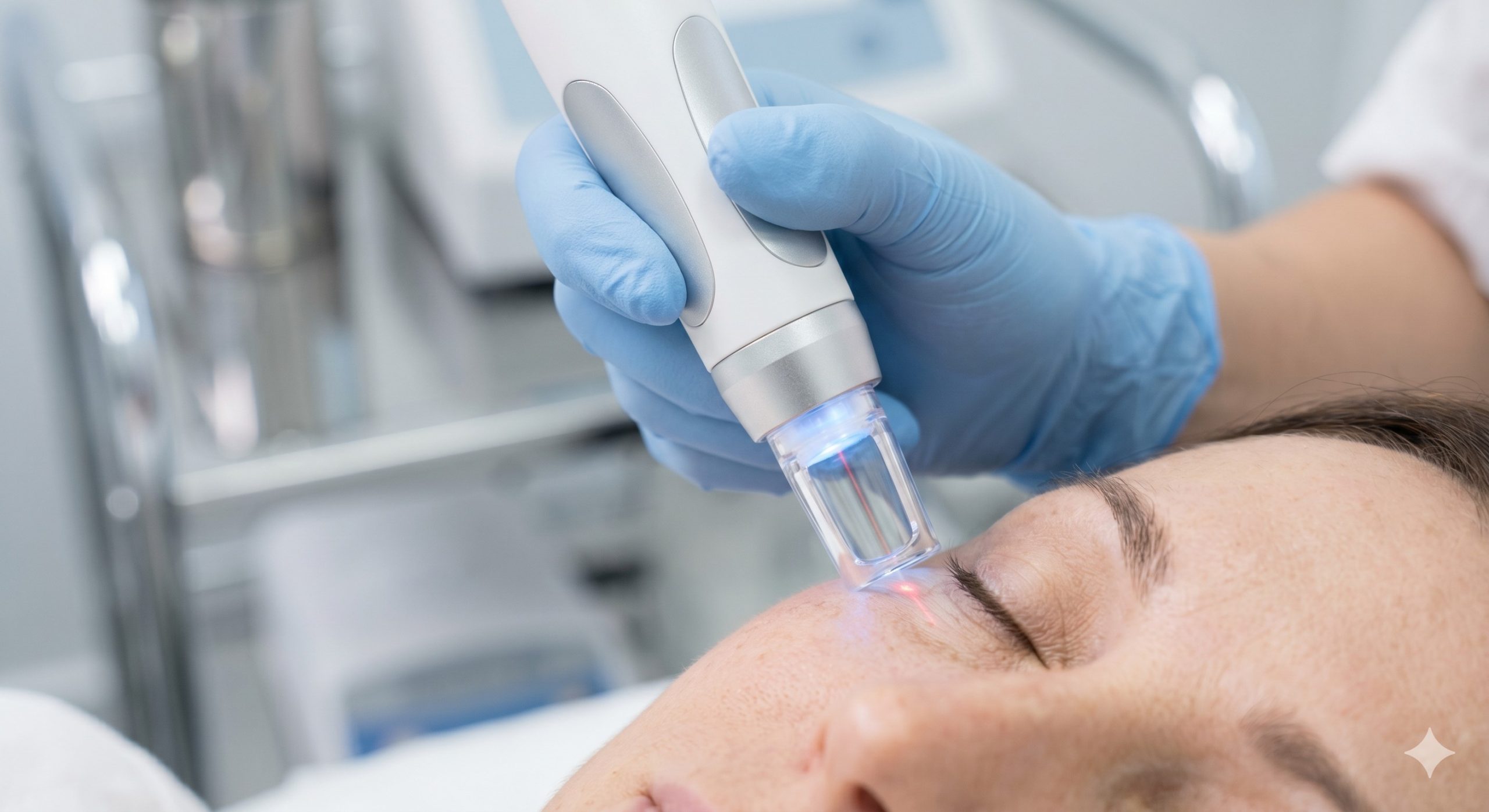
Modern devices are engineered with advanced Sapphire contact cooling and optimized handpiece designs to ensure patient comfort and safety, minimizing side effects like erythema and swelling, which are typically transient and occur in less than 70% of cases. Furthermore, because the 1064 nm wavelength offers a superior safety profile for darker skin types, it allows clinics to confidently expand their patient base without the fear of post-inflammatory hyperpigmentation (PIH), which is a significant concern with other laser technologies. To protect your investment, ensure that any device procured meets stringent Medical CE and FDA clearance standards and is manufactured under ISO 13485 quality management systems.