
Resource
Radio Frequency Skin Tightening – Official Clinical Overview & Technical Datasheet
RADIO FREQUENCY SKIN TIGHTENING – OFFICIAL CLINICAL OVERVIEW & TECHNICAL DATASHEET
EXECUTIVE SUMMARY
Radio Frequency (RF) Skin Tightening represents a non-invasive aesthetic modality that delivers controlled volumetric heating to the dermal and subdermal tissue layers. This thermal stimulation induces immediate collagen contraction and initiates a cascade of neocollagenesis and elastin remodeling, resulting in progressive skin tightening and contour refinement over a 3-6 month post-treatment period. This document provides a comprehensive technical overview of the clinical architecture, treatment parameters, and operational specifications for the OEM RF platform, designed for seamless integration into dermatology clinics and medical spas.
The platform distinguishes itself through a proprietary impedance-matched energy delivery system and an advanced contact-cooling engine, ensuring both clinical efficacy and patient safety across a broad spectrum of skin phototypes.
CLINICAL ARCHITECTURE & DESIGN
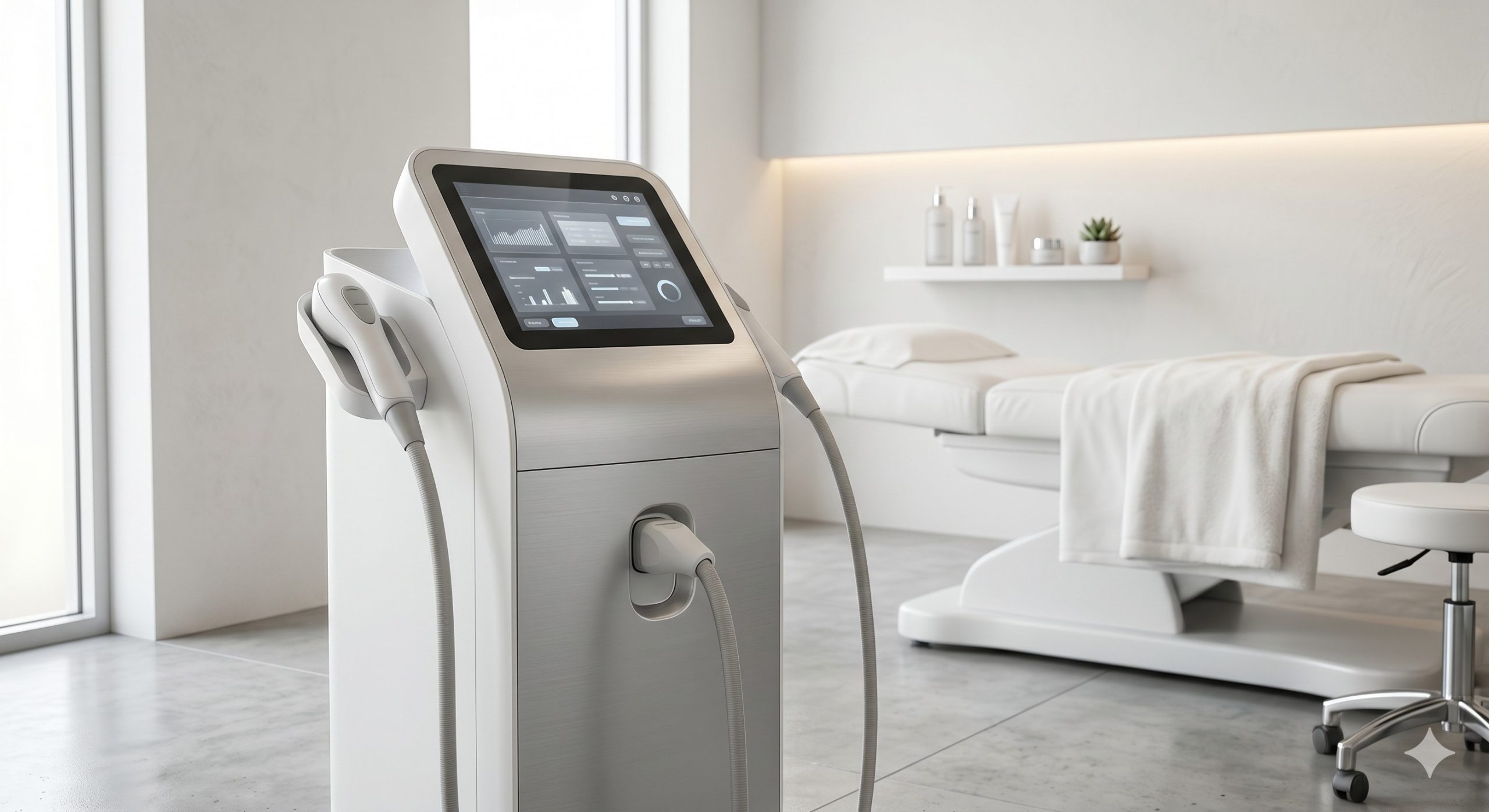
The system architecture is predicated on a monophasic or bipolar RF energy generation core, coupled with a closed-loop feedback control system. The primary energy source consists of a solid-state RF amplifier that generates a high-frequency alternating current (typically in the 0.5 MHz to 6.78 MHz range). This current is delivered through a precision-engineered treatment handpiece to the patient’s skin surface via a capacitive or resistive coupling electrode.
The fundamental mechanism of action is based on the principle of dielectric heating. As the RF current passes through the tissue, it encounters intrinsic electrical impedance. The resultant ionic agitation creates frictional heat within the targeted tissue volume. This process is highly selective, primarily affecting the dermis (which is rich in water and electrolytes) while the energy pathway can be modulated to protect the epidermis. The depth of heating is a function of the electrode geometry, the applied power, and the tissue’s inherent impedance, allowing for precise treatment planning.
Advanced system variants incorporate multi-channel energy delivery and temperature monitoring modules, enabling real-time adjustment of energy output to maintain the therapeutic window of 40-45°C at the target depth, thereby maximizing collagen denaturation and subsequent neocollagenesis without causing epidermal necrosis.
KEY INDICATIONS & CAPABILITIES
The RF Skin Tightening platform is clinically indicated for a wide range of mild to moderate soft tissue laxity conditions. Its versatility allows practitioners to address multiple anatomical regions with a high degree of precision and safety. Indications include:
– PERIORBITAL LAXITY: Reduction of crow’s feet and fine lines around the eyes.
– FACIAL REJUVENATION: Improvement of nasolabial folds, marionette lines, and overall jawline definition.
– NECK AND SUBMENTAL TONING: Non-surgical reduction of platysmal banding and “turkey neck” appearance.
– BODY CONTOURING: Mild tightening of skin laxity on the abdomen, arms, thighs, and buttocks.
The system’s ability to achieve consistent volumetric heating makes it an ideal stand-alone treatment or a synergistic adjunct to other aesthetic modalities, including intense pulsed light (IPL) and injectable neuromodulators.
COMPLIANCE & STANDARDS
This RF medical device adheres to the most rigorous international safety and performance standards, ensuring full compliance for global deployment. The platform is designed and manufactured under a certified Quality Management System conforming to ISO 13485:2016 for medical devices. Key regulatory benchmarks include:
– ELECTRICAL SAFETY: Compliance with IEC 60601-1 (Medical Electrical Equipment – General Requirements for Basic Safety and Essential Performance) and IEC 60601-2-2 (Particular Requirements for the Basic Safety and Essential Performance of High-Frequency Surgical Equipment and High-Frequency Accessories).
– EMC COMPLIANCE: Meets the stringent electromagnetic compatibility requirements as per IEC 60601-1-2.
– CLASSIFICATION: Certified as a Class IIa (or equivalent) medical device in the EU under the Medical Device Regulation (MDR) and cleared by the US FDA for over-the-counter and/or prescription use, depending on configuration.
TECHNICAL SPECIFICATIONS
| Parameter | Specification |
|---|---|
| RF Frequency | 0.5 MHz – 6.78 MHz (Selectable) |
| Max Output Power | Up to 200W (Continuous/Modulated) |
| Cooling System | Advanced TEC + Sapphire Contact Cooling with Water Circulation |
| Treatment Tip | Ergonomic, lightweight design with integrated temperature sensor |
| Display | High-resolution 12.1-inch Color Touchscreen (LCD) |
| Impedance Detection | Automatic, real-time feedback control |
| Voltage | 100-240 VAC, 50/60 Hz |
| Dimensions (W x D x H) | 450 mm x 500 mm x 1050 mm |
| Weight | Approx. 35 kg |
| Operating Modes | Continuous, Pulse, and Customizable Treatment Protocols |
| Safety Certifications | FDA Cleared, CE Mark (Class IIa), ISO 13485 |
CLINICAL PROTOCOLS
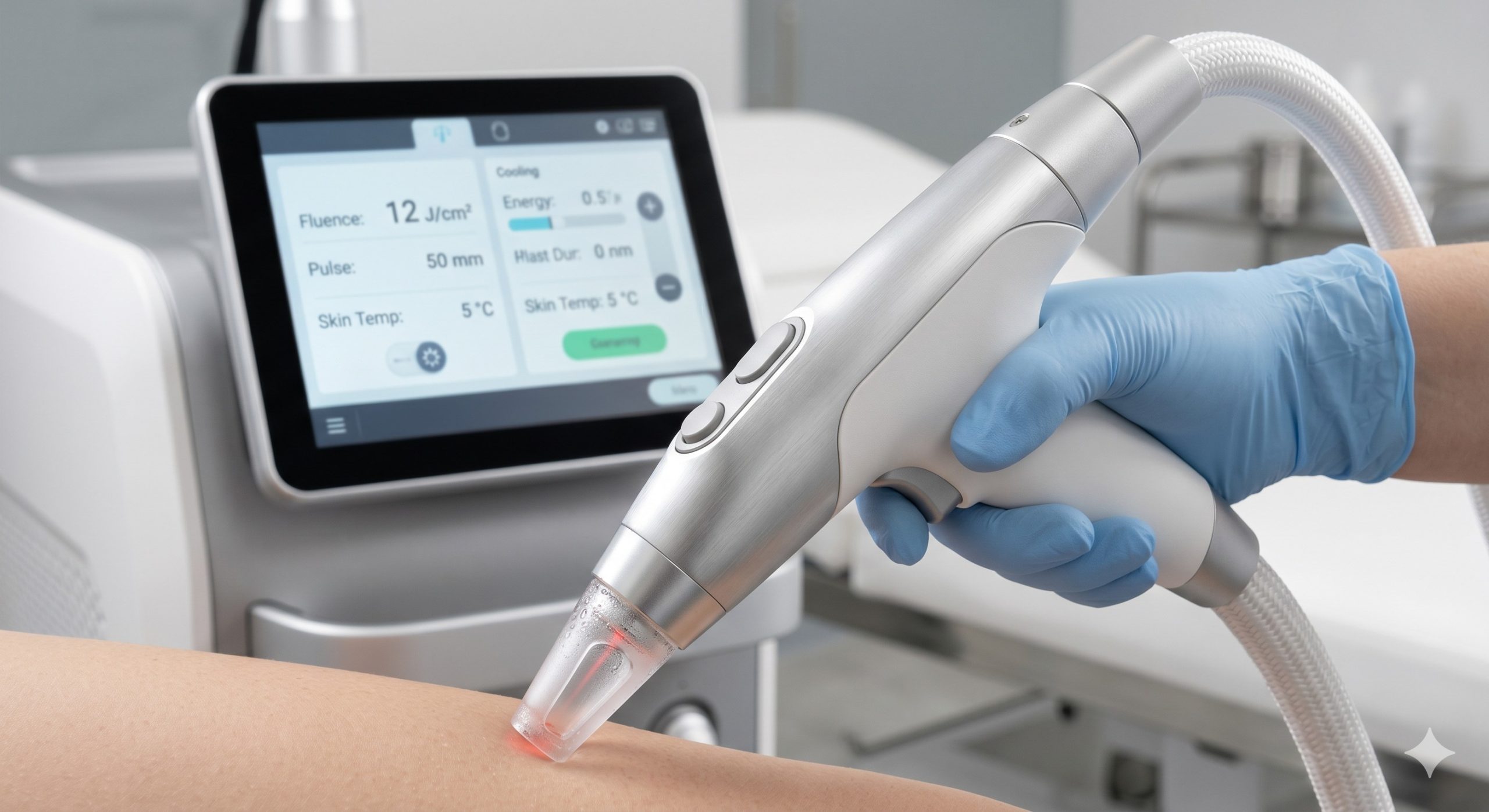
Operational workflow is critical to achieving reproducible clinical outcomes. Recommended protocols are governed by the patient’s Fitzpatrick skin type, tissue laxity, and target anatomical site. Prior to treatment, the device must be calibrated, and the contact cooling system should be activated to achieve an operating temperature of 2-5°C at the treatment interface.
A standard full-face treatment protocol involves the delivery of 10,000 to 20,000 pulses, with each pulse lasting between 100 ms and 500 ms. The fluence is typically initiated at a sub-therapeutic level and gradually increased until the patient reports a deep, tolerable warmth, monitoring for the onset of the desired tissue response without pain or erythema. The handpiece is moved in a slow, continuous overlapping pattern to ensure homogenous heating of the entire target area. Post-treatment, the skin is allowed to cool; a topical soothing agent can be applied.
Optimization of the parameters is crucial. The impedance detection algorithm automatically adjusts the output to ensure energy is deposited efficiently despite variations in tissue conductivity. Using the recommended stacking technique, the clinician can further enhance treatment efficacy for patients with significant laxity, typically performing 2-3 passes over the same treatment area.
PRACTITIONER TRAINING & MAINTENANCE
To ensure the highest standards of safety and efficacy, comprehensive training and certification are mandatory. The OEM provides:
– ON-SITE CLINICAL TRAINING: Conducted by experienced aesthetic trainers covering physics, anatomy, safety protocols, and hands-on treatment demonstrations.
– DIGITAL LEARNING MODULES: Access to a proprietary e-learning platform with detailed video tutorials and interactive case studies.
– MAINTENANCE SCHEDULES: Regular preventative maintenance to ensure optimal RF amplifier performance and cooling system integrity. The sapphire/tip cooling engine requires periodic cleaning and calibration, while the RF amplifier is engineered for a lifespan exceeding 10 million pulses, subject to usage.
MAINTENANCE REMINDER: Regular replacement of the coolant filter (every 6 months) is recommended to prevent system overheating and ensure consistent energy output.
CONCLUSION
The OEM Radio Frequency Skin Tightening platform represents a significant advancement in non-invasive aesthetic technology. Its robust clinical architecture, coupled with advanced safety features and intuitive operation, provides a high-ROI solution for modern aesthetic practices. By adhering to the documented technical specifications and clinical protocols, practitioners can confidently deliver measurable skin-tightening results with a high degree of patient satisfaction and safety.